The Iran Nobody in Washington Wanted to Listen To
Iran didn’t ask for regime change. It asked for bread. How a protest movement got hijacked — and turned into a war nobody planned for.
The bombs are still falling. The supreme leader of the Islamic Republic of Iran is dead. The president of the United States has admitted to a journalist that he has no idea who comes next.
And the man who saw all of this coming has been saying so, loudly and at personal cost, for 20 years.
Our guest on this week’s WhoWhatWhy podcast is Hooman Majd, the grandson of an ayatollah, the son of a diplomat who served the shah, a contributor to NBC News and The New Yorker, and the author of four books on modern Iran — most recently the memoir Minister Without Portfolio. He has spent his career as the voice in the room insisting that Iran is always more complicated than Washington wants to believe. He has never been more right, and the moment has never been more dangerous.
He’ll tell you why the protests that Washington read as a mandate for regime change were actually something far more specific and far more human.
He’ll tell you what Iranian nationalism looks like when your country is being bombed and a foreign president announces he’ll be choosing your next leader.
And he’ll tell you why the Iraq analogy — as instructive as it is — only goes so far before Iran’s 3,000 years of history take over.
What did the Iranian street actually want? Who is really behind the push for regime change — and who benefits? And is there any version of what’s happening right now that doesn’t end in catastrophe?
 Apple Podcasts
 Google Podcasts
 RSS
RSS
Full Text Transcript:
(As a service to our readers, we provide transcripts with our podcasts. We try to ensure that these transcripts do not include errors. However, due to a constraint of resources, we are not always able to proofread them as closely as we would like and hope that you will excuse any errors that slipped through.)
Full Text Transcript:
(As a service to our readers, we provide transcripts with our podcasts. We try to ensure that these transcripts do not include errors. However, due to a constraint of resources, we are not always able to proofread them as closely as we would like and hope that you will excuse any errors that slipped through.)
[00:00:11] Jeff Schechtman: Welcome to the WhoWhatWhy podcast. I’m your host, Jeff Schechtman. There is a particular kind of expertise that can only be inherited. Not learned in a classroom or acquired through years of think-tank fellowship, but carried in the blood, absorbed at dinner tables, where the conversation was conducted in Farsi. In diplomatic residences where the old world and the new were always in uneasy tension. In the silence that follows a revolution that erases the only home you ever knew.
Hooman Majd has been living inside that silence for nearly half a century. The grandson of an Ayatollah, the son of a diplomat who served the Shah, a man who translated for Ahmadinejad at the United Nations, and then wrote about the experience with the cool precision of someone who understood exactly what was being lost on purpose. For 20 years, he has been the voice in the room saying it’s more complicated than that. More complicated than the narrative coming out of Washington. More complicated than the story Israel once told. More complicated than the diaspora opposition cheering on bombs falling on the country they fled.
But now, in the span of several weeks, almost everything he warned about has come to pass. The strikes have landed, Khomeini is dead, the nuclear program is rubble, and the president of the United States has admitted to a journalist he has no idea what comes next. What Majd has understood, and what the architects of this moment never seemed to grasp, is the Iranian people on the street were not sending the message that Washington received. They were not asking for this. They were asking for bread. They were asking for a currency that held its value. They were asking, as they have been asking since 1906, for something that has always been just out of reach: simply at last, to live in a democracy. What they got instead was a lesson in how great powers hear only what they want to hear.
My guest, Hooman Majd, was born in Tehran, raised in diplomatic postings from San Francisco to London to New Delhi, and stayed in the United States after the revolution of 1979 that took everything his family had built. He’s a contributor to NBC News, he’s written for The New Yorker, The New York Times, and Foreign Affairs. And he’s the author of four books, including The Ayatollah Begs to Differ, and his most recent memoir, Minister Without Portfolio. It is my pleasure to welcome Hooman Majd here to talk about what is perhaps the most consequential moment of a long career as Iran’s most essential interpreter. Hooman Majd, thanks for joining us here on the WhoWhatWhy podcast.
(00:02:54) Hooman Majd: Thank you so much for having me.
(00:02:56) Jeff Schechtman: Well, it is a delight to have you here. Thank you so much for joining us. You grew up, as I mentioned in the introduction, in pre-revolutionary Iran. You were raised in the upper echelons of that world, a world that really ceased to exist in 1979. As you watch events unfolding today, talk a little bit about the context of that, and how you look back at the country, and how you see it today.
[00:03:23] Hooman Majd: I didn’t grow up inside Iran as much as around the world, but as a son of an Iranian diplomat, very aware of my Iranian-ness, if you will. And back in those days, Iran was considered this kind of mysterious, but kind of cool country, by people outside of Iran. Wherever I went to school — American schools in Tunis, or in New Delhi, or even San Francisco and London — there was always a curiosity about Iran, and I was very proud to be Iranian, only because I thought I came from an amazing culture. It’s what every Iranian learns as a child. I come from 2,000, 2,500 years of great culture. Cyrus the Great, all those things that they teach us as children, as Iranian children. And so I was proud of that. I was proud of …
And then there was this shock, not just because of what my family lost in the revolution. Not just because of losing property or whatever it is one loses when there’s a revolution and a drastic change in a regime. Not even so much losing your country. But there was this kind of sense of loss of self, of my own identity. It’s like, I can’t identify with the people who are now in charge of this new regime in Iran, because they really bear no relation to anything that I’ve ever experienced in my life. And I’m not American either, even though I live here and I’ve grown up around Americans. My best friends are American. I went to school with Americans and Brits. So there was this sense of, you know, identity loss in a way, not just a loss of a homeland.
So that’s the immediate context of a pre- and post-revolution. I didn’t really judge the revolutionaries, though, despite that. Because even though I didn’t know them, I didn’t understand that culture very well, despite the fact that my own family were quite religious. But not in the way, not politically religious or religiously political, if you will. And so despite that, I didn’t judge them. I knew that the Shah was not great for Iran politically. I knew that from an international perspective, he was great. From internal politics, by the time I was 15 and 16, I really understood what SAVAK was, the secret police that was trained by the CIA, trained by Mossad, that did torture people, did throw people in jail if they didn’t … if people expressed an opinion that was against what the Shah believed. The Shah denied that always, that there was torture and stuff like that, but we knew it did exist.
We now know it was probably less than was promoted by the revolutionaries at the time of the revolution. So one had mixed feelings. It’s like, I’m not going to blame people for bringing on a revolution. I don’t even live there right now. I’m not a part of that society, even though my father is very much a part of that world because he was our ambassador, Iran’s ambassador to Japan at the time of the revolution. But I didn’t want to judge. I didn’t want to judge revolution. I was against an Islamic Republic on a personal level because I just didn’t believe that Iran should be an Islamic Republic. I was fine with it being a Republic. To make a long story short, that sense that I have, had, excuse me, of not wanting to judge and not wanting to be anti-Islamic Republic, necessarily anti-Islamic Republic, led me to a career that had nothing to do with Iran for a while in America. First being an illegal alien because I’d been a student, and then with the hostage crisis. Visas were canceled under President Jimmy Carter. Finally, getting political asylum, becoming legal, getting into the entertainment business, music business, and then into the film business a little bit with major corporations was a wonderful life. I have no regrets about any of that. During that time, staying in touch with Iran as much as I could, being aware of what’s going on in Iran politically. And then when the music business collapsed and a film company that I was working with, we ran out of money. So I then ventured into journalism and that led to finally getting my passport back, my Iranian passport back, and being able to travel to Iran and then write about Iran, as you mentioned, these four books.
[00:08:08] Jeff Schechtman: One of the things that you did, and this relates to the writing that you did. It relates to the work you spent many, many years doing as an interpreter. That you were constantly explaining Iran and you were mostly explaining it to people that were taught to fear the country and really had no clear idea of what was going on there. You were an interpreter on so many different levels.
[00:08:32] Hooman Majd: Yeah, absolutely. In the early days of the revolution, it was, and with the hostage crisis, the embassy hostage, U.S. embassy hostage crisis in Iran, it was very difficult to be Iranian, I will say. I had the good fortune, I suppose, of not sounding like an Iranian, not sounding like the people that they were seeing on television, you know, the bearded guys yelling down with their “death to America” and so on and so forth. And with a name that didn’t obviously sound Muslim or Iranian to people. My name doesn’t resonate as being like, oh, there’s a guy from, it’s foreign, definitely a foreign name, but they can’t really specifically label. So I was lucky in that sense.
But you couldn’t really explain Iran at that point, other than if you were asked. And if the subject came up when people were wearing yellow ribbons and tying yellow ribbons around trees and saying how awful the Ayatollah is, explain that, that’s not everybody. There’s a reason why so many people are, that’s not all Iranians. There’s a reason why so many Iranians are leaving Iran and seeking refuge outside of Iran, because they disagree with what’s going on with Iran, including disagreeing with taking up hostages and death to America, and this kind of break in relations with the West. So yeah, that was the initial day. Later on, as things became different, the sort of entente, Bill Clinton tried to get a better relationship going with Iran. Iran was unable to, even though Khatami, who was the reform president at the time, wanted to build a relationship with the West, a different relationship, and tried very hard, and was successful with Europe, but less so with the United States. Mainly because he was stopped by the powers that be, which means the Supreme Leader and his office. Then later on, Obama obviously not only tried, but was successful with the nuclear deal. And throughout this time, trying to explain what Iran is so that it would allow Americans to be supportive of, for example, Obama in a nuclear deal.
And I think most Americans were. I don’t want to discount the objection by the extreme right in America, and certainly certain congressmen and senators who didn’t want any deal with Iran, even if it meant virtual capitulation at the time. And we know that Israel didn’t want a deal. We know that Benjamin Netanyahu came here to argue against the deal, joint session of Congress. But I think … Or at least I should say, I don’t think. I hope that my books at that point, having written two books, maybe could help Americans. I would hope that it could help Americans, including people in government, including people who had — in think tanks — who had some influence to think differently about Iran, Iranian society, and what Iran wants to be and where it wants to stand in the world order. That may be presumptuous of me, but I think I got enough attention from my, at least my first book, and my appearances on television, my work with NBC News, that I like to think that it didn’t hurt, but it certainly helped with an understanding of Iran. Which could help people go, oh, yeah, it makes sense for us to try to make this happen. It makes sense for us to put away this nuclear issue and not worry about Iran building a bomb. It makes sense for us to support that.
[00:12:16] Jeff Schechtman: And one of the themes that run throughout this is, in your explanation and your interpretation of Iran, it’s always this idea of telling people and having to explain to people that it’s more complicated than they think. I mean, and that runs right up through today.
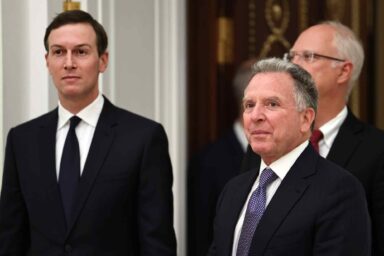
[00:12:32] Hooman Majd: Absolutely. It’s always way more complicated than people think. And I think the proof is in the pudding, as they say, with Trump thinking he’s going to pull a Venezuela on Iran. And we’re in the fifth day of a war that’s seen Americans killed, up to a thousand Iranians killed, fighter jets falling out of the sky, and airports throughout the region closed. And drones hitting buildings in other countries in the Middle East from Iran, launched from Iran. That’s a fundamental misunderstanding by our government, by the U.S. government, of what Iran wanted to do, what it could do, and just starting a war willy-nilly. Sort of like shoot from the hip and hope it works. So, yeah, the misunderstanding of the Iranians here, and I think a lot of people probably agree with me and some will disagree with me that Iran, in this particular case, seeing what the military buildup was on its doorstep, understanding the cost associated with that military buildup, was very, very keen, very eager to show real flexibility in this last round of negotiations with Steve Woodcoff and Jared Kushner. And Rafael Grossi from the IAEA, the UN Nuclear Agency, which oversees nuclear programs, peaceful programs, was there in the meeting. The Omani foreign minister was there in the meetings. I think they really thought that they could avert this war.
But somehow Donald Trump decided, No, it was going to be war. In hindsight it was probably wrong for the United States to send two people to negotiate with the Iranians who knew absolutely nothing about Iran, and worse, knew absolutely nothing about the nuclear program. So, big difference from the Obama days. And again, I’m not trying to be pro-Obama and anti-Trump here. I’m just trying to set the scene for where we’re at today. And obviously, I approved of the nuclear deal because I thought, you know, it’s good for America and it’s good for Iran. I mean, if you ever had a win-win situation, that was it. And one usually hopes for win-win situations.
[00:14:59] Jeff Schechtman: One of the things that seems to have precipitated the current situation is the perception that America had, that a lot of Americans had, that Iranians somehow wanted this help, that they had taken to the streets a month or so ago in huge numbers and taken incredible risks to their own lives. Many were killed in the process. And that was somehow a go-ahead to this. Explain that.
[00:15:26] Hooman Majd: Well, there’s no question there are people in Iran who were so, I guess, so upset, angry with the regime, if you want to call it that. With the system that had brought them to the point where they couldn’t afford eggs and couldn’t afford chicken and couldn’t, with the economic situation and their money, their assets, their savings were being depleted by this unbelievable inflation. That anything, any change, would have been welcome, including, for some, I would say, a military attack to change things, whether it’s a complete regime change or, as I like to call it, regime adjustment. An adjustment in the regime that benefits them as well as the United States and allies of the United States, so that there’s this relief from this horrible situation they find themselves in.
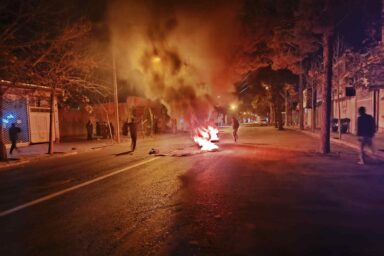
So the protest started for economic reasons. It became a protest against the regime because the regime didn’t have an answer. There was no answer for the people who were protesting that, oh, we’re going to solve your economic problems. This is how we’re going to solve it. Obviously, the Iranian nuclear negotiators believed that by negotiating with Trump and Trump’s team that they would get sanctions relief and this was going to take a while. But obviously that crackdown that happened where thousands were killed made it … made people even more angry, even more angry at the regime.
So there’s no question that people have welcomed a change in Iran. There’s also no question, and it would be silly to deny it, that people have been calling for some. Again, the numbers are impossible to pinpoint. Calling in these demonstrations that happened in January for the Shah’s son to return in this sort of nostalgic idea the Shah’s time was so much better than now, so the Shah’s son’s time will be better than now. There’s no question about that, and there’s no question that some people are probably okay with this war, thinking if this war continues, the regime will fall and we will have a better future because under this regime we no longer trust it. And then, of course, there’s a whole other group of people who are, well, we really like some change, but we definitely don’t like being bombed. And people are dying. There’s panic to some degree on the streets of Tehran. A lot of people trying to leave Tehran. They’re leaving in quite big numbers. Many streets … I’ve seen videos that I can verify, other people have verified, some streets look like Gaza. Obviously not the whole capital. Iran is much, much bigger. It’s as big as Western Europe, so it’s not … Gaza’s a tiny little strip. And Iran has 93 million people. Gaza had a couple of million residents. So I’m not trying to equate the two, but there are streets that look like Gaza. And certainly there are many, many Iranians who don’t want that.
[00:18:46] Jeff Schechtman: And talk a little bit about the fact that that demonstration initially, and you alluded to this a moment ago, was really based on economics more than politics initially.
[00:18:56] Hooman Majd: No question. A lot of people in Iran, what happened in the demonstrations, it was actually some of the most diehard loyalists of the Islamic Republic, the most religious people, the bazaaris, the merchant class, who started the protests. And they were protesting that the government really didn’t have an answer for the inflation, didn’t have an answer. I’ll give you a perfect example. It actually started by cell phone tradesmen in the bazaar. And the cell phone people, sellers, and they sell cell phones from Samsung and iPhones and so on and so on. These are all imported, right? So they have to pay in dollars to get these phones. And they were saying, we can’t do business anymore because I can’t sell an iPhone today for $1,000 when it’s going to cost me $1,100 to replace it tomorrow. So I’m out of business. What are you going to do about this? That was how the protest started. And it then spread from the cell phone, you know, electronic sellers in the bazaar, to other merchants were saying basically the same thing. We can’t afford to do business because anything that I sell today at a price, I have to replace. And replacing it costs me more than what I could get for it today. So the only alternative would be to sell in dollars or sell in gold, but that’s not really practical in a country like Iran. People use the local currency, use local banks. So that’s how it started.
But then once the government was unable to answer the people’s demands, it turned into a much stronger call for change. But before that, there were people who were already anti-regime anyway, who joined in the protests, and they were the loudest, the most vocal. You know, death to the dictator, death to Khamenei, death to this and that, and we want regime change. And then among some of those people also calls for the Shah’s son to return and take over. So there was a desperation. And desperation is understandable.
[00:21:02] Jeff Schechtman: And talk about the Shah’s son, Reza Pahlavi, and his attempted leadership coming out of these demonstrations and claiming that he had 50,000 members of the Iranian security forces ready to defect and that he was the guy to follow.
[00:21:17] Hooman Majd: Well he started making that claim. He’d been relatively quiet for some 40 years or so, more than 40 years since he was 18 years old when the revolution happened here, and he was living here at the time. He raised a family, was always like the opposition, an opposition figure against the regime, but never, not really very active. And then the Mas Amini protests happened, the hijab protests in 2022, and he saw an opportunity, or his advisors saw an opportunity, to become this leader. And that’s when he really became very public and making speeches and having rallies and so on and so forth about this regime has to go. Look, they killed this young woman because she was … her hijab wasn’t proper. And so he gained some popularity then. For many, many years, nobody really was speaking about Pahlavi. Certainly, when I used to be able to go to Iran, nobody in Iran ever mentioned his name. It wasn’t even on anybody’s lips. He had some measure of support in the West, but he wasn’t actively doing anything. He wasn’t building a government in exile. He wasn’t, unlike the MEK, for example, he was not building a support base inside Iran, a base of support that could potentially take over, even if they’re meeting in secret or whatever.
But then he started in 2022. And then when these most recent protests happened, yeah, he was like, go out on January 8th, call my name, take over the government. And we saw what happened. The Iranians responded with force on January 8th, just as after about 10 days of protests that had already been happening, which were peaceful. And then it became violent and there was some violence by some of the protesters, Molotov cocktails, so on and so forth. Anyway, the crackdown was horrific. And we know that the Iranian government says 3,117 have been killed and listed their names and social security numbers. Other people say it’s up to 30,000, but the human rights organization saying 7, 8,000 with possibly more. The president of the United States says 32,000 without saying where that number came from. But Pahlavi has used that number and he now argues that he is the only choice for regime change. He did talk about back in the summer, about the first 12-day war that Israel and the United States did in June of 2025, that he had registered 50,000, some 50,000 security forces and military forces to defect at the right time. Well, certainly the right time would have been like a month ago and they didn’t. And if there was going to be any defection now would certainly be the right time as well. And there isn’t defection. So that seems to have been bogus, a boast that’s not true. And obviously, a lot of people who may have supported him or may support him do feel like he’s been not really very helpful or useful here. He’s told people to go out in the street, they’ve gotten murdered. He’s sitting in Washington or Paris, comfortable away from all the action. So, yeah, his popularity exists. There are people who are going to want a change who will be satisfied with him because he represents this very Western, Westernized kind of regime. And that’s what some people want. His alliance with Israel, some people want that as well because they feel like there won’t be any more threats from Israel once he’s in power, if he’s in power. But the truth of the matter is it’s a real long shot to imagine that he can bring about change. He really doesn’t have an organization inside Iran. Doesn’t have the widespread support that some people believe he has inside Iran. He does have support in the diaspora, no question about it.
[00:25:25] Jeff Schechtman: One of the things that I think gets lost a lot in the telling of Iran’s story in America is a sense of nationalism. The idea that the Iranian people can despise the government and despise the military, but their feelings towards foreign powers coming in are even worse in many cases. That there is this sense of nationalism that is still very much there.
[00:25:50] Hooman Majd: Yeah, no question, no question. And one thing I’ve been saying in the last few days is if … What people have always said, senators and people like that, the population, the Iranian population, is the most pro-American in the Middle East, is the most pro-Israel in the Middle East. Well, that may have been true, maybe even more pro-Israel, not pro-Israel, but pro-American than Turks, for example. But, that said, once you start getting bombed and having Iranians killed by Israel, killed by the United States, I think you automatically are going to see people not like being so pro-American or so pro-Israeli. And when you start seeing a foreign country trying to impose on you, on your people, a form of government, a form of leadership, you become suspicious immediately as an Iranian because of the history of Iran. Because of the history going back a couple of centuries. I’m talking about the British and the Russians, imperial Russians, controlling Iran. And you’re talking about the 1953 coup, the United States and the UK. So, yeah, there’s always going to be people who are hesitant to accept that. And just today, just today, Axios was reporting that … the Axios reporter, Barak Ravid, who spoke to Trump, said that he will not accept a leader in Iran that he doesn’t approve. He has to approve the leadership in Iran. Well, I mean, it’s bizarre. The president of the United States has to appoint the leader.
[00:27:34] Jeff Schechtman: I mean, people forget, I suppose, that it was out of this kind of foreign interference and foreign powers that really gave birth to the current Islamic Republic.
[00:27:46] Hooman Majd: Exactly. Exactly. I mean, that was one of the … people have forgotten that. Absolutely. Eisenhower didn’t want to do 53, you know. He was pushed into it because of the anti-communist sentiment in America at the time. And he was being told, well, the communists will take over if we don’t do this. But there was a hesitancy. Truman had rejected a coup completely before Eisenhower. And then Eisenhower initially rejected it. According to the history books — I’m not a historian, but the books that I’ve read in the history books. So does Trump want to be the guy who’s behind the next coup? I mean, it’s bizarre. I don’t understand it. And clearly that’s something Iranians will reject. If you wanted the Iranians on your side as you’re bombing them, the last thing you do is tell them, oh, I’m choosing your next leader. I’m bombing you and I’m choosing your next leader.
[00:28:56] Jeff Schechtman: Certainly you’ve written and you agree that the current military intervention is folly at best. Is there a version of this, given where we are today, five days into this war, is there a version that doesn’t end in catastrophe?
[00:29:12] Hooman Majd: I think it’s already a catastrophe. I don’t see how it’s not a catastrophe. I don’t know. The ending could be a worse catastrophe, but it’s already a catastrophe. I mean, look at the entire region. I don’t want to exaggerate and say it’s in flames. There’s no air traffic in the region, virtually none. Emirates Airlines, one of the biggest airlines in the world, canceled almost all of its flights. A Russian airline is flying from Bahrain to Moscow, but basically there’s no air travel in the Middle East right now. We’re talking about Dubai being bombed. Bahrain being bombed. Qatar being bombed. Saudi Arabia being bombed by drones and or missiles. Today, Azerbaijan airport, an airport in Azerbaijan, being hit. We’re talking about the Kurds now being potentially armed and wanting to start a separatist movement in Iran and perhaps attacking revolutionary guards and the Iranian military. So yeah, I don’t know how much more of a catastrophe.
Think about, for example, the Emirates, and Dubai specifically, which is viewed as sort of the Monaco of the Middle East, where you can, you know, it’s a safe haven. You can build a hotel, you can build a golf course, you can invest your money, you can buy a multimillion dollar house, a villa. Banks can come there and do business and it’s being bombed. Or being attacked. How many people are going to consider Dubai a safe haven anymore after this is all said and done? The whole region has changed. And even if the regime changes in Iran and becomes pro-Western for a while or whatever it becomes, which is unlikely, by the way, unless there’s a ground invasion that Trump hasn’t actually ruled out a la Iraq and we go in and impose a new regime on Iran, then what? Do we have a situation like Iraq, where there’ll be pockets of resistance? I mean, I’ve always maintained you can hate this regime and Iranians can hate this regime. But let’s face it, there is by any estimate, including intelligence agencies, anywhere between 10 and 20 percent popularity of the regime, including the Supreme Leader who was assassinated. And that amounts to a few million people. Will they just sit back? And we saw what happened in Iraq. Will they just sit back and let the US and or Israel or the two countries combine to impose their will on Iran? I doubt it. I think that would be the ultimate catastrophe, I would argue, a ground invasion, because it would involve a lot of American deaths as well.
[00:32:11] Jeff Schechtman: And you make the point that the analogy with Iraq only holds up to a point. That it really is a very different situation.
[00:32:19] Hooman Majd: Absolutely. Very different situation. Iraq had, as we know, there was the whole majority Shia, minority Sunni, minority Kurds, but split between these three groups. Iran is multi-ethnic and does have minority Sunni, minority Kurds, and minority Arabs and Baluchis, but it’s much more united as a country against invaders than Iraq, which was an artificial country to begin with. That only existed as a nation since, well, I guess, end of World War I. There’s a pride among Iranians that their country has existed both geographically where it is and politically as a nation state for close to 3,000 years at this point. So that’s a different situation than some of the Arab countries in the region, which were carved out of various tribal entities and colonial entities. It’s a different dynamic. Who knows?
I don’t know what will happen if there’s an Iraq-style invasion. We know that’s not imminent because we don’t have our troops there ready to land and start an invasion. But if the idea was that with the air war alone, just by the air, that we could bring about a regime change, that’s probably folly, certainly in Iran. I mean, we weren’t able to do that in Vietnam. Pete Hegseth was talking about, oh, we have complete air superiority. Well, we know you do. We know you and Israel — the United States and Israel — have complete air superiority and they control the skies. The US controlled the skies over Hanoi and over North Vietnam. How did that work out for us? I mean, we got some pilots shot down, but we did control the skies over pretty much all of Southeast Asia at the time. And that doesn’t bring about a revolution, doesn’t change a regime. And we even had troops, but not in North Vietnam necessarily, but we had troops fighting the Vietnamese and we weren’t able to defeat them with a far superior military.
I think the experience of Afghanistan, the experience of Iraq, should have theoretically told us that this is probably not the wisest move. And we should have tried to do something more diplomatic. But listen, I come from a diplomatic background. I believe in diplomacy until there’s no other choice. But I think there’s always the choice of diplomacy, always.
[00:35:05] Jeff Schechtman: We’ve talked about this nationalism. One of the things that we see here that I’m sure encourages Washington, some in Washington, is this excitement on the part of a lot of the Iranian diaspora about the bombs falling there right now.
[00:35:20] Hooman Majd: I honestly don’t know what to say. It’s hard to imagine. I’ve been able to talk to, indirectly talk to, through voice messages when the internet comes back on in Iran briefly, for whatever reason, sometimes it’s in the middle of the night here in New York, I get a message. It’s really bad in Tehran. And that’s where I have contacts, in Tehran. It’s really bad. And the idea that people are cheering it is just … I don’t know what to say. I don’t know how anybody can cheer the bombing of another country. Even worse, how anybody can cheer the bombing of their own country that they may not live in. But it’s bizarre to me. It’s beyond my comprehension of how anybody can feel like that’s okay. When you see the images of dead people and injured people and the streets that you know so well, that you’ve driven down many times on the road to the airport. When you see that and you see the horrific scenes, I don’t know how you can say, oh yeah, this is great.
[00:36:37] Jeff Schechtman: What does Iran look like six months from now, do you think?
[00:36:40] Hooman Majd: Well, predicting Iran has always been impossible, hasn’t it? Everybody who’s ever predicted what happens with Iran has been proven wrong. Including myself. So I’ll include that. I used to be on NBC occasionally, and I still am occasionally, and they’ll say, oh, Iran expert. I say, please don’t call me an expert. An expert means that I know what I’m saying. But no, I can’t predict it. I think it really does depend so much on what the United States does, because I believe Israel will follow what the United States decides. I think if Trump decides he absolutely wants to stop this war, Israel will stop as well. I don’t think they’re just going to defy Trump and continue bombing Iran. So it just completely depends on where the United States wants to take it.
I think Iran will hold out and not agree to an immediate ceasefire, because I think, based on people I’ve talked to, the last time they did that, which was in June, in the 12-Day War, they felt they got fooled. They just allowed the US to bomb them again by agreeing to a ceasefire, that they should cause pain, that they should cause pain for the United States. That they should cause pain for the regional countries who will then put pressure on the United States not to mow the grass, as it is, every six months, come and bomb the country, trying to get their will imposed on Iran. If you say six months from now, well, I don’t think the war could last six months. I really don’t. I don’t think anybody will allow that to happen. I think there will be a ceasefire at some point. And again, going back to the ground troops and ground invasion, if that doesn’t happen, then I would see Iran being a weakened country, but with the regime intact and looking to rebuild and rebuild infrastructure, rebuild its military, rebuild its ballistic missile capability, because that’s their defense. That’s what they have, their drones and their missiles. Which is why they have always refused to give those up.
So six months from now, if you were to ask me odds, if I was a betting man, I would say the regime is intact, relatively intact, having lost quite a few top leaders. And there will be some sort of ceasefire agreement. That’s what I would bet on. I mean, let’s face it, Hamas is still there after two years of Israel bombing it right next door. And so to get rid of a regime is not the easiest thing in the world, as we’ve seen. I mean, we got rid of the regime in Afghanistan, but they came back. So 20 years later, they came back. We got rid of the regime in Iraq, but with incredible pain for the Iraqi people and for the American people and the American military. So we don’t want to repeat that. So I don’t think that’s going to happen.
[00:40:01] Jeff Schechtman: Hard to imagine rebuilding given the sanctions that are in place and the economic condition of the country.
[00:40:07] Hooman Majd: Correct. And I think the way that would happen is in any ceasefire, I think there would also have to be some kind of deal where sanctions are lifted. Otherwise, Iran won’t agree to a ceasefire. And I think at some point they might feel they have the upper hand because they’re causing pain and Trump wants the ceasefire. And if that’s the case, then in order to give Trump the ceasefire, they’re going to want some sanctions relief. And that may or may not happen. I can’t tell you if Trump will agree, but we know Trump likes to declare victory and his base usually just, you know, believes him. And whatever deal happens for sanctions relief will by definition be better than the JCPOA and Obama’s deal. And he will be able to tout that as his accomplishment: I got a better deal.
That will happen because the JCPOA is not going to happen again. Iran’s not going to have thousands of centrifuges spinning. It’s not going to happen. And Iran had already agreed that wasn’t going to happen. Why Trump didn’t declare victory then and say, I made a deal, I don’t know. But there was pressure, we know, from Israel and Netanyahu to also deal with the ballistic missile situation. So that was another factor, I believe. I think also if there’s a ceasefire and if there’s some kind of arrangement in a ceasefire, there’d have to be some kind of arrangement for what’s going to be in the future. And I think China and Russia will play a role here as well. For Iran, I mean, on Iran’s behalf, in terms of rebuilding and being able to facilitate that. The other interesting thing with all this is, and the trip hasn’t been canceled yet, at the end of this month Trump is going to China and meeting with Xi, who has been Iran’s biggest buyer of its oil.
[00:42:02] Jeff Schechtman: We’ll see how it all plays out. Hooman Majd, I thank you so very much for spending time with us today.
[00:42:08] Hooman Majd: My pleasure. My absolute pleasure.
[00:42:10] Jeff Schechtman: Thank you. And thank you for listening and joining us here on the WhoWhatWhy podcast. I hope you join us next week for another WhoWhatWhypodcast. I’m Jeff Schechtman. If you like this podcast, please feel free to share and help others find it by rating and reviewing it on iTunes. You can also support this podcast and all the work we do by going to whowhatwhy.org/donate.