Iran’s Ethnic Minorities Cautiously Bet on US and Israeli Support
The attacks and maneuvering by armed ethnic militants suggest that fostering ethnic unrest may be part of the US and Israeli strategy.
|
Listen To This Story
 |
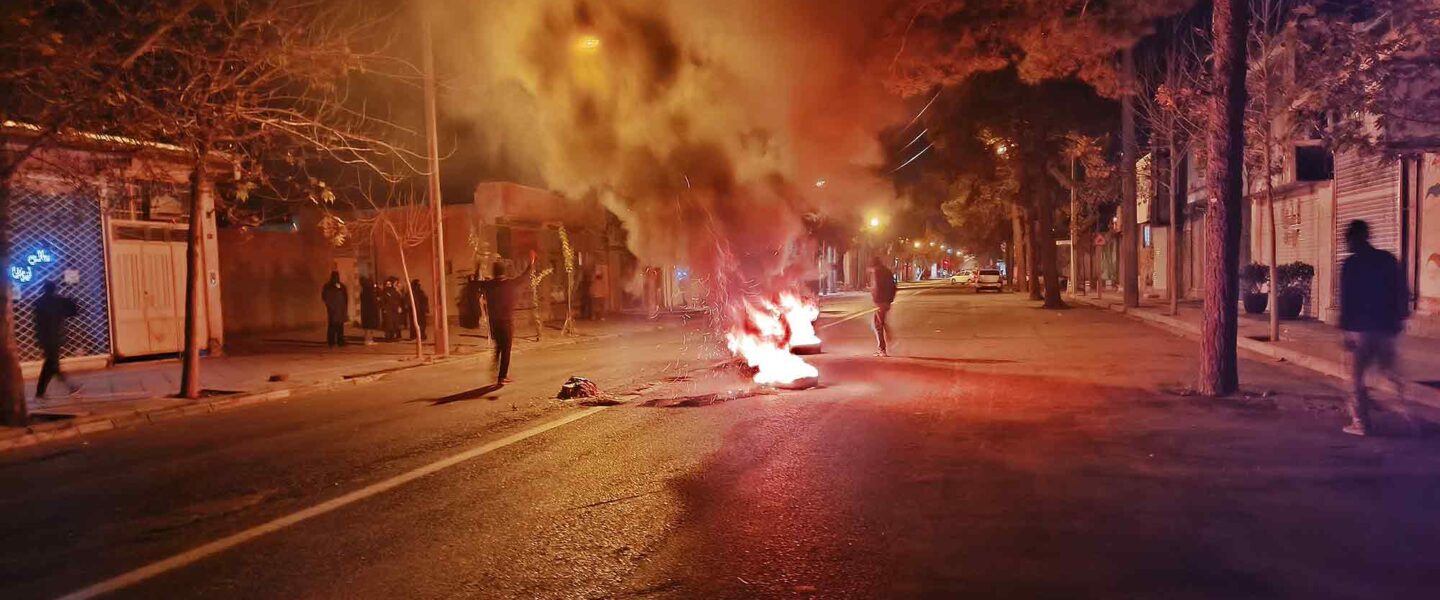
Some 197 security officials were killed in Iran’s mass antigovernment protests in December and January. That was before the government cracked down on protesters, brutally killing thousands.
The question is: Who killed the security officials, and more importantly, who trained their killers, and how did they obtain their weapons?
The answer is relevant for understanding the potential fallout of the US-Israeli military campaign, which seems likely to spark ethnic uprisings that further destabilize the Islamic Republic.
Statements by Mossad, Israel’s foreign intelligence service; Israeli government officials; Mike Pompeo, who directed the CIA and served as secretary of state in Trump’s first term in office; and John Bolton, one of Trump’s first-term national security advisors, suggest that Israel played an important role in the protests turning violent.
Israel’s involvement could be the prelude to the fostering of potential ethnic minority insurgencies in Iran.
Iranian sources suggest that the armed protesters may have obtained their weapons from armed ethnic minority groups, given that the regime’s security forces tightly control the distribution of arms to their own personnel.
Sources close to police personnel noted that the police rank and file are equipped with guns that fire paintballs rather than live ammunition because authorities are unsure of their loyalty to the regime. According to these sources, only the highest-ranking police officers are equipped with live ammunition.
Iran’s assertions that foreigners intervened in the protests echoed testimonies from protesters quoted by the Financial Times, which reported that agitators had mingled with the demonstrators.
“There were groups of men in black clothes, agile and quick. They would set dustbins on fire and then quickly move to the target,” one protester said. Another demonstrator reported seeing a dozen black-clad men “looking like commandos.”
Playing the Ethnic Unrest Card
In recent days, US and Israeli attacks have targeted Iranian military and Islamic Revolutionary Guard Corps (IRGC) facilities in Kurdish-populated areas, including IRGC and army bases, border posts, and prisons populated by Kurdish activists.
This “raises the risk that instability could produce fragmentation or localized violence rather than orderly regime change,” said political scientist Hamidreza Azizi.
Journalist Borzou Daragahi cautioned that “Iran is a powder keg. … Iran has as many if not more ethnic, religious, class, and regional cleavages as its Middle East neighbors. It is also loaded with small arms and young men trained during their mandatory military service to use them. It could easily explode or collapse.”
US officials in the Iraqi Kurdistan capital of Erbil have been in contact in recent days with a newly formed coalition of armed Iraq-based Iranian Kurdish groups, in the clearest indication that the Trump administration may support ethnic-minority aspirations.
The attacks and strategic maneuvering by armed ethnic militants — including Kurds, Balochis, Arabs, and Lurs — suggest that fostering ethnic unrest may be part of the US and Israeli strategy.
The Kurdish coalition includes groups that have enjoyed US and/or Israeli support in the past.
The coalition plans to exploit a potential power vacuum in Iran to establish Kurdish rule in the Kurdish-populated regions of the country.
It called on Kurds serving in the Iranian military and security apparatus to defect and “choose the side of the nation.”
Skeptical of US reliability, the coalition reportedly demanded in a meeting with US officials that the United States create a no-fly zone above Iranian Kurdish regions to cover their operations and demonstrate the US commitment.
The attacks and strategic maneuvering by armed ethnic militants — including Kurds, Balochis, Arabs, and Lurs — suggest that fostering ethnic unrest may be part of the US and Israeli strategy.
The focus on Kurdish-populated areas is part of Israel’s targeting of Iran’s internal security apparatus, which in January opened fire on demonstrators and killed thousands in one of the deadliest crackdowns on protesters worldwide in decades.
The US and Israeli attacks in Kurdish-populated areas are concentrated on Iran’s security infrastructure, including IRGC and military bases, border posts, and prisons populated by Kurdish activists.
Kurdish sources confirmed thatsaid the US and Israeli strikes in Kurdish-populated areas were intensifying by the day.
In response, Iranian drones have struck at Iranian Kurdish positions in northern Iraq, as well as buildings in Iraqi Kurdistan believed to house US military and CIA personnel.
Iranian officials have long believed that the United States and Israel want to see the breakup of Iran as a nation-state. The officials point to past US and Israeli backing for Kurdish and Balochi insurgents going back to before the 1979 Islamic revolution.
The ethnic minorities’ demography and geography magnify the threat of domestic strife in a destabilized Iran. Iran’s ethnic and religious minorities account for approximately 43 percent of the Iranian population.
Their strategic importance stems from the fact that minorities straddle the country’s borders: Azeris in the northwest Turkish-Azerbaijani-Iranian triangle, Kurds in the west along the borders with Turkey and Iraqi Kurdistan, Arabs in the southwestern oil-rich province of Khuzestan along the frontier with Iraq, and Balochis along the southeastern border with Pakistan and Afghanistan. Not to mention the Turkmens in the north and the Lurs in the south and southwest.
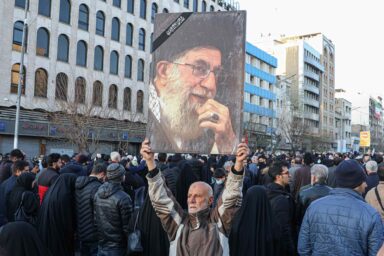
Supreme Leader Ayatollah Ali Khamenei’s killing potentially opens the door to Iran’s descent into political violence, even if the regime has managed a smooth transition, so far, to a new leader with the constitutionally mandated creation of a three-man transitional Leadership Council.
Even so, with the death of Khamenei, Iran has lost the arbiter among the country’s competing political factions. As a result, a prolonged war could create power vacuums as state control weakens, particularly in border regions.
The no-fly zone would be modeled on the no-fly zone over Iraq declared by the United States after the 1991 Gulf War. That zone enabled the creation of an autonomous Iraqi Kurdish region.
The meeting with US officials came as Trump called Mustafa Hijri, the head of the Democratic Party of Iranian Kurdistan (KDPI), amid reports that the CIA was working with the Kurds to foment a popular uprising in Iran.
Earlier, Trump had spoken with Iraqi Kurdish leaders. Likely on the agenda was securing the cooperation of the Kurdish regional government in northern Iraq in funneling arms to the Iranian Kurds.
At a Pentagon news conference on Wednesday, US Defense Secretary Pete Hegseth evaded questions about US support for armed Kurdish groups, implicitly suggesting that Israel, not the US, would be the party doing so.
“None of our objectives are premised on arming or supporting any particular force. What other entities may be doing, we’re aware of, but our objectives are not centred on that,” Hegseth said.
Intelligence sources suggest that the Trump administration and Israel believe that armed ethnic insurgencies could help trigger renewed mass antigovernment protests that would topple the Iranian regime.
For the strategy to have any chance of success, other ethnic minorities like the Balochis and the Arabs would have to join the Kurds. The Kurdish coalition has said it was reaching out to other ethnic minorities, including Balochi and Azeri militants.
As in Kurdish-populated areas, armed ethnic groups have long operated in Iran’s province of Sistan and Baluchistan, and in Khuzestan, the oil-rich region that is home to ethnic Arabs.
In December, Jaish al-Adl (the Army of Justice) – a Pakistan-based group with a history of attacking Iranian security forces – together with other Balochi groups created the Mobarizoun Popular Front to wage an “up-to-date” insurgency against the Iranian regime.
The group said it had killed an Iranian security official in Sistan and Baluchistan on January 7. Earlier, it claimed to have killed other officials on December 10.
Ali Kazem Al-Ahwazi — a representative of the Coordination Council of Ahwazi Organizations, which brings together armed ethnic Arab groups in Khuzestan — said earlier this week that the council was preparing for a “large-scale operation” if and when Iran further destabilized.
“We are waiting for the right opportunity,” he said.
James M. Dorsey is an Adjunct Senior Fellow at Nanyang Technological University’s S. Rajaratnam School of International Studies, Associate Editor of WhoWhatWhy, and the author of the syndicated column and podcast, The Turbulent World with James M. Dorsey.