The Unknowns in Trump’s War Against Iran
Nature is said to abhor a vacuum, but knowing that won’t tell us what will fill it.
|
Listen To This Story
 |
– OPINION –
A friend emailed me a simple question: “US/Israel attacks on Iran, good or bad?”
I haven’t sent him an answer yet, but I already know my short answer will be: “Remains to be seen; stay tuned.”
In a few words, once the bombing is over, Donald Trump will either finally deserve the Nobel Peace Prize he has coveted for so long, or he will have doomed a generation of Iranians to even harsher socio-economic realities of dictatorship and even longer prison terms and torture.
When Donald Rumsfeld served as US secretary of defense, he used to say that there are things that we know, and things that we know that we don’t know. Then there are things that we don’t know that we do not know.
Let me go down that road.
First, here is what we know:
We know that Israel and Saudi Arabia have managed to convince Trump that the timing for attacking Iran was a question of now or never. We know this because they have either said so publicly or it has been printed in mainstream media during the past 24 hours.
Former Israeli Prime Minister Naftali Bennett was asked by the BBC on Saturday, “Why now?” He answered that Iran was hurriedly expanding its ballistic missile industry and that it was moving its nuclear facilities even further underground so that eventually even “bunker-busting” bombs would not be able to reach them. The Washington Post reported that prior to the attack, US intelligence had seen no imminent threat to the US mainland during the next decade.
On Sunday, the Post also reported that Saudi leaders had pushed Trump to take action now. “Saudi Crown Prince Mohammed bin Salman made multiple private phone calls to Trump over the past month advocating a US attack, despite his public support for a diplomatic solution,” the paper wrote.
The urging from Israel and Saudi Arabia to rush an attack against Iran contradicted statements by Oman’s Foreign Minister Badr Albusaidi, who told CBS News’s Face the Nation on Friday that Iran has vowed that it will “never, ever have … nuclear material that will create a bomb.” Albusaidi called the Iranian declaration a “big achievement.” Oman has been at the forefront of nuclear negotiations with Iran, and Albusaidi added that Tehran had also promised that existing stockpiles of enriched uranium would be “blended to the lowest level possible” and “converted into fuel, and that fuel will be irreversible.”
Here is what we know that we don’t know:
We do not know the endgame that Israel and the Trump administration are planning. We don’t even know the roadmap to an endgame.
In a middle-of-the-night video that he posted on his Truth Social account, Trump told the Iranian public that he was giving them a once-in-a-lifetime opportunity to free themselves from repression. He urged them to topple the Iranian regime.
What we do not know is whether Trump and Israel may have incontrovertible knowledge that armed and ready resistance cells within Iran have been trained and mobilized to take over. At this point, that is a crucial unknown.
My concern is that Trump, Israel, and Saudi Arabia may be gambling with the lives of Iran’s demonstrators, who, if they expose themselves now, will very likely be subject to the savage force of Iran’s Islamic Revolutionary Guard Corps and the Basiji militia — a state-sponsored volunteer organization known for brutal repressive actions against anti-government factions.
To be sure, many Iranians inside the country have called for the US and Israel to unleash attacks against the regime in Iran. They did so because they are frustrated, impoverished, and suffocated. Whether the attackers have actually done their homework and considered the eventual consequences remains to be seen.
Another unknown is whether Iran will become a sort of Venezuela-lite or succumb to a Libya and Iraq chaos scenario once the regime is toppled. What will happen if multiple armed factions tear the country apart?
Iran’s society is not a monolith. While I stand to be corrected, I doubt that Iran will end up looking like Libya, with militia-style goons roaming around the country, terrorizing people. Iran has multiple ethnic groups with arms for self-defense, but the country has never had what I would call a “militia mentality,” the Basiji notwithstanding.
I also doubt that Trump can co-opt members of the Iranian establishment the way he did with government figures in Venezuela. It’s doubtful that he can find anyone in the current Iranian regime who would be ready to work with him to form any kind of US-approved government.
If Trump is looking for a leader to head a new government in Iran, it would have to be an outsider, someone from the diaspora willing to return in order to “save” Iran.
For the moment, that seems to be a community of one: Reza Pahlavi, the son of Mohammad Reza Pahlavi, the former shah, who has spent much of his life in the United States. His profile has certainly risen, not only in the West but also inside Iran. Much of that may be due to organized public relations efforts.
The choice of Pahlavi is not hard to understand. Since the fall of his father, Iran has seen three types of opposition insiders: the monarchists, the leftist Mujahedin-e-Khalq (MEK) militia and their sympathizers, and “moderate” Islamists who were once part of Ayatollah Ruhollah Khomeini’s original entourage.The moderates included people close to former President Abolhassan Banisadr and Foreign Minister Sadegh Ghotbzadeh.
Most of the moderates were either eradicated in Iran or died of natural causes in exile. The MEK have lost credibility over the years, and there is no reason to believe that they have any sleeper-cells inside Iran. That leaves Pahlavi.
Trump and allies, such as Secretary of State Marco Rubio, have been diplomatically silent on Pahlavi. Even pro-administration hawks such as Sen. Lindsey Graham (R-SC), frequently referred to as a “Trump whisperer,” have refrained from publicly endorsing Pahlavi.
During a roundtable on the sidelines of the Munich Security Conference last month, Graham was asked point-blank by CNN’s host, Christiane Amanpour, whether he would publicly endorse the monarch-in-waiting.
Looking straight at Pahlavi, who was in the audience and sitting just across from the podium, Graham said, “No,” but then clarified quickly that his refusal to commit himself was “because that is not my job.” The camera captured the rather stoic look on Pahlavi’s face; he rose to the occasion, saying, “I have never asked for a personal endorsement, nor is it the right thing to do.”
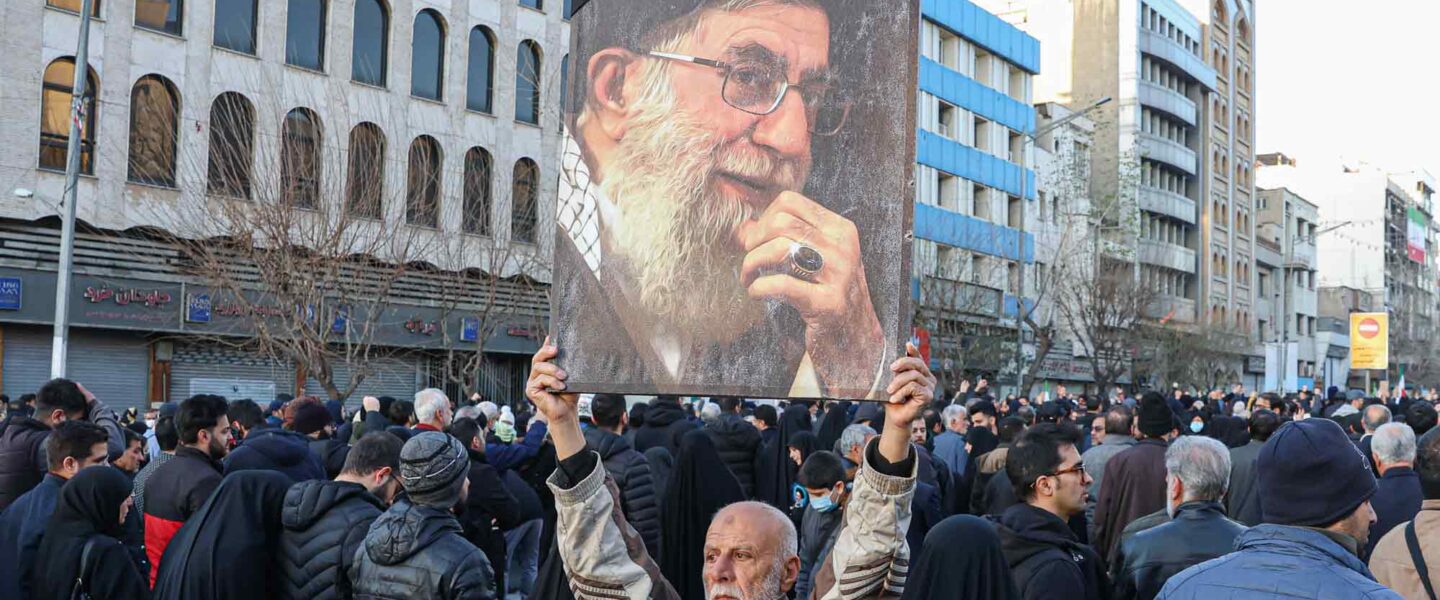
Will the killing of Iran’s supreme leader, Ali Khamenei, along with others in the presumed line of succession, make the fall of the Iranian regime easier? Not so fast, many argue. The Iranian regime is heavily entrenched. It is not for nothing that it has managed to remain in power for nearly half a century.
If the regime does fall, the risk for the government that replaces it would be a return to the squabbling that led to the kind of corruption and incompetence that dominated the tenure of Pahlavi’s father.
It might not be as autocratic as the regime of Mohammad Reza Pahlavi, but it would be a free-for-all chaos. At least, people might breathe free, if only briefly.
As for the things we do not know that we don’t know:
These mysteries could easily turn out to be the deciding factors, but by the time we identify them, it may be too late to change course.
Peyman Pejman is an award-winning, multi-lingual former journalist with extensive work experience in more than three dozen countries in the Middle East, Africa, Europe and Asia. He is a former Lecturer and Associate Professor of Journalism and Communications.