The Climate Fight Without America: Why Hope Isn’t Optional
While America abandons climate action, the world races ahead—and watches in dismay. A look at the cost of US denial and what's happening without us.
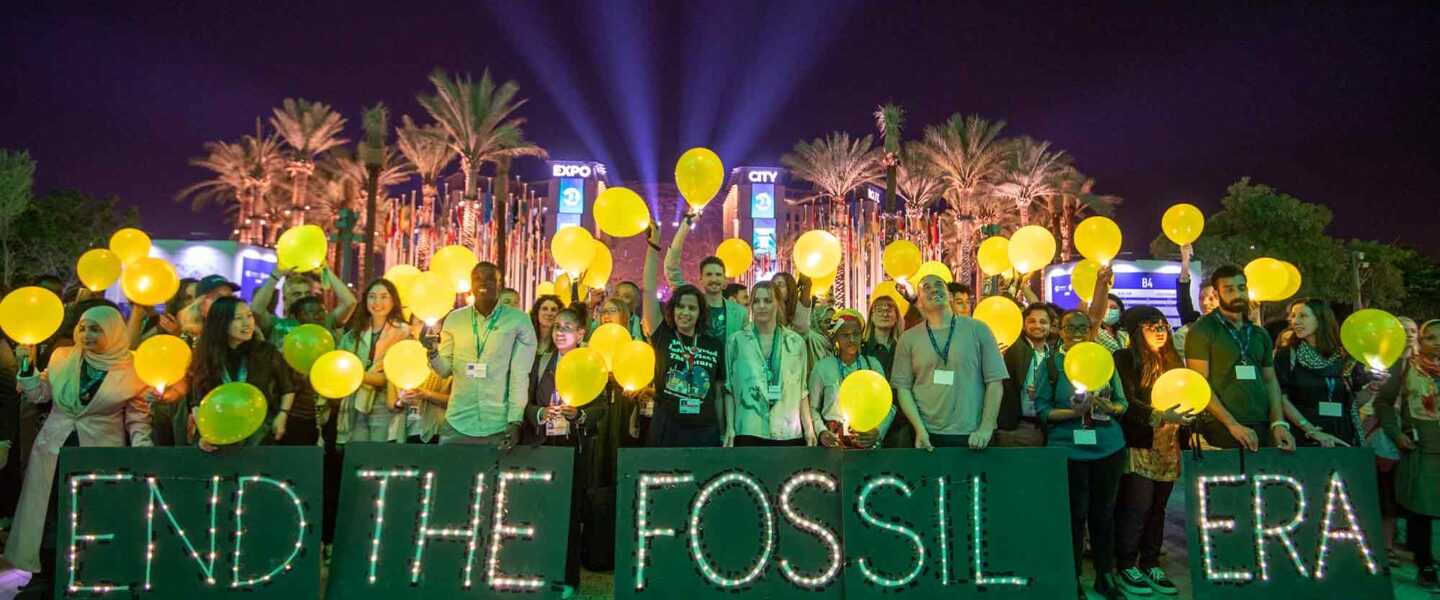
While climate change vanishes from American political discourse, something remarkable is happening in the rest of the world: Beijing, a city once choked by smog, has transformed into an electric metropolis with blue skies. Pakistan has gone from minimal renewable energy to over 25% in just five years. The UK just became the largest economy to end new oil and gas exploration. And the intellectual argument about the reality and existential danger of climate change? That’s been won.
Mads Christensen, the executive director of Greenpeace International, has spent three decades on the front lines of environmental activism. Joining us on this week’s WhoWhatWhy podcast, he brings a perspective that cuts against the prevailing American narrative of climate despair.
The global momentum is real, he argues, driven not by government mandates alone but by market forces that make fossil fuels increasingly obsolete and green technologies simply better products.
Christensen’s optimism isn’t naive. He knows that the three crises facing humanity are interconnected — climate, inequality, democracy — and that solving them calls for patience alongside urgency. “Never forget to be impatient,” he says, capturing the tension between marathon persistence and sprint-level activism.
This is a conversation about sustaining hope through evidence that collective action works—and about what it looks like when you’re winning battles even as the outcome of the larger war hangs in the balance.
 Apple Podcasts
 Google Podcasts
 RSS
RSS
Full Text Transcript:
(As a service to our readers, we provide transcripts with our podcasts. We try to ensure that these transcripts do not include errors. However, due to a constraint of resources, we are not always able to proofread them as closely as we would like and hope that you will excuse any errors that slipped through.)
Jeff Schechtman: Welcome to the WhoWhatWhy podcast. I’m your host, Jeff Schechtman. For more than half a century, we’ve been having a conversation about our relationship with fossil fuels, though it hasn’t always been framed as climate change. We’ve moved through vocabularies: conservation, environmental protection, global warming, climate crisis, climate emergency. The language keeps escalating. The science becomes ever more certain. The consequence is more visible.
And yet here we are in 2026, and climate change feels simultaneously everywhere and nowhere. It’s everywhere in the sense that energy now sits at the center of every major geopolitical crisis: Russian gas in Ukraine; Middle East oil, an endless conflict; US-China competition over the technologies that will power the next century. Climate change has become the underlying text of international relations.
And yet it’s nowhere, in the sense that it’s vanished from American political discourse, just as the consequences become undeniable. The world’s largest historical emitter isn’t just stepping back from leadership, it’s actively accelerating in the opposite direction.
My guest today has spent three decades navigating these contradictions. Mads Christensen joined Greenpeace as a frustrated young volunteer in 1992, inspired by the organization’s willingness to confront power directly. He’s now the executive director of an organization that pioneered the direct-action playbook, making the invisible visible, creating moments that force attention.
But the landscape has shifted. In 2013, when 30 Greenpeace activists were detained at gunpoint by Russian commandos after protesting Arctic drilling, Christensen led the international campaign that secured their release. Now we’re seeing billion-dollar lawsuits designed to bankrupt organizations. Activists designated as undesirable, prison sentences for peaceful protest. The consequences are escalating precisely as the need for action intensifies.
Greenpeace just helped secure a major victory — the UK ending new oil and gas exploration in the North Sea after nearly three decades of campaigning. And yet globally, emissions continue to rise and new projects continue to break ground, which raises the fundamental question: How do you maintain pressure and sustain hope when you’re winning battles, but the war feels like it’s slipping away?
It is my pleasure to welcome Mads Christensen, the executive director of Greenpeace, here to the WhoWhatWhy podcast. Mads Christensen, welcome to the program.
Mads Christensen: Thank you for having me and a pleasure.
Jeff: Before we get into so many issues that I want to talk to you about, tell us a little bit about Greenpeace, about you. You’ve been there 23 years. A little bit about what you have experienced in that period of time.
Mads: I started as a young volunteer right after high school while I did my studies in university on the side, and I think I joined at a time where international cooperation as a driver for solving some of the big environmental problems that the world was facing was working very well. I joined just at the time when the world was facing an existential threat with the depletion of the ozone layer and seeing how the world came together to solve that problem, ban some of the chemicals that were driving that destruction of the ozone layer, seeing international agreements being implemented effectively, was extremely inspiring.
And it was extremely inspiring for me to see how an organization like Greenpeace could build people-power, could build public pressure on the decision makers, making it easier to overcome the obstacles that the industries were complaining about when they said we will lose thousands of jobs, it will be a disaster for an industry that is producing some of these chemicals, etc. But overcoming those challenges and of course seeing afterwards that it was quite easy to substitute these chemicals, it was quite easy to build up new industries that could produce new coolants.
So the optimism of that example really gave me a lot of energy in saying there’s so many other of the environmental problems that we could solve in the same way. Now later, the problems, the interconnectivities of these problems, have increased dramatically and we are of course in a much different place today, as we see on some of the major challenges that we face. But this was inspiring and that was the environment I started in as a young activist.
Jeff: Let’s talk a little bit about where we are today. In many ways, almost every crisis in the world, every issue today revolves around the issue of energy, whether it’s the Russia-Ukraine crisis, the Middle East, the US and China, and now Venezuela. Energy is at the center of all of these discussions and in many ways climate change is part of that discussion and environmental issues as part of that discussion seem to have become a subtext. Talk about that.
Mads: Yeah, that’s true and I don’t know if that’s a new thing. I think for as long as I have lived, or at least been active, energy, fossil fuels have been at the center of many of the crises, the conflicts, the wars we’ve seen around the world. So I don’t know if that’s a new thing.
I think the new thing is that we now have credible alternatives that are much more difficult to stamp up conflicts or war around. It’s very difficult to imagine that there will be the same kind of conflicts over solar or wind. So, I think that’s perhaps the new thing.
I think it’s obviously true that we live at a historic inflection point. The ecological breakdown, but also democratic erosion, the rapid technological acceleration, you know, really intersect to create this moment of profound risks that we are in right now, but certainly also provide a number of opportunities for change. We know that it’s these moments of global disruption or industries being disrupted in different ways that there’s also huge momentum and possibility for dramatic, positive change. And I think this is what energized me and makes me optimistic and hopeful.
Jeff: And you’ve had success recently, in spite of all that we’re talking about, with the UK and North Sea oil and gas exploration.
Mads: No, that’s true. And I think just to take one step back, I think despite the challenges the world is facing and the conflicts that are at a historic high, I think we are still in a situation where we are seeing examples of global collaboration, the right decisions being made.
So I can understand if you’re sitting in the US, and especially if you’re a progressive and can see that it is very difficult to find the hope in building opposition and resistance to some of the craziness we are seeing from the Trump regime. But I think on a global level, I think there’s still a critical mass of momentum and movement in a good direction. I think we’ve seen with the ocean treaty this year, we prevented a bad plastic treaty earlier than that. We’ve seen a global collaboration on chemicals reach legislation. We’ve seen a lot of sort of momentum over the last decades on this agenda.
And I think recently what we’re seeing is that a number of countries — the UK, Norway, Denmark, but certainly also outside Europe — countries that are saying, yes, it does not work for us to continue to extract fossil fuels from the ground. And therefore we put a stop to new explorations.
Denmark, the country that I’m from, formed an alliance, the Boga Alliance, back in 2020 when Denmark decided to put a stop to new oil explorations and permits in the North Sea. That alliance is still growing. And the latest one that joined is the UK, where the UK now says— which of course is a larger producer of fossil fuels than Denmark, is joining that alliance and saying no.
This is also helped by the legal system. We’ve seen an uptick in environmental protection laws over the last decades. And now we as Greenpeace, and together with the rest of the movement, are really using these laws actively to challenge fossil fuel extractions, demanding accountability, demanding that we actually see that countries are putting their action where their word and laws are. And that is helping as well.
Jeff: Do you see a slowing of momentum right now as a result of the US actions?
Mads: The US is obviously a very important country in the world, but it’s also fair to say that over the last decades, the US has not been a progressive force in climate protection as such. And therefore, the steps that the US administration is now taking are not significantly slowing the global momentum.
I think what has really changed over the last decades is now the market is in two ways actively pushing through this transition to a renewable future. One way is that we actually see that prices are coming down on solar and wind, and fossil fuels are becoming increasingly expensive to find and to extract. And that is, of course, dramatically changing the equation.
But the other way we also see the green transition is because the products that are being produced — whether it’s electric vehicles or whether it’s heat pumps or whether it’s other green solutions — are just better products. So consumers want them. And these things are making it almost impossible for the Trump administration or other aggressive players to stop that tsunami of transition that we are seeing globally.
You know, just in the last five years, Pakistan has gone from a few percent of renewable energy to over 25 percent. We see the same in many countries in Africa; South Africa is one of the dominant ones. We are seeing in China the uptake of renewable energy many years ago surpassed the uptake of new coal or fossil fuel. And we are seeing the most likely emission reduction from China. From here on, let’s see. But right now the uptake is so massive and, of course, leading in the world status.
And if we look back what happened 10 years ago and would predict what would the uptake of electric vehicles be, no one would have imagined that it would go as fast as it has. It is just remarkable what is happening right now on some of these things.
And while we can still look at all the trends that are going in the wrong direction, that are going too slow, that we are still heading towards ecological crisis, we do have to find not only hope, but also inspiration in these trends that are going in the right directions.
Jeff: There is also the sense that the intellectual argument is won — that the rest of this is about momentum in terms of the specific nature of progress, but that you are no longer fighting the battle of the intellectual argument about climate change.
Mads: Yeah, I think that is absolutely true. And I think, despite that, we have a cost-of-living crisis in so many parts of the world — that the end of the month concerns in many ways are as big or even bigger than the, you could call them, the end of the world concerns.
The fact is that all over the world, when you look at what is on people’s mind, what they’re concerned about, what they fear, climate change remains unchanged, high on that list. Other concerns have gotten even higher, but the concerns and the willingness and eagerness to see politicians and corporates act and be accountable for the destructions they’re doing is unchanged and is still increasing in parts of the world where it was low before.
So in that sense, we still have a sense of urgency, a sense of people wanting to see these problems addressed meaningfully.
Jeff: You talk about the past five years — was there a single turning point, something that really put this momentum in play, in the sense that you talked about?
Mads: Well, I think that Greenpeace, and me personally also, have always had an understanding that this is a marathon, right? We started to talk about climate change in the nineties and it has gone, in my opinion, incredibly slow with the change and frustratingly slow. But understanding that it is a marathon and there’ll be ups and there’ll be down.
I think we all also understand that, that at the time when climate change and the planetary crisis would become apparent for the vast majority of people in the world, at that time — unfortunately, due to the energy and the planetary systems, due to the time it takes for rising temperature to actually result in massive natural disasters, et cetera — then there would be a risk that it’s almost too late to fix it, right?
I think right now in around — yeah, maybe five years ago in 2019, 2020 — a lot of different parts of the world were at the same time hit by some of the impact of the planetary crisis. Now many parts of the world and the global South have seen these impacts for a long time.
I’m from Denmark. I lived in Greenland. In Greenland already back in the late nineties, we started to see some of the huge impact of climate change with the melting glaciers, sea ice disappearing, and the hunters on the ice could not go out and find their prey. So we saw the impacts in some parts of the world, but the vast sort of majorities — whether it’s in Europe, in the US, in Asia — probably didn’t feel climate impact before 2019 and 2020.
That caused quite a shift in public opinions and demands for actions. And I think that’s why we saw a huge momentum. And I think that was also the case in the US in those years. And I think there were a few years where we definitely hoped that that would translate into a much accelerated action path. And it did in some places, including in China and Asia, in Africa— but of course, lagging behind and in Europe as well, but of course, lagging behind in the US.
Jeff: And to what extent do you think that some of that success has really planted the seed of that there’s no more need for the kind of hope and action that you’ve talked about in the past?
Mads: I hope, and I think that this has inspired and energized a generation to accelerate and do even more, because I hope that a lot of people have seen that it actually works. It works when you work together, when you demand change, then change can come and you can actually stand up to some of these forces that are holding us back.
I think the way I see it is that our opponents in many ways, you know, sow fear and division in order to maintain their power and privileges. And I think Greenpeace and our allies, we’re telling stories of hope and collaboration, humbly uniting forces in order to bend this long arch of history towards justice and equity and sustainability. And that’s just a much more appealing story and journey to be on.
So I have great confidence that this is also an experience that many of the young people who participated in the youth movements three, four years ago, many of the progressive companies that took meaningful action in order to reduce emissions, many of the governments that have seen that it’s actually an economic benefit to do these transitional steps. There are jobs, there are transition possibilities that have economic benefits as well. I think we have sowed enough seeds and seen enough evidence of that for that to be a meaningful journey for many, many countries around the world.
Jeff: Do you think you provided a model for other organizations and other issues that others can follow?
Mads: Well, it’s a long time ago that we in Greenpeace saw ourselves as a lone fighter or lone hero on this journey. I mean, we have for more than a decade now really embraced the notion that we will only be able to sustain momentum, to be part of a change journey, if we do it together with key parts of society.
That means allies who are like-minded in many ways, but it’s also the untraditional allies like progressive industries, like the labor movement. And I think a big part of our effort is about building those connections, building those bridges, ensuring that we truly are a diverse and powerful movement that can continue to build people power in order to put maximum pressure, holding polluters accountable, holding governments accountable for their actions. And I think that’s how we see our role, and that’s what we’re trying to do every day.
Jeff: And talk about the patience that goes along with that, because that seems to be an important part of it. It took 20 years to get the Ocean Treaty in place, a long time to secure this North Sea exploration ban that we talked about earlier. These aren’t things that happened overnight.
Mads: No, I think that’s an important lesson also for the younger generations that are joining this fight in different ways — to understand and to be patient. And that’s, of course, extremely painful in a situation where you know that the one thing we don’t have is time. So there is a conundrum and there’s a tension between those two things, and that’s why we should never forget to be impatient and to demand immediate action.
And I think that’s where we need to constantly look for any acceleration point that we can find out there. And that’s why we cannot afford to waste time on getting also the laggards or the slow movers with us before we move forward.
So it is a very, very important aspect, the time aspect, when we have a situation where we know we’re running out of time, we’ve used the emission carbon budget of the atmosphere and we already have surpassed some of the planetary boundaries that we are so eager to protect.
Jeff: Talk about the impact and reliance on technology that a lot of people talk about as a potential solution to some of this.
Mads: Well, in my experience, the conversation around technology often led us into inaction and waiting. And I think we’ve seen that way too often when it comes to the talk about the role that nuclear energy or fourth generation nuclear can play, whether we talk about AI or we talk about some of the other areas where there is huge investment going in right now — fusion energy as well.
So I think we have to be super careful, and we have to really internalize the fact that right now we have the technologies we need. They are proven to be extremely effective — whether it’s energy efficiency, whether it’s renewable energy, whether it is some of the materials that we know needs to replace the fossil fuel-based materials that we surround ourselves with. These all exist. There is no excuse. This is all about the political will and the willingness to progress these solutions at pace and at scale. So we have to be extremely careful.
That doesn’t mean that there are no possibilities in technology and that doesn’t mean that we shouldn’t research them, invest in them, see what they can do for us. But let’s please not wait for a golden technology solution!
I think some of the individuals that have been proponents for this — Bill Gates or other people who’ve been proponents for technology will solve these problems for us — I think they’ve also realized that that probably takes longer than the timescale that we have.
And I think this is an extremely important realization and I think we really need to pay attention to what happens when China is building— and I’m mentioning China because they are, yes, they are driving this in a domestic setting, but right now they’re also leading on the exporting of these technologies to the world. So when they’re implementing around 400 or 500 gigawatts, corresponding to perhaps 300 or 400 coal plants a year of solar and wind in China every year at an accelerating scale, then they have shown the way for how fast this can go if we decide to do that.
Jeff: Talk a little bit about China and what you see there and what you worry about and what’s positive as you see it.
Mads: Well, there’s obviously many things to be concerned about when it comes to the political systems in China, no doubt about it. I happened to be in Beijing half a year ago and I hadn’t been there since 2009. That was the last time I was there. In 2009, I came to a Beijing that was engulfed in smog. It was noisy. It was a difficult country to be in, a difficult city to be in, in many ways.
When I was there six months ago, I came to a completely transformed city. It was green all over the place. All public transport was electric, all two-wheel transport was electric, 50 percent of the cars were electric, there was blue sky. Technology had improved the easiness of everyone to live in the city, and I saw a complete transformation of a mega city in the world.
I had the same experience coming to both Jakarta, but also to, of course, Singapore and some of the other cities in Asia. Having the pleasure, for example, to have been four or five times to the US this year because we’ve had a major legal fight in North Dakota, seeing the difference between some of the American cities, or even the European cities, to those experiences that I have in Asia is something that I would hope many more people will have a chance to experience. Because I think it’s eye-opening because it really talks to not only the scale of change, but also to the pace and speed of change that is possible if you decide to do it.
Jeff: Talk a little bit about that and why others haven’t done it at that speed and that pace as you see it.
Mads: I think, again, this is not only about China. I think we’ve seen a number of cities and a number of countries where this has happened. The country that I live in, in Europe, the Netherlands, the country that I’m from in Denmark. In Denmark right now, we have surpassed the 80 percent of the energy mix that is from wind and solar and we have right now an uptake of electric vehicles of more than 60 percent. We see that practically all over Europe right now. It’s not only China who can do it at speed and pace.
Of course, China has some different ways that make it easier for them to do infrastructure projects like the— I think it’s 20,000 miles of high-speed train network that they have built now. They can do that in an autocratic setting with less public participation. That’s not what we want, of course, but we do want to see these technologies, these solutions scaled at the pace that is needed and luckily we’ve also seen democratic countries do it at that pace.
I mentioned some of them before and I think we just need to be sure that we understand that this cannot be driven by market alone. We need to make absolutely certain that we also say what kind of technologies we don’t want.
We don’t want fossil fuels. We cannot allow investments going into fossil fuels. The International Energy Agency came out with their assessments a few years ago where they said right now we don’t need to extract or to open up new extraction fields for fossil fuels. The logical consequence of that would be that every country in the world says no more explorations, no more exploitation licenses given to fossil fuels. Now we have to ensure that we divert all investments into the solutions that we have. That would be an example of a policy that would be very helpful in order to accelerate the transition.
Jeff: You’ve mentioned generational change. Talk about that and what you have seen over your time doing this work.
[00:26:04] Mads Christensen: Well what I experienced in 2019 and 20 when we in many parts of the world saw the youth movements — the Greta Thunberg, Fridays for Future, many other youth-led initiatives that put enormous pressure on not only the governments and the corporates but also on the older generations and ask difficult questions of them about what kind of world that they were passing on — what I saw there was a willingness to understand that these crises that we are facing as a planet, the planetary crisis, the end-of-the-month cost-of-living, inequality crisis, that these are interconnected.
It’s very difficult to persuade large parts of the populations to be serious about climate change or the biodiversity crisis with the corporates. All the countries are not held accountable, are not forced to pay for the pollution. So understanding that these crises are interconnected and seeing that I think has been very helpful and it’s very important in order to address some of the systemic drivers behind the planetary crisis.
For the boomer generation, for my own generation a little bit younger than that, we grew up in a time where the environmental problems were very much end-of-the-pipe problems, right? That could be solved with stopping the direct pollution from a factory or putting an end to burning a specific substance, right?
But the problems that we’re facing now are interconnected and complex in a way that needs us to find solutions that are also interconnected.
Jeff: Do you ever tire of the fight?
Mads: I find hope and optimism in the fact that I constantly see that change to the better can be done, is possible and does happen.
If we organize, if we stand together, if we collaborate in alliances, then our story remains much more inspiring, much more appealing than those forces on the other side, whether it’s the fossil fuel companies or the agro-industrial complexes or those forces who want to maintain their power and privileges, who don’t have a compelling story and don’t have a convincing way of attracting or proposing solutions.
So I feel optimism and energy from that fact.
Jeff: Mads Christensen, I thank you so much for spending your time with us.
Mads: My pleasure. And thank you very much.
Jeff: Thank you. And thank you for listening and joining us here on the WhoWhatWhy podcast. I hope you join us next week for another WhoWhatWhy podcast. I’m Jeff Schechtman. If you like this podcast, please feel free to share and help others find it by rating and reviewing it on iTunes. You can also support this podcast and all the work we do by going to whowhatwhy.org/donate.