Democracy’s Pulse Is Beating — But For How Long?
Can democracy survive computerized vote counting? Systemic and man-made vulnerabilities in our election infrastructure may threaten integrity.
November’s elections in New Jersey and Virginia showed that democracy still can work. Against the authoritarian tide, voters showed up and democracy delivered results that mattered.
But before we celebrate, ask yourself: What happens when those in power today realize they’re losing ground? What happens when 2026 looms as a potential reckoning?
We have 50 separate statewide election systems. Fifty potential pressure points where the machinery of democracy could be compromised. And while most local election officials are honest and competent, the equipment they depend on tells a different story — a story of corporate consolidation, partisan control, and vulnerabilities that computer experts have been afraid of for two decades.
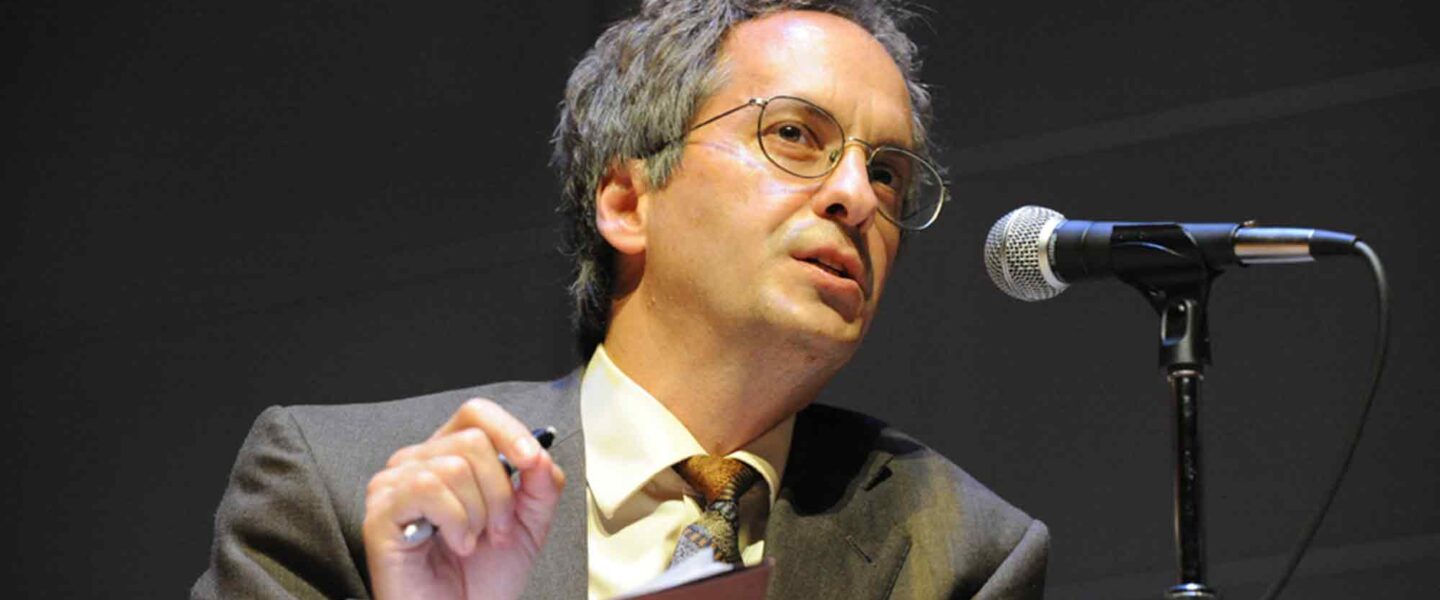
Our guest on this week’s WhoWhatWhy podcast, Jonathan Simon, senior editor at WhoWhatWhy and author of CODE RED: Computerized Elections and the War on American Democracy, has spent more than two decades tracking the fault lines in America’s computerized voting infrastructure. What he’s found raises uncomfortable questions about whether our elections truly reflect the will of the people — or something else entirely.
From what he calls the “red shift” phenomenon that appears consistently in competitive races to certain audit systems that “fix” potential iceberg tips rather than flagging them for deeper investigation, Simon walks us through evidence that challenges our most basic assumptions about electoral integrity.
The question isn’t whether we should lose faith in democracy: It’s whether we’re willing to demand the transparency and verification systems that would let us keep it.
 Apple Podcasts
 Google Podcasts
 RSS
RSS
Full Text Transcript:
(As a service to our readers, we provide transcripts with our podcasts. We try to ensure that these transcripts do not include errors. However, due to a constraint of resources, we are not always able to proofread them as closely as we would like and hope that you will excuse any errors that slipped through.)
Jeff Schechtman: Welcome to the WhoWhatWhy podcast. I’m your host, Jeff Schechtman. For months, we’ve been holding our breath, watching what seemed like democracy’s slow fade to black. The authoritarian playbook appeared to be working. Institutions bending, norms shattering, the very machinery of self-governance grinding toward a halt.
But then something unexpected happened: New Jersey, Virginia, elections that matter, results that count. Democracy, it turns out, still has a pulse.
History has this way of humbling us. Just when we’re ready to write the eulogy for democratic governance, just when the inevitability of autocracy seems carved in stone, the people show up at the ballot box, remind us the arc bends, but it hasn’t broken, not yet.
But here’s where the story gets interesting and where our hope must be tempered with vigilance. Because the very fact that elections still matter, that they can still produce democratic sweeps raises an entirely new question. What happens when those in power realize they’re losing? When it becomes clear that 2026 could be a reckoning, what tools will be deployed to prevent it?
We have 50 separate statewide election systems, 50 potential pressure points, 50 places where the machinery could be jammed. Stop the Steal was the Trump rallying cry in 2020. There’s nothing preventing it from becoming a democratic rallying cry in 2026. Except the fundamental difference as to whether the claims are true. And that’s precisely what’s at stake, not which party wins, but whether the results reflect what actually happened.
Presidential candidates are already positioning themselves for 2028. Democratic primaries for the 2026 congressional elections are taking shape. The pieces are moving across the board, but the board itself, the integrity of our electoral system — that’s what we need to be watching now.
My guest today has been tracking these fault lines, mapping the vulnerabilities in our democratic infrastructure, and asking the uncomfortable questions about what happens when elections matter too much for some people to let them be fair.
Jonathan Simon, senior editor at WhoWhatWhy and co-author of CODE RED: Computerized Elections and the War on American Democracy, joins me to talk about whether democracy’s pulse can survive the stress test that lies ahead. It is my pleasure to welcome Jonathan Simon here to the WhoWhatWhy podcast. Jonathan, thanks so much for joining us.
Jonathan Simon: Jeff, thanks for having me. This should be fun.
Jeff: Well, it’s great to have you here. When we look around, we do have 50 separate electoral systems for the 50 states, and we have 4,140-something counties where these elections take place. When we think of it, it is that diversification, really, the fact that it is so spread out, that often gives people a sense that it can’t be rigged, it can’t be any problems, everything has to be all right, because it is so widespread. Talk about that first.
Jonathan: Yeah. You know, different countries do it different ways, and we’re among the most decentralized. And as you say, that’s given a certain amount of maybe optimism about whether elections here are as vulnerable as in other places. The problem with that view is — and it’s true, that there is that local administration in the way we do it, the county level, the state level — but the equipment is very centralized, and the computers that are used and have been in use for the past couple of decades are manufactured by just a couple of companies, programmed by those companies and their satellites.
So, when you look in the infrastructure and the inside, under the hood, how votes are actually being recorded and counted, there’s actually a great deal of, I wouldn’t say quite uniformity, but there’s a lot more centralization than one would think, based on the fact that you have the 50 states and the thousands of counties.
And to add to that, there is a significant partisan control over the companies that manufacture and distribute and program the machines. And that has become even more the case recently, because Dominion Voting — which, as you probably recall, sued for defamation, having been singled out by Trump and Fox News for being somehow anti-Trump — was sold lock, stock, and barrel to a new company that is basically run by a Republican operative, Scott Leiendecker. It’s called Liberty Vote.
So, now you have somewhere between 80 and 90 percent of the votes being counted on machines that are either ES&S, which has a long, long Republican taproot, or Liberty Vote, which is a newcomer, but is also very much a right-wing pedigree.
Jeff: Talk a little bit about the kind of machines these are, how they work, how voting systems work today. Because when you talk to election officials, one of the first things they will tell you, besides the decentralization argument we were just talking about, is that these machines operate independently, that they’re not connected to the internet, they’re not connected to a central place.
Jonathan: Well, it’s really quite patchwork in that sense. I mean, we do have optical scanners that you basically put in a paper ballot — a voter-marked paper ballot, or a machine marked paper ballot — and it tallies the votes based on an optical scan. You also have ballot marking devices, which create the vote for you, and have their own vulnerabilities. There’s still some direct recording, or DREs, which are basically touchscreen, where the vote never sees really any, any paper at all, any durable record. And it’s kind of a mishmash of that. Very, very little hand counting.
And so it’s basically all one sort or another of computer. And these computers— like, if you think of an opscan, you’d say, well, you know, that’s pretty basic. But an opscan has somewhere between 500,000 and 700,000 lines of code, directing it on how to read those ballots. And unfortunately, the claims that have been made that these opscans are freestanding, or firewalled, or whatever, and they’re not connected to the internet— a lot of holes have been poked in those claims. There have been, you know, videos taken of the routers next to the opscans, and the wires leading from the opscan to the router. And of course, it doesn’t have to necessarily be a router, it can be Wi-Fi; there are lots of ways of hooking them up. So those denials themselves are somewhat dubious.
And there’s a great deal that’s just unknown. I would say there’s too much unknown to be able to say, whew, you know, we’re out of the woods, there’s no problem here. There’s no way this could be infiltrated. The fact is, there are many vectors for infiltrating on all of these types of machines. Ballot marking devices are probably more vulnerable than opscans, and DREs are the most vulnerable of all.
But all of those methods, they’re all computerized. And they’re all susceptible to various forms of interference, which can be potentially from outsiders, getting in through a network, or from insiders, creating the programming initially or changing the programming.
The fact is that it’s not easy to tabulate a national general election. You’re looking at, you know, 100 million, upwards of 100 million votes. They come like little tributaries, little streams into larger rivers. And at every stage, there’s a transfer of data. And there is an aggregation process going on from very little to a little bigger to bigger to final results, which then, you know, we pretty much see on television or on streaming, or however we see them, and basically take at face value.
But those have come from a lot of different machines with a lot of vulnerabilities. And I should say those vulnerabilities, that’s not conspiracy theory. I mean, that’s basically been verified by computer experts, you know, starting early on, starting at least 20 years ago, that these vulnerabilities exist.
Whether or not they’re being exploited in fact is another issue, something that’s very difficult to prove. And that’s where it gets into the realm of, I would say, conspiracy theory.
Jeff: And to what extent are local election officials necessary to encourage these vulnerabilities? In other words, can these vulnerabilities happen without the consent of local election officials?
Jonathan: That’s a good question. There are two problems with local election officials. And I should first say that from all my experience and my colleagues’ experience working in election integrity over the last several decades, the vast, vast majority of local election officials are honest, and they’re honorable, and they’re doing the best they can to run a fair election. There are probably not very many bad eggs, and that probably goes up and down the partisan spectrum. It probably holds for blue states and red states and blue counties and red counties. The vast majority take their responsibilities seriously.
There are two problems. One problem is that they don’t have the chops, the tech chops, to really know what’s going on in those computers. Again, with very few exceptions, the vast majority of them are dependent upon their contractors, which means they’re dependent directly or indirectly on those vendors that I talked about, ES&S and Liberty Voting, and their satellite contractors. And we’ve kind of kept track of some of them. There’s not a lot of visibility. There’s not a lot of transparency in the election equipment industry, whether it comes to the production of these machines, to the design, the programming. These are generally not publicly traded companies. There’s not much they have to disclose, and there’s a great deal of secrecy. So we can only tell so much.
But from what we’ve seen, there’s a lot of political slant and bias to the satellite companies, the ones that tend to be more hands-on, with updating, upgrading, patching, doing all the tech work that has to be done to keep these machines functional. And there is some significant political slant or partisan slant to many of those companies.
So the election officials, for the most part, just have to let those technicians and those tech folks in the door and let them do whatever it is they do. And they really have very little basis for evaluating whether that’s been honest. So that’s problem number one.
Problem number two is that election officials almost across the board, their main goal is to run a quote-unquote “clean” election. And so if there are any signs that the election is compromised in any way, their first reaction is not to be public about it, not to make it public, but to sort of “fix” the problem and move on — so that nothing really comes out about the things that have gone bump in the night.
And that brings us to the issue of audits and recounts, which is a pretty important aspect of all this.
Jeff: Before we get to the audits and recounts, I want to go one step further in all of this, that these machines, these companies, Dominion and ESS, have been around for Democratic victories, Republican victories. We have seen winners and losers on both sides in the period of time that these machines have been the primary source of voting results, and in fact, that these machines have been operated by these companies. Talk about that.
Jonathan: Well, that’s one of the strongest or first arguments that comes to people when we claim that there may be some sign that there’s been manipulation of elections. And when we say manipulation of elections, some of that is overt in the form of illegitimate forms of voter suppression, or even legitimate, quote-unquote, legal forms of voter suppression, where those are targeted and those are aimed at certain constituencies: voters of color, students, urban voters. There’s been a lot of voter suppression on the part of the Republican Party, and it’s only growing stronger right now for various reasons. So that’s one component of it.
But when we’re talking about potentially the harder-to-see component, which is the possibility of altering vote counts covertly, the argument has been, well then, why don’t they win every election? If they can rig elections, why would they not rig all of them? Why would you have a President Obama? Why would you ever have a Democratic majority in Congress? And, you know, the swinging pendulum has been part of American politics basically from the very beginning. And we expect the pendulum to swing, and it does to some extent.
But if you look at the last 20 to 30 years, it has swung, but it’s swung in a weird way, such that it’s kind of nudged itself and precessed itself further and further to the right when it comes to control of key aspects and branches of government, both at the state level and at the federal level.
Jeff: Given that there are certainly expectations as a result of polling; given that, as you say, most local officials are competent and not corrupt; and given the level of expectation we often see, doesn’t all of that together mitigate against any kind of rigging going on?
Jonathan: Let me put it this way. There are polls out there, there are expectations out there, there are baselines out there. Assuming the vulnerabilities are there, and assuming that there is not much ethical restraint when it comes to exploiting them — and I think both of those are fairly solid assumptions — the question becomes, how much can you get away with and when do you do it?
As any good poker player knows or any good pool player knows, you don’t get very far if you sink every shot and if you win every hand, if you pull aces out of the sleeve to win every hand. You’re pretty selective.
There are some constraints on how much you can alter election results. They have to sort of be within a riggable zone. And if you reverse a landslide and, you know, go against the polls such that there’s a disparity of 20 percent, you’re going to get investigated. There’s going to be uproars. The risk of detection becomes way higher.
So there’s a kind of risk-reward equation, or way of evaluating it, where basically if I’m looking to rig elections, I’m going to be fairly selective and not bite off more than can be chewed. You’re going to probably aim to shift, in one way or another, however many votes you can, or need, within an acceptable risk of detection.
And that algorithm comes out differently for different elections. An election like 2008, three days before the election, Karl Rove was claiming that John McCain was going to win. The day before the election, so just two days later, he “changed his mind” and came out and publicly said Obama was going to win. The scuttlebutt on that was that the plug was pulled on an attempt to basically steal that election because the gap was too wide. Now, is that fact? Is it true? Is it provable? Are there receipts? Probably not. That is just what bubbled up.
Jeff: It’s bubbled up within a certain universe. But is there any, even absent receipts, is there anything to indicate that there’s something else going on that can support this argument that, as you say, just bubbled up?
Jonathan: The pattern from election to election has been a consistent redshift. And redshift, it’s a term of art. I borrowed it from cosmology and coined it back in 2004 in its application to election integrity.
Redshift means when vote counts come out to the right of baseline expectations — exit polls, tracking polls, prior elections, whatever evaluations have been made. But generally, we’re looking at polls. And at that time, in particular, we were looking at exit polls. Exit polls were stronger back then, and they were done in all states rather than just a few states. So it created a better baseline to work with.
And, you know, the redshift has been, I wouldn’t say ubiquitous, but it has been persistent over the last 25 years. And it has not just been persistent, but it’s been targeted in the sense that — and this is where it gets a little weedy, and I apologize — but there are redshifts, and there are redshifts. And when we see that redshifts are concentrated, heavily concentrated, in competitive elections that matter — in other words, in swing states, in battleground states, in key Senate races — and in these venues the redshift is egregious, but nationally, let’s say, it’s modest. We call that a second-order comparative.
You basically have disparities. The redshift is a disparity. It’s a basic disparity between polls and vote counts. But then you have a disparity of disparities. The redshift is big here, but not over there.
It’s easy to explain the simple disparity. Well, the polls were off, or stuff happens. You’re not going to get complete accuracy. Well, it was just outside the margin of error. Those are easy to explain away. And our inherent bias is to trust vote counts and not trust polls. So it’s an easy win for the nothing-to-see-here-folks people.
But when you have a disparity of disparities, when you have that second-order comparative — and that’s what we found in 2004, 2010, 2014, 2016, 2020 even — that is a different matter!
Because then you have to explain why there’s this redshift, red flag, this big indicator, and it only seems to be focused on, or targeted to, or popping up where you would expect a rigger to be interested in shifting results. And that becomes harder to explain with benign or organic explanations.
Jeff: Talk a little bit about the polling and the way the polling in the next election is impacted by the results of the previous election, and the way those polls are adjusted based on what previously happened.
Jonathan: You know, pollsters, they’re in business to stay in business. And you don’t stay in business very long if you get, consistently, elections wrong in the same direction. You are then considered to be either just a partisan hack or not know what you’re doing, because you keep making these false predictions.
So pollsters pay very strong attention to error correction, or what they perceive as errors that need to be corrected. They look at how they predicted an election, what methodology they used, how they went about sampling, how they went about weighting that sample. Weighting by gender, by race, by partisanship, by age, by all these factors — samples get weighted to be the pollster’s best guess of a representation of the actual electorate.
That’s a key part of polling, and it’s not dirty; there’s nothing wrong with it. There’s a certain amount of art and a certain amount of science to polling. Now the election happens — you realize there was a redshift; as a pollster, you got it wrong. Going into the next election, you’re going to change your parameters, you’re going to change the way you sample. And how are you going to do it? You’re going to do it to include more red or Republican voters in your sample — by whatever means you have to do that: redefining what it means to be a likely voter, screening, weighting, just simply up-weighting your Republican respondents and down-weighting your Democrat or independent respondents, etc.
You do what you gotta do to try to get that next election right based on the history of the election that just happened and maybe the election before that. I’m oversimplifying a bit. Pollsters work really hard at this.
Jeff: What pollsters also have to take into account is not just the previous election and shift accordingly, but every election, especially if we’re talking national elections, and it’s even true in in terms of local elections: Every election brings its own electorate. And the electorate in one election doesn’t necessarily look exactly like the next one or the one after that. The turnout is different and the nature of voters is different.
Jonathan: Exactly. It’s a hard job. And one of the reasons we rely not on individual pollsters, but on aggregates of pollsters is that we recognize it’s — and by we, I mean the public in general, as well as analysts like myself — we recognize it’s a hard job. And we don’t want to rely on any individual because there might be bias there. There might be errors of methodology. They might just guess wrong about what the electorate’s going to look like.
But when you get 20 or 30 reputable pollsters and the aggregators weight those pollsters by their reputability — that means looking into their methodologies, checking for biases, and also looking into their performance record — those aggregates are, are pretty strong from a statistical standpoint. That having been said, it is a hard job and there is a certain amount of guesswork in terms of who’s going to show up at the polls.
Jeff: Talk a little bit about how that modeling works. How does a pollster decide which electorate model he’s going to use for a national election, a local election, a statewide election? Obviously those situations are all fundamentally different in terms of what the electorate looks like.
Jonathan: One thing that’s pretty basic is that presidential elections model presidential elections and midterms model midterms. You wouldn’t use, for instance, a presidential electorate profile to set up a poll for the next midterm election, because different constituencies come out with different rates of turnout for these types of elections.
As we’ve gotten into a chaotic period in what I call the Trumpocene, this has gotten even more difficult because there are strong factors that drive turnout such as in, for instance, the 2018 election, when voters had seen Trump for two years and he had done all sorts of things, from family separation to just a whole bunch of things that now, in retrospect compared to Trump 2.0, look kind of quaint, but at the time they were very provocative.
You had an election in 2018, a midterm election that was off the charts in terms of turnout. It was supposedly a big Democratic landslide, although if you actually look at it, they wound up losing Senate seats very improbably, even though they gained something like 40 House seats. So even there, [a rig] doesn’t always look like a win. Sometimes it looks like a mitigated loss. You’ve lost less than you were expected to lose.
That’s another form of positive outcome from the standpoint of somebody attacking the electoral system.
There are many challenges for pollsters, but they work very hard at it. There’s a very good book, by the way, came out a year or so ago, by John Zogby. He is a prominent pollster and he goes very thoroughly into the challenges pollsters face and how he and other pollsters attack those challenges and try to overcome them.
Jeff: The reality is that this is the system that we have. As you say, it is not a perfect system. It has a lot of limitations. It has a lot of potential for mischief, but what would work better? What kind of baseline could we look at that would be more effective at this point, realistically?
Jonathan: What you’re left with at the end of the day is an imperfect process. It is not the ideal baseline. The ideal baseline would be a set of hand-marked paper ballots where you could either hand-count them initially or come back to them and hand-count them and say, okay, this is our baseline. This is what the voters actually indicated race by race, contest by contest. This is who they indicated and we’re going to tally it all up, however long it takes us. And then we’ll know what the truth is.
Polling has vulnerabilities and issues and challenges and computerized vote counting has vulnerabilities and issues and challenges. And the case I would make is neither one is sufficiently reliable that we can just say, okay, that’s the truth. That’s how we’re going to run our country. We’re going to base our democracy on these results because we have faith.
There is not enough basis for faith in polling and there’s not enough basis for faith in computerized recording and tabulation of our vote counts.
Jeff: Talk about the value of post-election audits, which we see happen in many places and we hear about it. And that combined with the fact that in this day and age, there are so many eyes on everything, literalized, virtualized, et cetera, that it seems that it would be so much harder today for any foul play to take place. Talk about that.
Jonathan: Yeah. The “eyes” part is true to some extent. I mean, there’s your whole internet and there’s all sort of self-appointed monitors and watchers and analysts and downloaders and whatnot.
Unfortunately, though, much of the electoral process takes place behind a curtain. In the case of the computers, it’s a cyber curtain. In the case of the audits, very often it’s a literal curtain — which is to say that the audits themselves are not highly transparent. And very often they’re not publicly observable.
There is potentially tremendous value in audits. Audits in theory are a great way, and they’re a necessary way, to verify elections. You need verification of computerized counts, because no matter how many observers you have, no matter how many people are sitting in the election office or in the precinct or at the central counting area in the county, they can be looking with a million eyes and they can’t see what’s actually happening to those individual votes.
Those individual votes are zeros and ones, or they might be hexadecimal. They’re in computer code and they’re doing their dance in the dark. And that’s just the reality of it. All those “observers” can’t see any of that.
Jeff: So does that negate the value of audits or is there a way to do audits that actually can be constructive?
Jonathan: If you have a rigorous, well-designed audit, you have a chance to both detect and deter exploits to alter the vote counts, because you have the hard evidence, you have the ballots, voter-marked — hand-marked, one would hope, um, although that’s not true everywhere — and the auditors can sit there with them. And if they see a disparity in a randomly selected precinct, a randomly selected county, in whatever percentage of total votes they’re looking at — it doesn’t have to be a tremendously high percentage.
And then if they respond to that disparity by saying: “Whoa, that looks like a problem. It may be an error, may be fraud, maybe we’ve got it wrong. It requires escalation.” It requires expansion of the audit. Let’s look at a few other places. Let’s see if this is a red flag in fact. Let’s see if it’s an iceberg tip. Let’s see if it’s showing a process of manipulation or alteration and it just popped up in this random audit.”
If that were done, if that protocol were followed such that the audit was well-designed and, crucially, well-executed, rigorously executed, then I, for one, and I would say the public, should have a great deal more trust in our election results. You would do it with a bank, you would do it with a business, and you would do it right.
But unfortunately what’s happening is in many— the audit system around the country is patchwork and moth-eaten. It’s decent in a few places, it’s rather pathetic in more places, and it’s almost nonexistent in other places. And that is, that’s just the basic design. But then when we turn to the protocol — this is what you do, this is what you sample, this is where you go — when you look at it as it’s executed, it’s even worse.
When disparities are detected, for the most part — and when I say for the most part, I mean virtually always — the reaction of the election administrator is, “Oh, we found a mistake, let’s fix it. So we’ll change the machine count to match the audit count, stamp it certified. We’ll change the audit count to match the machine count, stamp it certified.”
It doesn’t really matter which of those you do. You’re treating that as an error to be fixed, rather than as a little piece of evidence that something bigger might be wrong.
If you went to a bank, and you said, “I’m going to audit your bank, you tell me what books you want to show me. And if I find an error in those books, I’ll fix them for you. But I won’t look at any of your other books.” That would be ridiculous.
But that’s exactly what’s happening here. And so that really negates the protective value of many, many of the audits.
Jeff: What can be done in terms of pre-auditing these machines, in doing something, doing a test before the elections that in some way certifies the accuracy of the machines?
Jonathan: In theory, that’s done. Most of these machines are pre-tested. The problem with that is you can install code on these machines — and it’s not particularly challenging — that will pass, like Volkswagen with the emissions test, that will pass the pre-cert test, and then kick into action on election night, when the counting is actually happening.
So the pre-certifications are necessary, but not sufficient. You can’t tell what’s actually running on election night. Really, you have to go back to hand-marked ballots.
Jeff: Talk about the beginnings of all of this, when you noticed and others noticed some of the things that you have been talking about. How far back do you have to go, and to what extent does that correspond with the machines that we’re using now and the various companies that own these machines?
Jonathan: Yeah, good question. I lived a pretty non-political life, even though I was a lawyer, lapsed lawyer, and had some political involvement. I worked as a pollster back in the late 70s, in Washington. I had a fair amount of familiarity with the political scene, but basically I snored my way through the 1990s. I was pretty detached, I would say, kind of not unlike many people today, who are either fed up, or they just don’t really trust anything, or they don’t think it matters. I kind of went through the Clinton years like that, after Reagan had come.
I really wasn’t very politically involved, but then 2000 came along, and Bush v. Gore, and it became really clear that there was a pretty strong force that was determined to manipulate our political system in one way or another. Certainly what happened in Florida. I mean, there were complexities there, there were litigation errors on the Democratic side, but basically the Supreme Court put Bush — came up with a novel theory, Scalia’s — and put Bush in office. It kind of woke me up.
So by 2002, given my background as a polling analyst, I was kind of already kind of looking at things and saying, well, now 9/11 has happened, now Bush is getting very big on invading Iraq — just basically a lot of things, there was a lot of turmoil. Although again, in retrospect, it looks kind of quaint; but there was a lot of turmoil, and a beginning of a very, you know, strong polarization. The Patriot Act had passed, there was a lot of anxiety.
So I began to look at these elections as, you know, these were going to be pretty important now in determining national direction. And in 2002, I was prepared to look at the exit polls and do a little cross-checking and see whether there were any red flags, any grounds for worry
And then the exit polls were spiked in 2002. They were never made public. And the reason they were not made public was that they were so far off. There was such a huge red shift — and I got that from inside sources — that they just couldn’t, they were just too embarrassing. So what happened, what else happened in 2002? The Help America Vote Act passed. And the Help America Vote Act was sort of Mitch McConnell’s brainchild and Bob Ney’s brainchild — he later wound up in federal prison.
And it was a bill to basically rapidly computerize — and at that time that meant touchscreen voting — American elections. And it was, you know, to make it easier for the disabled was one of the pretexts. And they brought on the Democrats, they got bipartisan support. They won over John Conyers with the bait that it would increase turnout, and this would be favorable to the Democrats.
Now, how a smart guy like John Conyers could ever take that bait and believe that something engineered by Mitch McConnell was going to be good for the Democrats is still a mystery to me. But that was the case, and HAVA passed, and there was a very strong push towards computerized voting in 2002. So suddenly it became an issue.
And there was a— it’s kind of a war story, but there was a big conference where I was at the time living, in the Boston area, and it was at Suffolk University in Boston. And all these computer experts got together, and they were giving these presentations. Folks from MIT and Caltech, and they were basically outlining how we could have this perfect, completely trustworthy electoral system by 2036. If we did X, Y, and Z and invested a certain amount of money and, you know, set it up a certain way, we could have this ideal electoral process that everybody could trust and would be convenient for everybody.
And I remember I was sitting in the back row and, after all these presentations, I raised my hand, I got called on, and I said— I kind of, you know, cleared my throat and paused for 10 seconds because I wasn’t even sure how to say this. And I said, “We’re all sitting here designing the perfect electoral system for 2036 or maybe even 2028. Do you know where Karl Rove is right now? He’s in a room someplace with a map and a bunch of pushpins figuring out which districts, which states, which counties are vulnerable to election manipulation right now. Who is going to address the 2004 election? Who is going to make that election legitimate and safe and honest and accurate? Because we’re not going to get to 2028 unless we take care of that first.”
And everybody kind of held their breath and, you know, it’s like, will somebody, will security please remove this guy? That was basically the attitude. So I knew at that point — this is 2003 — and I knew that things were going to go pretty off the rails.
And so in 2004, election night of 2004, through my connections, through the polling industry, I had been in touch with Warren Motofsky, who was the father of exit polling, and he ran it for CBS for many, many years. And he dished on how they approached the exit polling and how they weighted their exit polls and the adjustment process by which the polls moved to congruence with the vote counts, etc.
And I thought, OK, I’m going to actually capture the exit polls before they’re adjusted. And it was a kind of a fool’s errand, or at least I thought it was, because I was pretty, pretty much of a technoramus. And I didn’t even have PDF at the time. So I literally had to print these out one by one on my printer, all these crosstabs. That’s the way the exit polls come, crosstabs, meaning all divided by demographics and all these various other questions they ask on the polls. And so I was going to have to print all this stuff out for as many states as I could. And I would have to do it very fast. And my printer was not a very fast printer.
But what happened was, there was a glitch. Something went wrong. And the unadjusted exit polls were left up on the CNN website, not for minutes, as they are now — now it’s even seconds — but for hours. They were left on until 12:24 a.m. Eastern Time. And so I basically had four hours in which to print out what turned out to be about 350 pages worth of crosstabs!
By four in the morning, I had gone through them all. It helped to have been a former pollster because I knew what I was looking at. I knew how to interpret them. And I knew how to turn them into a functional spreadsheet. And by 4 a.m., I had this spreadsheet, which showed two key things. One was, there was across the board, kind of a national red shift from these weighted, but unadjusted, exit polls.
But more significantly, the red shift was concentrated by a ratio of about three to one in the 10 battleground states. So the red shift — this is what I called a second-order comparative before — the red shift seemed to be happening [much more] in places where the races were competitive.
And so it had the potential electoral significance that if the results were just moved by 3, 4, 5 percent, it would alter the outcomes. And that’s what happened.
Ohio was the key state there, but there were others. There was Florida, Wisconsin, a whole bunch of states, North Carolina. And we had this initial bit of evidence that it wasn’t a uniform red shift. Something was happening specifically in these states. Something was changing the profile and the dynamics of these particular states.
Was it crystal clear? No. Was it clear enough to say, “Whoa, maybe considering that this election is absolutely close, that there are all these reports coming out of Ohio of lockdowns, of sudden, you know, infusions of votes for George Bush, the evangelicals that supposedly all came out, hundreds of thousands of them to vote after dinner, so that there were these other indicators that something was wrong. And now you have this more general, if slightly blurry, forensic indicator that something is wrong. Maybe it’s time not to just go out and concede, but say, ‘Hey, we should be taking a closer look at this.?’”
Of course, that’s not what happened. John Kerry conceded. Once that happens in elections — and that’s part of the problem, the thankless task of being an election integrity advocate or activist — everything else becomes academic after that. Candidates are very, very reluctant to jeopardize their future career by being a pain in the ass.
Jeff: Is it believable that given how many machines are out there, how many counties we’re talking about, how many states we’re talking about, and more companies that used to exist in this area that have been consolidated, as you talked about at the outset, that nothing has ever leaked out, that no whistleblower has ever come forward, that we’ve seen nothing that gives us, as you say, the receipts?
Jonathan: Well, some people have come forward; and this is where it gets even more tinfoil hat, but they didn’t live to tell the tale. I mean, one was Athan Gibbs, who was involved in a tragic car accident. Another was Mike Connell, who was Karl Rove’s IT guru, who was involved in a tragic airplane accident.
I mean, you start going into the stuff, people roll their eyes, they say whatever they do, but the bottom line is, you know, when a couple of people come forward and they wind up dead, that becomes a pretty strong disincentive to other potential whistleblowers. And Reality Winner also did come forward. She wound up in jail.
There are people who have raised serious questions; but, as with any other potential conspiracy, usually it’s need-to-know basis, and when it comes to altering computer code and such as that — where it’s not out in the open and overt, where, at the election administrator level, it could just be a manual that says, plug this into here, or turn on this switch — they don’t know that anything bad is happening.
This stuff is guarded. I mean, you saw what happened to Tina Peters working on behalf of Trump in Colorado. She wound up in jail for basically trying to go after the memory cards and go after what was on these machines. There are some pretty harsh penalties for people who try to get at this information. It’s very, very closely guarded, which doesn’t mean that it’s inaccessible to insiders that have either an agenda or are getting paid.
Jeff: And finally, though, the net result of taking that point of view, of believing that, is simply for people to lose faith in the system entirely and not even show up.
Jonathan: Yes, that is a big, big danger. So, there is a great danger of undermining voter confidence — I guess that’s the term of art — but there’s also a great danger to not undermining voter confidence!
Because if we go, as calves to slaughter, into a managed democracy, into a system where it looks like elections are happening, but they’re not really translating in any faithful way at all the will of the people, then we are — really, we’re just sealing our own fate. And we’re pretty far down that road. In my view, we’re 20-some-odd years down that road, and we’re right close to the end of it.
So, I think the key to this is we’ve got to be prepared. We’ve got to be prepared for several scenarios, as in 2020. We’ve got to be prepared for an honest election to be challenged and for an attempt to nullify it. We have to be prepared, to some extent, for elections to be canceled with some form of invocation of martial law, although I think that’s far less likely. I mean, why cancel elections when you can either nullify them or rig them?
And we have to be prepared for results that are shocking relative to even these polls that set expectations that we know have been impacted by prior elections that were shocking. So, in my view at least, these polls have been — methodologies have been — tweaked consistently to the right, but if even those polls set up expectations that are radically different from what the results are in these midterms, and there is a shock, you have to be prepared to act on it, not just accept it.
Jeff: Jonathan Simon, I thank you so much for spending time with us today.
Jonathan: It’s been a pleasure. Thank you, Jeff.
Jeff: Thanks. And thank you for listening and joining us here on the WhoWhatWhy podcast. I hope you join us next week for another WhoWhatWhy podcast. I’m Jeff Schechtman. If you like this podcast, please feel free to share and help others find it by rating and reviewing it on iTunes. You can also support this podcast and all the work we do by going to whowhatwhy.org/donate.