Supporting Iran’s Minorities Risks Playing With Fire
And, from their standpoint, so does relying on Donald Trump’s word for anything.
|
Listen To This Story
 |
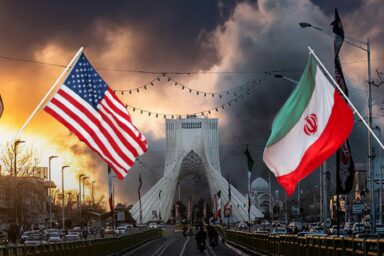
Iran may have played into Israel and the United States’ hands by firing drones and missiles at Azerbaijan and Turkey.
Beyond risking drawing Turkey and Azerbaijan into the Iran war, the attacks could boost efforts to spark ethnic uprisings in Iran, even though US President Donald Trump, in an apparent 180-degree turnaround, this weekend threw cold water on initial Israeli and US plans to encourage ethnic insurgencies.
Speaking to reporters on Air Force One, Trump said he had “ruled out” encouraging Kurdish groups from entering the fight with the Iranian government. “They’re willing to go in, but we really — I’ve told them I don’t want them to go in. The war is complicated enough without having, getting [sic] the Kurds involved,” Trump said.
It was unclear whether Trump’s about-face would force Israel to fall into line. Israel has maintained long-standing relations with Iranian Kurdish and other armed ethnic groups in the Islamic Republic.
The Iranian attack came as US and Israeli warplanes targeted military, security, and intelligence bases in a swath of land that stretches from the Azerbaijan-Iran border to Kurdish-populated areas near Iraq.
Twenty percent of all bombings have focused on Kurdish and Azeri areas of Iran.
Trump’s turnaround appeared to be at odds with the pattern of Israeli and US bombings, which potentially create an environment conducive to ethnic insurgencies, starting with Kurdish and Azeri-populated areas.
The bombing campaign “suggests the [Israeli and US] intent is to facilitate Iranian government loss of control in restive regions of Iran,” insisted Robert Ford, a former US ambassador to Algeria and Syria.
To further foment ethnic unrest in Azeri areas and motivate Islamic Revolutionary Guard Corps (IRGC) defections, an influential, far-right, pro-Israel US group, the Middle East Forum, advocated targeting Azeri-led IRGC units that allegedly were the most brutal in the crackdown in January on mass antigovernment protests. Thousands were killed in the crackdown.
Azeris command many IRGC units in northwestern Iran. Their families risk moving into the US and Israeli line of fire.
Azeris account for up to a quarter of Iran’s population and are the most integrated of the country’s multiple ethnic minorities that together constitute 43 percent of the Islamic Republic’s people and populate its borders.
Even so, Azeris have asserted their cultural and ethnic identity more vocally in recent years, demanding schooling in their own language, turning to satellite Turkish and Azeri-language media for news and entertainment, and participating in cultural programs hosted by Turkish consulates in the Iranian Azeri provincial cities of Tabriz and Urmia.
Those assertions don’t necessarily translate into a substantial quest for greater autonomy, unification of Iranian Azeri provinces with Azerbaijan, or independence.
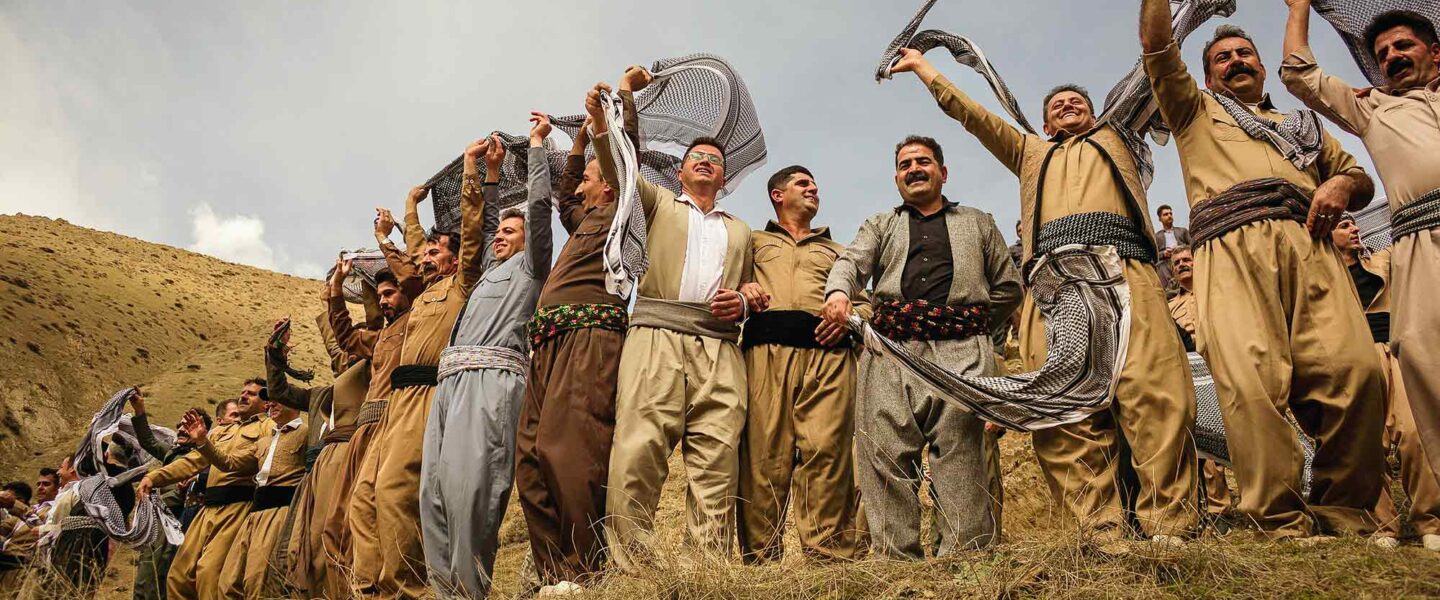
As a result, Kurds emerged as the most immediate focus of the US and Israel minority strategy.
Iranian Kurdish cooperation that includes the provision of targeting intelligence to the US and Israel, reinforced the two countries’ initial focus on the Kurds, according to sources.
The prospect of ethnic unrest in Iran is not limited to the west and northwest of the country. The Pakistan-Afghanistan border spat is playing out on the border of the restive Iranian province of Sistan and Baluchistan and the neighbouring Pakistani region of Balochistan.
Both are home to armed Balochi groups, eager to take advantage of opportunities created by the Iran war and the fact that the Pakistan-Afghanistan dispute has festered, with the international community’s attention focused on Iran.
Although best placed to mediate between Pakistan and Afghanistan, Qatar is preoccupied with defending itself against Iranian missile and drone attacks and ensuring that it and other Gulf states don’t get further drawn into the war.
Trump’s turnaround has reinforced Kurdish hesitancy to count on the US in any attempt to launch an insurgency in Iranian-Kurdish populated regions.
The Kurdish experience in Syria looms large in the minds of Iranian Kurds.
When the chips were down in Syria for the Syrian Kurds, who served as the US’ ground troops in the fight with the Islamic State, the Trump administration sided with Turkey and the Syrian government of President Ahmad al-Sharaa in opposing Kurdish autonomy in a federated Syrian state.
In a sign of caution, a newly formed coalition of Iranian Kurdish groups, which spoke to Trump by phone and met US officials in the Iraqi Kurdistan capital of Erbil to discuss a possible insurgency, was slow in proceeding with preparations.
Kurdish sources said the coalition has yet to create a joint operations room or appoint a spokesperson. “We’re taking our time,” one source said.
Kurdish caution juxtaposes with a sentiment among many in the Gulf that the US and Israel have dragged them into a war they had not bargained for.
In a rare public venting, a prominent Emirati billionaire real estate and business tycoon, Khalaf Al Habtoor — a close associate of Dubai’s ruling Al Maktoum family who in the past advocated the secession of the oil-rich ethnic Arab Iranian province of Khuzestan — challenged Trump’s right to drag Gulf states into a war.
“Who gave you the authority to drag our region into a war with Iran? … You have placed the countries of the Gulf Cooperation Council and the Arab countries at the heart of a danger they did not choose,” Al Habtoor asked in an open letter to Trump.
Al Habtoor’s letter is remarkable because the United Arab Emirates, Israel’s closest friend in the Arab world, has long supported rebel and secessionist forces in countries like Somalia, Sudan, and Libya. This policy sparked a public spat between the UAE and Saudi Arabia, which supports the region’s internationally recognized governments.
Amid antigovernment protests in Khuzestan in 2015, Al Habtoor penned an op-ed in a Saudi newspaper calling for “the liberation” of the province’s 5 million Arabs.
Describing Khuzestan as “Arabistan,” Al Habtoor asserted that the Arabs were “struggling to survive under the Persian yoke in an Arab region bordering Iraq and the Arabian Gulf.”
James M. Dorsey is an Adjunct Senior Fellow at Nanyang Technological University’s S. Rajaratnam School of International Studies, Associate Editor of WhoWhatWhy, and the author of the syndicated column and podcast, The Turbulent World with James M. Dorsey.