Orbán’s Defeat in Hungary’s Elections Sparks a Wide Range of Reactions
Even among the many celebrants, there’s a spectrum of concerns about what comes next.
|
Listen To This Story
 |
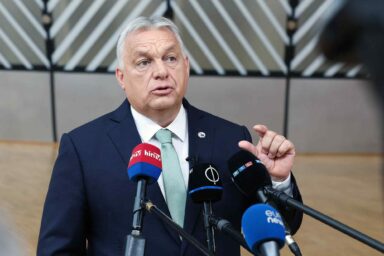
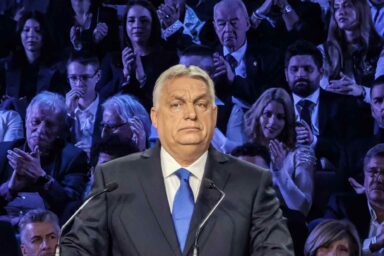
Expectations raised by Hungarian strongman Viktor Orbán’s overwhelming defeat in Sunday’s parliamentary elections are very different depending on who is assessing the situation.
Not surprisingly, most Hungarians want a better future, and they clearly felt that that was not going to happen with Orbán. The European Union is primarily interested in smooth relations among its members, and Orbán’s defeat removes a major irritant that, until now, has actively done its best to disrupt European unity.
Moscow will almost certainly see Orbán’s ouster as the loss of a key ally. For all intents and purposes, Orbán was Vladimir Putin’s man planted at the heart of NATO. Orbán’s exit also removes an obstacle preventing Europe from granting Ukraine a loan that was desperately needed to continue Kyiv’s resistance to Putin’s efforts to grab Ukrainian territory.
For Donald Trump and his MAGA followers, Orbán had served as the spearhead for the right-wing turn in Europe and a favorite of the US-based CPAC (Conservative Political Action Conference). He will be missed by these people, but his defeat is likely to be overshadowed by Trump’s problems with Iran.
Orbán banked for years on his cozy relations with Trump, but for most Hungarians, the relationship with Trump was not as threatening as Orbán’s efforts to reduce Hungary to a client state of Moscow. Hungary stands at the Eastern edge of Europe, but many of its citizens prefer an alliance with Western Europe to one with Russia. That point was made by the 1956 Hungarian Revolution, which sought to reduce the Russian stranglehold over Hungarian affairs.
What Comes Next
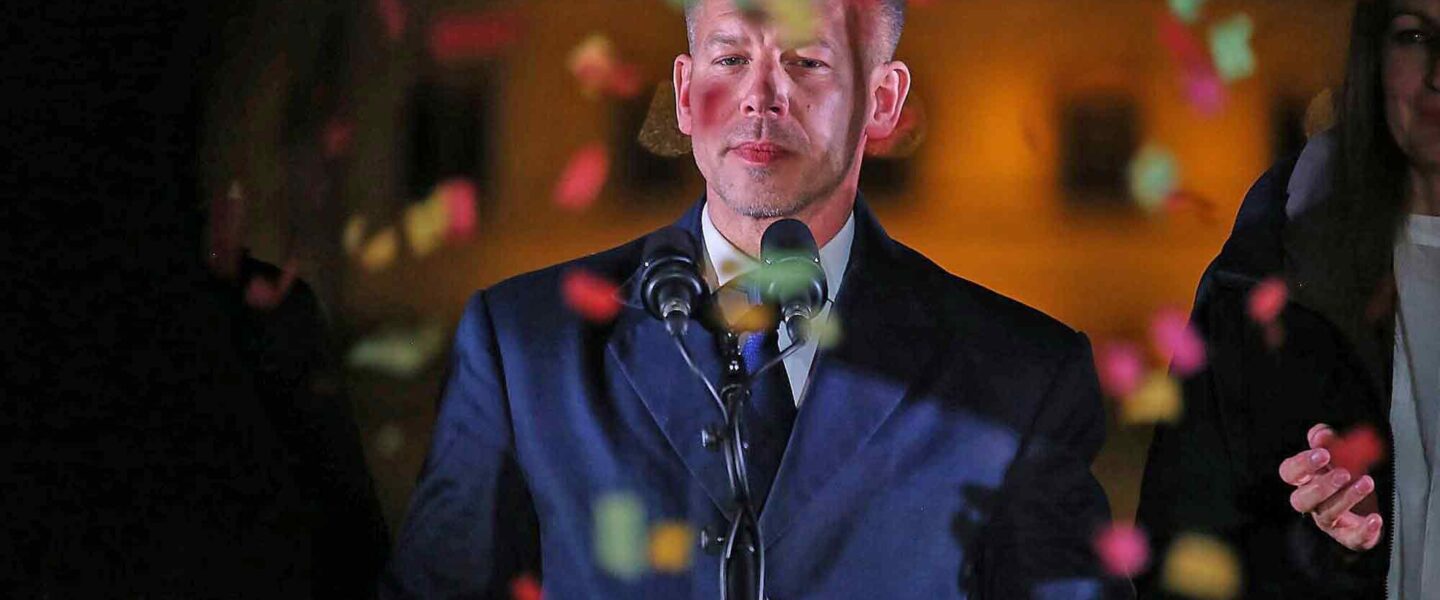
Péter Magyar, leader of the Tisza Party, which just won a supermajority in the Hungarian Parliament, is also a sitting member of the European Parliament and will have to resign that position. An election will be scheduled to choose his replacement.
It will also take time to see how Magyar’s Tisza Party manages the country’s affairs. Because Orbán has dominated Hungarian politics for 16 years, many of the newly elected members of parliament have never served before.
For most Hungarians, the overwhelming issue that decided the election was the corruption endemic in Orbán’s increasingly authoritarian regime.
“It was absolutely a domestic referendum on the impact of Viktor Orbán’s corruption, mismanagement, and embezzlement in the economic sphere,” said Marc Loustau, affiliated fellow at the Institute for Advanced Study at Central European University.
“Péter Magyar is a very disciplined campaigner, and he stuck to this message of anti-corruption, restoring the rule of law, and a functioning state. He didn’t let in other arguments and squabbles over relations with Ukraine and Europe. That served him very well,” he said.
A common theme raised by nearly everyone interviewed before and after the election was Orbán’s overemphasis on foreign policy and underemphasis on domestic issues.
“What happened yesterday was a referendum,” said Alpár Kató, founder of the independent English news portal Daily News Hungary. He explained:
People did not want Russia and Moscow’s hate campaign. They didn’t want to fight with the European Union. That was the biggest difference. Magyar’s style of campaigning was also very different from Orbán’s.
Orbán focused on foreign policy issues — Ukraine, Russia, and relations with the European Union. Magyar focused on local issues. Magyar held many more town hall meetings than Orbán, and that signaled that he cared about local life. In the last week or so, Magyar had 8–10 meetings each day. Orbán held maybe one a day.
Given the overwhelming majority Tisza received last night, and given Magyar’s own temperament, Kató said, there are some areas in which he is likely to move fast, while other issues may be left to mid-term or long-term.
Loustau and Kató said Hungarians want a combination of democratic values and improvements in their living standards.
Loustau thinks Magyar’s top priorities will be in the quality of life and dealing with
the crumbling state of public services, the obscenely, grotesquely degraded quality of health care in public hospitals, the declining quality of public education, which has hurt Hungarians when it comes to competing internationally and in labor markets in Europe.
Restoring a sense of fairness in the economy and hope to Hungarian families that they can have a decent quality of life while staying in Hungary, that broad shift of restoring hope would be crucial to Péter Magyar’s immediate success.
Kató pointed out that Magyar’s acceptance speech has already called on Orbán loyalists, including President Tamás Sulyok and top members of the judiciary, to step down. “Those who have served the previous regime in key state institutions should step aside,” Magyar said last night.
He is also expected to redefine the role of the media and give the press more freedom.
“Orbán had 16 years,” Loustau said. “I am not saying Hungarians will give Magyar 16 years, but I am sure they will give him more than a few months.”
No Guarantee for Ukraine
European leaders in Brussels, while happy about the election outcome, also advise caution.
Luoustau noted:
Péter Magyar has pledged to open Hungary back up to European institutions and establish a new relationship with Europe. So, we will absolutely see a reset of the relations, but the most important thing is that we will see a stop to Hungary’s disruptive activities on behalf of Russia. We will no longer see Hungary not only acting as an ally of Russia but as a secret agent in Europe acting on behalf of the Kremlin.
That said, when it comes to Ukraine, it remains to be seen whether European leaders get unqualified support from Magyar. Realizing the sensitivity of his position, Ukrainian President Volodymyr Zelenskyy was one of the first European leaders to congratulate Magyar.
“I congratulate Péter Magyar and the TISZA party on their convincing victory,” Zelenskyy wrote on social media. “It is important when a constructive approach prevails. Ukraine has always sought good-neighborly relations with everyone in Europe, and we are ready to develop cooperation with Hungary.”
Ukraine has good reasons to want speedy and better relations with Budapest. Orbán had blocked an EU effort to provide Kyiv with a $105 billion loan. EU rules stipulate that the loan must be approved by consensus, not by a simple majority, giving Orbán an effective veto.
While Magyar will likely try to be conciliatory toward his European colleagues, it is unlikely that he will agree to a blank check for Ukraine before getting concessions for some 80,000 ethnic Hungarians living in western Ukraine who have complained for years that they suffer from discrimination.
“He [Magyar] is not automatically pro-Ukraine,” said Kató. He continued:
To be honest, Hungarians don’t really support Ukraine, although they understand that Russia is the invader. It is a huge problem in the region of Transcarpathia that Hungarians cannot use their mother tongue.
Mr. Zelenskyy does not want to give them that right, even though it is a minimum European right. I don’t really understand why this issue is so important for Mr. Zelenskyy and the Ukrainian parliament.
Orbán may be gone, but it will take time to overcome the underlying ethnic conflicts that still bedevil Europe.
Editor’s Note: A previous version of this story misidentified the founder of Daily News Hungary as Kató Alpár. His name is Alpár Kató; the story has been updated accordingly. We regret the error.