The European Right, Facing Setbacks of Its Own, Keeps Its Distance From Trump
As Trump becomes more erratic, European far-right groups see him as a liability and are trying to insulate themselves from the problems in the US.
|
Listen To This Story
 |
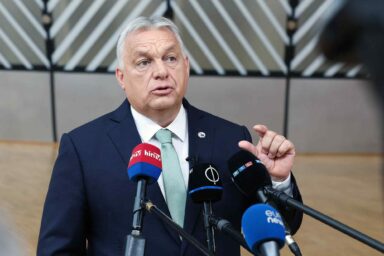
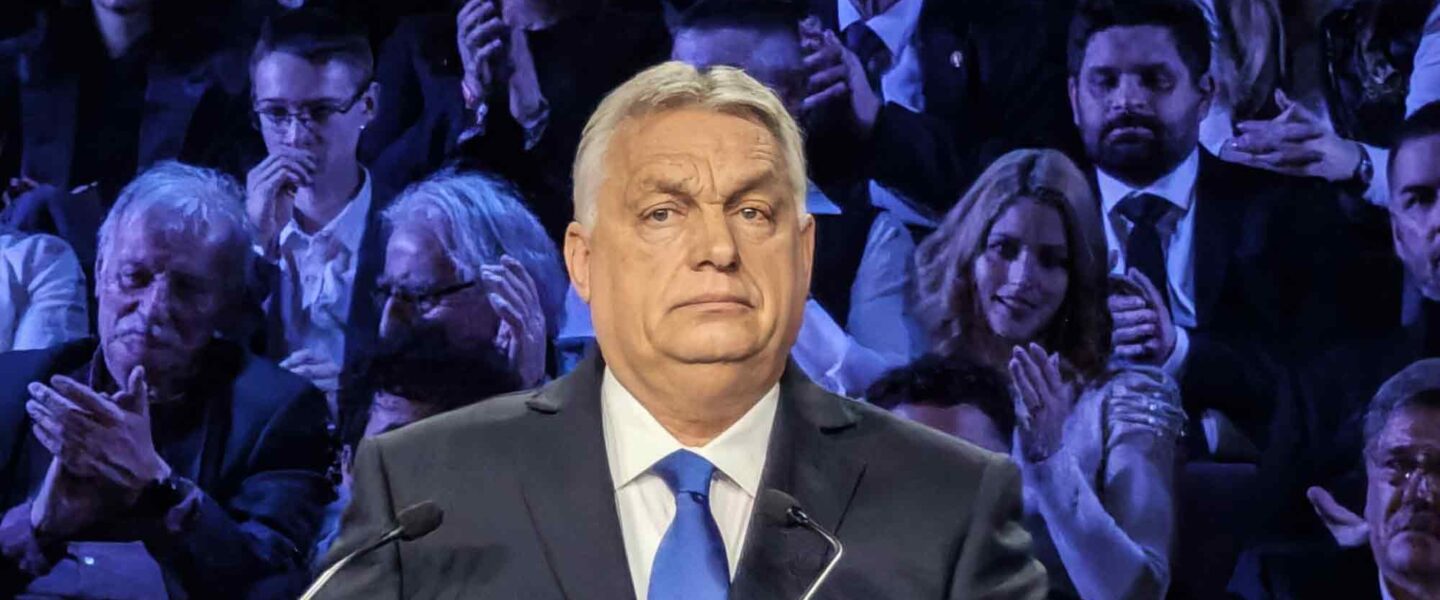
On Sunday, April 12, millions of Hungarians will vote in the country’s parliamentary elections. The outcome could decide the fate of the country’s ultra-conservative prime minister, Viktor Orbán.
Although Orbán is a favorite of the MAGA right in the US, many Europeans see him as an irritating obstacle to European unity. He opposes European support for Ukraine and maintains an overt alliance with Russia. Recent polls indicate that his political party has a strong chance of losing its majority in Parliament in the upcoming election. If it does, it would break the control that Orbán has had over Hungarian politics for the last 16 years.
Orbán’s declining popularity, along with the political right’s perceived poor showing in recent French municipal elections and the right’s failure to pass a judicial reform vote in Italy, has raised the question of whether far-right groups in Europe are in decline. That remains to be seen. What is much more certain is that, given the increasingly erratic performance of US President Donald Trump, right-wing groups in Europe are increasingly cautious about maintaining any connection to Trump.
From Asset to Liability
Interviews with a number of political analysts suggest that ultra-conservative groups in Europe, who once viewed the US president as an asset, now see him as a liability.
Bálint Magyar — a two-time Hungarian minister of education, sociologist, and senior research fellow at Central European University’s Democracy Institute — suggested that Trump decided not to make a personal appearance in Hungary to avoid being identified with a loser in case Orbán fails to win the election.
“He is sending JD Vance,” Magyar said, “but the overwhelming majority of members in Fidesz [Orbán’s political party] don’t even know who JD Vance is.”
Magyar added that if Orbán is defeated, it will send a chilling message of rejection to the right. “Like Trump,” he said, “Orbán has created an autocratic system that has subverted democratic institutions and enriched his friends and family.”
In more favorable days, Trump might have had an influential effect on European far-right and conservative groups, but his personal and foreign-policy mistakes have reduced his credibility among the leaders of those movements.
In Italy, Trump missed an opportunity in March to support Prime Minister Giorgia Meloni’s attempt to pass a constitutional judicial reform referendum. Without Trump’s support, the referendum was defeated.
Meloni was counting on a positive boost from Trump, said Federico Castiglioni, a researcher in the EU, politics and institutions program at Italy’s Istituto Affari Internazionali.
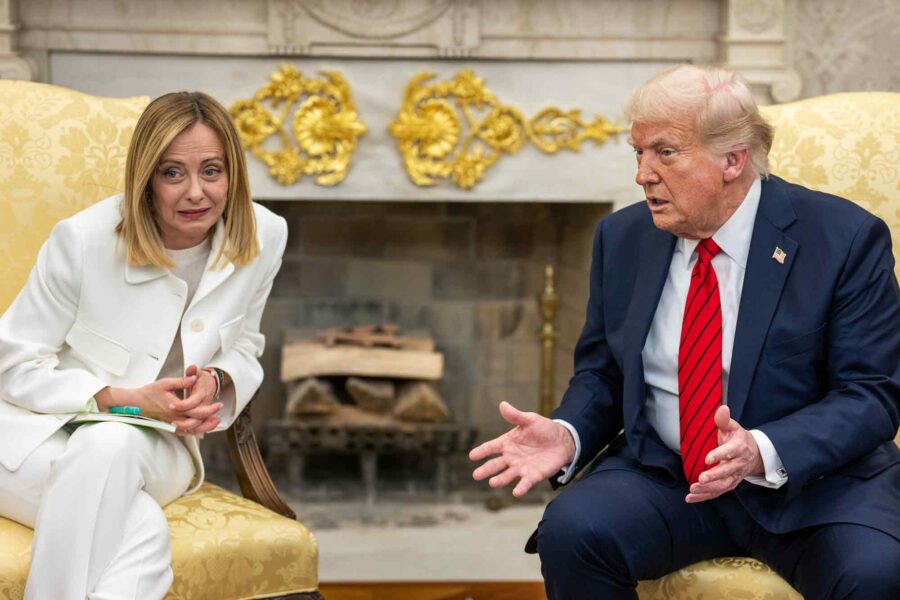
“She was betting that Trump could use Italy as an interlocutor and a reliable partner,” Castiglioni said. “She tried to play the game and get along. She was in a good position to be a mediator, but Trump did not seem interested.”
“If Trump had followed a classic Republican approach to Europe, it would have been much easier for Meloni, and closer to Italy’s national interest,” Castiglione added. “As it is, she cannot support [Trump] beyond a certain point. We are at a crossroads in which the two nations’ interests may collide.”
Examples of Trump’s positions that weakened his influence in Europe include disputes over Greenland, Ukraine, and the ongoing US-Israeli attacks on Iran. The war with Iran, especially, has caused serious damage to economies across Europe.
Likewise, French political analysts note that the far-right National Rally party — led by Marine Le Pen and its president, Jordan Bardella — has tried to distance itself from Trump in public.
“In France, the far right has been very careful not to associate itself too closely with Donald Trump because they knew from the beginning that he could be dangerous,” said Victor Mallet, a senior international editor at the Financial Times, and author of the recently published book Far-Right France: Le Pen, Bardella and the Future of Europe.
“Le Pen is not an idiot. Jordan Bardella is not an idiot,” said Mallet. “They saw very early on in the second Trump administration that Trump could turn out to be a serious liability.”
Adrienne Woltersdorf, a Germany-based expert on French politics, said, “Generally speaking, the French [right] has not shown much euphoria specifically for Trump. Their alliance is hidden. The same with the Russian government. Their official propaganda is very sanitized.”
Woltersdorf added, “They understood right away that it would be difficult to advertise Trump as a major reference point for international politics. They subscribe to many of his foreign policy issues, but they don’t advertise it.”
A Few Caveats
Despite their misgivings about Trump, everyone interviewed cautioned against reading too much into the future prospects of European conservative and far-right groups based on recent French and Italian elections, including the potential loss of Orbán in Hungary.
Woltersdorf warned that last month’s municipal elections in France may not be an accurate indicator of the likely outcome for France’s next presidential election. “I am pretty sure that the municipal elections don’t give us a definitive picture for national results,” she said. “We see it strictly as 35,000 singular elections [for municipalities across the country].”
Mallet said mainstream media and left-wing pronouncements about National Rally’s perceived “defeat” are inaccurate:
The fact is that they [the right] have never done so well in local elections in their history. They got more local councilors and mayors in local towns and villages, and they got more votes than they ever did in local elections before. They extended their reach in parts of France in which they were not present before.
In Italy, Castiglioni said Meloni’s defeat in the constitutional judicial reform referendum does not necessarily indicate an immediate threat to her rule.
“Of the 50-plus percent of the people who voted against the reform, 30 percent are against the government resigning,” he said. Although Meloni failed to pass the reform resolution, Casiglioni thinks that the bill’s rejection was tied to local factors.
Mallet also thinks that the European right has managed to insulate itself from Trump’s problems in the US:
The extraordinary thing is that one would have expected that what Trump has done in the world and in America would be highly damaging to the right-wing, populist, nationalist parties in Europe, and so far he has not been.
In the end, the distancing from Trump is the result of a mixture of the old contention that “all politics is local” and the realization, early on, by far-right groups and conservatives alike, that Trump can be a liability.
They are now moving on without him.