Carney Paints US as Threat to Canada, Offers Model for Others to Cut the Cord
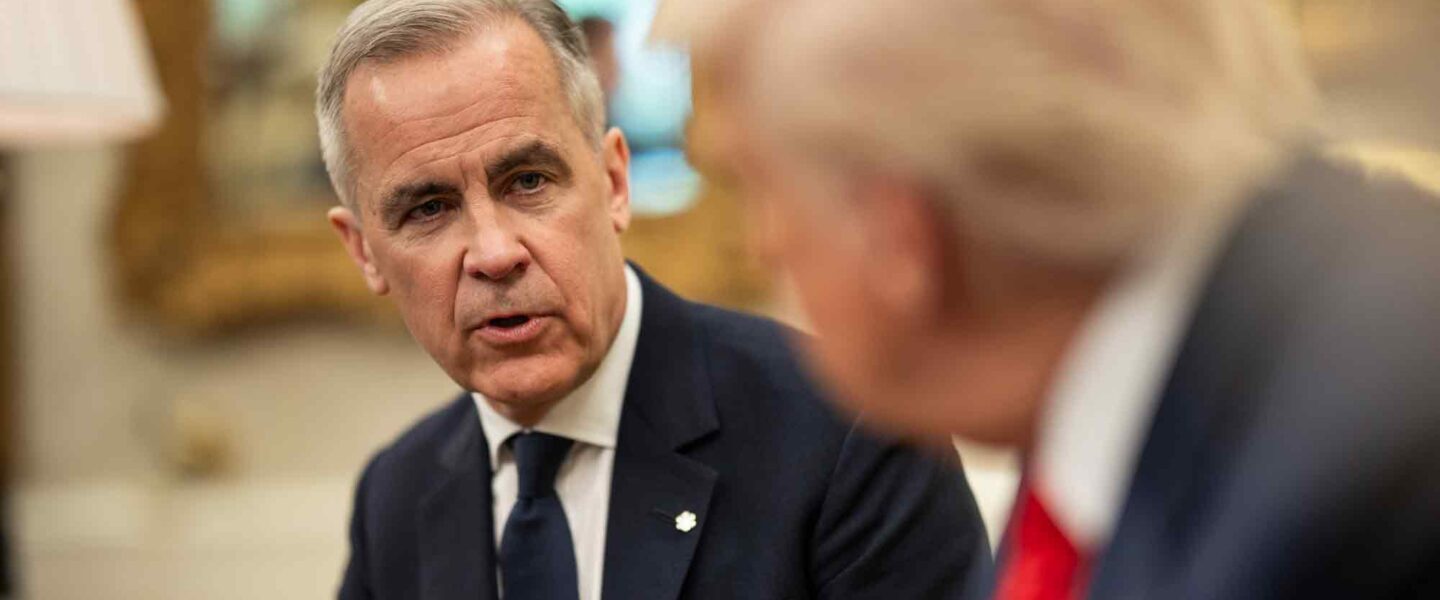
Highlighting the increasing isolation the US faces because of Donald Trump's actions, Canadian Prime Minister Mark Carney on Sunday laid out his plan to make his country less dependent on its neighbor and main trading partner.
|
Listen To This Story
 |
Highlighting the lasting damage that Donald Trump is doing to US relationships across the globe and that will be felt beyond his presidency, Canadian Prime Minister Mark Carney on Sunday portrayed the United States as a danger to his country that cannot be overlooked.
“Security can’t be achieved by ignoring the obvious or downplaying the very real threats that we Canadians face,” Carney said in a 10-minute address, adding, “The US has changed and we must respond.”
As a result of Trump’s abrasive approach to foreign relations and trade, what was once a mutually beneficial partnership has become a liability.
“Many of our former strengths, based on our close ties to America, have become our weaknesses,” Carney stated. “Weaknesses that we must correct.”
The prime minister laid out his plans to do so by making Canada less dependent on the US through domestic investments, including in the military, and diversifying trade.
“We can’t rely on one foreign partner,” Carney stated, adding that many of the biggest problems his country has faced in recent years, such as those resulting from the Iraq War, the global financial crisis, COVID, and the mess Trump is currently creating with trade and in the Middle East, were not of Canada’s making but impacted it nonetheless.
The same applies to many other countries, such as the “middle powers” that Carney called on to band together earlier this year.
“They have the capacity to build a new order that embodies our values, like respect for human rights, sustainable development, solidarity, sovereignty, and territorial integrity of states,” he said in a speech at the World Economic Forum in Davos, Switzerland, earlier this year, that received a lot of attention for expressing what so many people in these middle powers are feeling.
On Sunday, Carney made it clear that those were not empty words.
For example, he pointed out that his administration has struck 20 new trade deals with countries on four continents over the past year. That is arguably a better result than Trump has achieved with his strategy of coercion.
While others, such as the European Union, which has also concluded a number of major trade deals since Trump took office, are also trying to strengthen their ties to other markets, Carney has been the most aggressive leader of a (former) US partner, and it has helped him and his party.
Last week, his Liberals won three special elections and, thanks also to five lawmakers switching parties, secured a majority in Canada’s parliament.
Conversely, European governments less willing to stand up to Trump are faring more poorly in the polls and at the ballot box.
Ironically, Carney would likely not even have his job without the US president, whose claims of wanting to make Canada a state gave the prime minister the necessary boost to retain his position.
The prime minister’s address on Sunday also made it clear that the rifts Trump is creating won’t simply be patched up when he leaves office.
Carney stressed that he disagrees with those who don’t think there is a need for wholesale changes in the hopes that the US would “return to normal” in the future.
“Hope isn’t a plan,” the prime minister said. “And nostalgia is not a strategy.”
And this is a lesson Americans should take to heart as well. The institutions and relationships that Trump is destroying now won’t miraculously get fixed after the midterms or even on January 20, 2029, if a Democrat is elected, just like prices won’t magically come down as soon as the war with Iran ends.
Actions have consequences, and, in the case of the mayhem the US president is creating at home and abroad, these consequences will be felt for months, years, and even decades.