Trump’s Venezuela ‘Template’ Will Not Work in Iran, Experts Say
Ten days into his war with Iran, it is becoming clear that Donald Trump’s hopes of remaking the country according to the template that worked in Venezuela are very misplaced.
|
Listen To This Story
 |
President Donald Trump told Fox News he viewed the one-day attack on Venezuela that led to regime change there as a template for what comes next in Iran. Experts caution that the two countries are very different and that the situations do not have a lot in common
“It’s like apples to oranges,” said Behnam Ben Taleblu, the senior director of the Foundation for Defense of Democracies’ (FDD) Iran program.
Taleblu cited three main differences between Iran and Venezuela. The first, he says, is that the military action in Venezuela was not preceded by the protests and uprisings that occurred in Iran this past winter.
Next, he noted the “military capabilities of Iran are much greater than Venezuela’s.” Iran has five times as many soldiers and, as Taleblu pointed out, access to the largest ballistic missile arsenal in the Middle East.
Finally, he argued that the multilayered structure of the Iranian government doesn’t allow for the kind of “one-and-done” operation that brought about regime change in Venezuela with the capture of its president, Nicolás Maduro.
Though Trump and senior administration officials have offered multiple reasons for the US attack against Iran, the American objective remains unclear. It is also unclear how the Trump administration expects the conflict to end and what comes next.
In more than two decades of intervention in the Middle East, the US has not been effective at achieving its preferred outcome.
This conflict’s escalation, which involves nearly every country in the Middle East and is disrupting global energy markets, affirms that the end result is not likely to be different this time around. Experts agree that, if the US is seeking regime change in Iran, it is not going to be easy.
First, the country’s sheer size and population of 93 million make it both the second-largest and the second-most populous country in the region.
In addition, Iran boasts one of the largest militaries in the region.
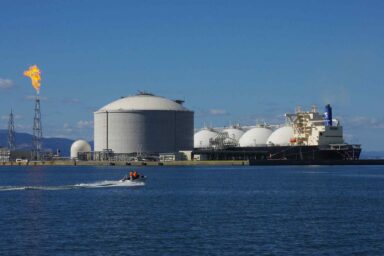
Finally, its position on the Strait of Hormuz — one of the world’s most critical energy chokepoints — allows Iran to impact the world’s economy far more than Venezuela can.
“We’re not just talking about Iranian oil, we’re talking about a large portion of Gulf production being unable to reach markets,” said Abhiram Rajendran, a research fellow at Columbia University’s Center on Global Energy Policy. “The scale is orders of magnitude larger than Venezuela.”
Around 3,000 ships carrying 20 million barrels of oil and liquid natural gas traverse the waterway daily, an amount that constitutes about a fifth of the world’s oil supply, according to data from the US Energy Information Administration.
Energy markets around the world are already feeling the effects.
“US oil prices are up about $20 this week. Gasoline prices are rising. We went from about $2.90 per gallon a month ago to around $3.30, and we’ll probably end up above $3.50,” said Rajendran. “There’s a real chance gasoline could reach $4.”
And, in contrast to Venezuela, which did not fight back when it was attacked and Maduro was seized, the regime in Tehran has made it clear that it will not simply put down its weapons, as Trump has demanded.
“We’ve had two decades to study defeats of the US military to our immediate east and west. We’ve incorporated lessons accordingly,” Iranian Foreign Minister Abbas Araghchi said following the initial attacks. “Bombings in our capital have no impact on our ability to conduct war. Decentralized Mosaic Defense enables us to decide when — and how — war will end.”
Decentralized Mosaic Defense is a military doctrine that prioritizes small-scale attacks carried out in a quick, disorganized manner throughout multiple fronts, including air, land, sea, cyber, and space.
Furthermore, Iran is not only able to launch strikes abroad (it has already attacked countries throughout the Middle East), but it also has the support of ideologically aligned militant groups throughout the region.
These proxies include Hezbollah, which has launched multiple attacks against Israel in recent days; various militant groups in Iraq; the Houthis in Yemen; and Hamas in Gaza.
The affiliated groups, together called the Axis of Resistance, make Iran the largest sponsor of terrorism in the region, and one of the biggest enemies to US interests for nearly five decades.
But there is a stark difference between the leadership in Tehran and the views of the general population.
“Iran is home to the most pro-American and pro-Israeli population in the heartland of the Middle East, and ironically, it’s ruled by the most anti-American, anti-Israeli regime in this part of the world,” said Taleblu.
In a 2024 survey conducted by the Middle East Institute, 78 percent of Iranians say the government’s foreign policy is a cause of the economic and social problems the country faces. The results were consistent across demographic groups, including age, gender, location, and education level. The survey also found that 68 percent of the population supports normalizing relations with the US.
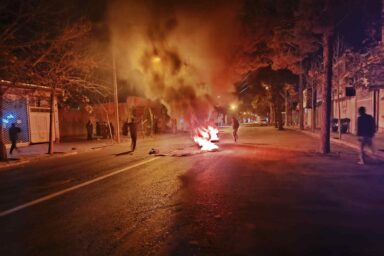
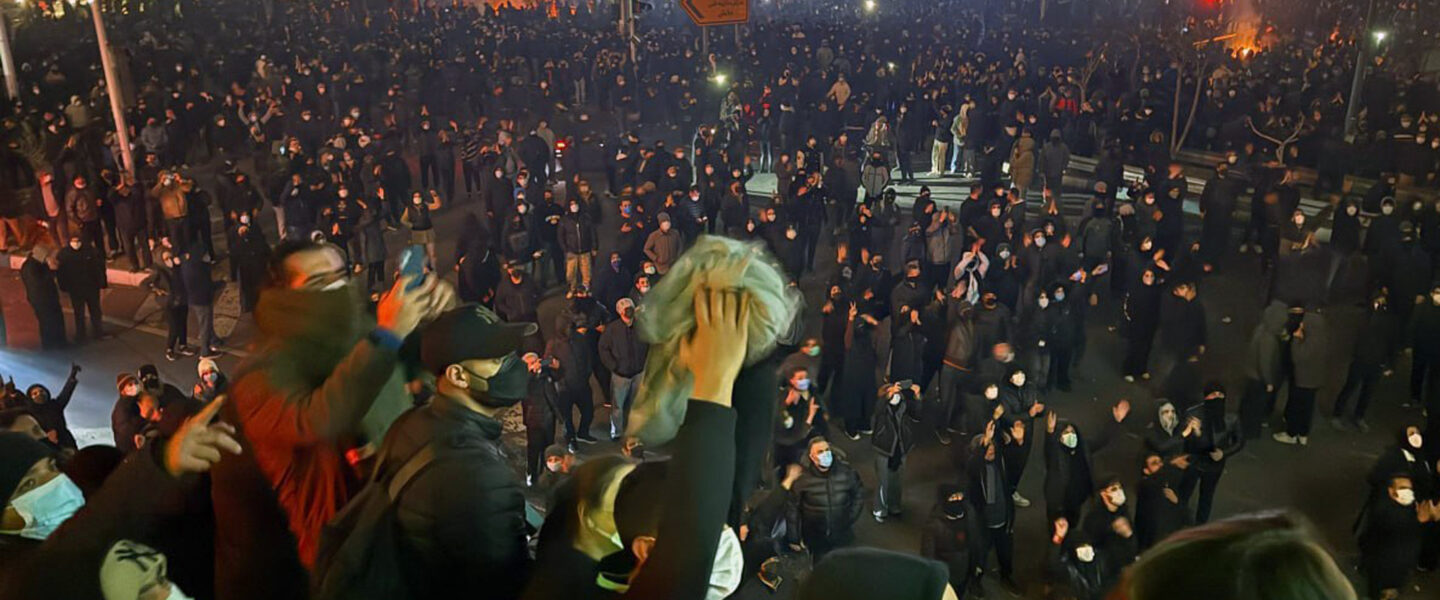
In December, hundreds of thousands of Iranian protestors took to the streets to air their anger at their country’s failing economy and a poor quality of life, with material conditions including inflation exceeding 50 percent, the freefall of its currency, and stagnant wages.
The protests quickly metastasized into the largest political uprising in the Islamic Republic’s history, with protestors calling for an end to the regime. A total of 203 cities across all 31 provinces experienced demonstrations on 682 separate occasions, according to a report by Human Rights Activists (HRA) in Iran.
Civilians were met with a brutal crackdown and the most violent repression of protests by the regime in its 47-year history, in what became known as the Crimson Winter. Conservative estimates put the total number of confirmed deaths at about 7,000, while other estimates put the death toll at over 36,000.
Despite the high cost, Iranians have continued to protest for change.
And that sets Iran apart from some of the other countries in which the US recently attempted to achieve regime change, because, as Taleblu points out, there is a “real, organic movement on the ground by the people to try to change the government.”
However, it is unclear, even to the Trump administration, who will lead Iran if the US manages to topple the current government.
While a popular revolutionary slogan chanted by Iranian protestors was “Long live the King,” it is unclear whether Reza Pahlavi, the exiled crown prince of Iran, has the support of the Trump administration to act as the transitional leader. In a 2024 poll, 31 percent of Iranians said they would vote for him in a free election, making him the top choice among a list of nearly three dozen potential candidates.
Trump has repeatedly stated that he prefers someone “within Iran” to take leadership. Last week, the US president told CNN that he has “three people in mind” and “wants to pick” who leads Iran next.
That would be in alignment with the so-called “template” in Venezuela. The Trump administration signed off on Delcy Rodríguez — Maduro’s right hand woman — to be the acting president of the country, as opposed to the populist leader María Corina Machado, who won the 2025 Nobel Peace Prize for her efforts to advance democracy in Venezuela.
Last week, Trump praised Rodriguez for “doing a great job and working with US Representatives very well.”
However, Iranians within the country are not likely to accept a leader installed by a foreign government.
A significant factor contributing to the 1979 Islamic Revolution was a strong rejection by the general public of foreign intervention and meddling in Iran’s government and management of the nation’s resources. Iran’s modern history can be characterized by a national struggle for independence and autonomy.
“There are deep roots to these concerns being held by Iranians about seeing foreigners benefitting from Iranian wealth and resources,” said Evaleila Pesaran, a political economist and lecturer at the University of Cambridge. “The opposition and discourse of that form in the ’60s and ’70s in Iran, leading up to the 1979 revolution, became a really defining characteristic of the new regime. It was written into their constitution that they wanted to protect themselves from any future meddling and intervention, both politically and economically.”
While Venezuela has already allowed more foreign investments in its oil sector, this may not prove to be so simple in Iran.
“Commercial interests will pursue business deals in places where they feel they have low risk and that there’s a good profit to be made. I don’t think that they’re going to very quickly find the Iranian market to be profitable,” said Pesaran. “Iran, because of all of that historical sensitivity, has enormous red tape, and it’s very difficult to do a contract with an Iranian company.”
Operation Epic Fury has revealed itself to be much more complex than Operation Absolute Resolve. It is unrealistic to think US efforts in Iran will be as seamless as they were in Venezuela when in just the first week of conflict, the Middle East and the global economy were plunged into chaos.