Astronomers May Have Caught Early Galaxy Dying
PICKS are stories from many sources, selected by our editors or recommended by our readers because they are important, surprising, troubling, enlightening, inspiring, or amusing. They appear on our site and in our daily newsletter. Please send suggested articles, videos, podcasts, etc. to picks@whowhatwhy.org.
|
Listen To This Story
 |
Astronomers May Have Caught Early Galaxy Dying (Maria)
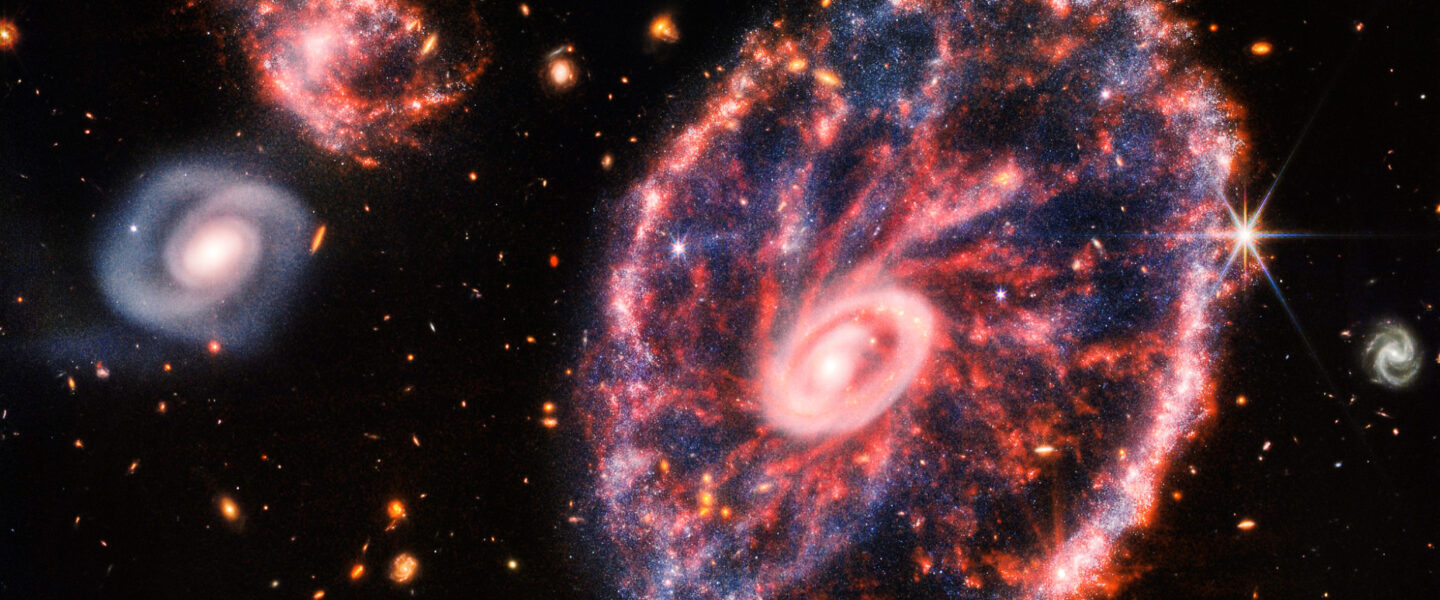
The author writes, “Astronomers have spotted many ‘red and dead’ galaxies in the early universe. These are massive systems that stopped forming stars surprisingly early in cosmic history. Now, they may have found evidence of one in the act of dying: a massive galaxy being stripped of its star-forming gas just 1.4 billion years after the Big Bang.”
From Truman’s Pension to Trump’s Billions — A White House Windfall Unmatched by Any President (Laura)
The author writes, “Harry Truman left the White House without any income other than his Army pension of $113 per month. The 33rd US president later wrote that it was wrong to ‘commercialize on the prestige and dignity of the office of the presidency.’ George W. Bush put his investments in a blind trust before running for president, and said in his last week in office that he had no idea how the 2008 economic crisis affected his net worth. Donald Trump, in contrast, made at least $2.2 billion in his first year back in office, according to a new financial disclosure report — a sum historians said was unprecedented and shattered the norm of US presidents avoiding financial conflicts of interest in the White House.”
How Trump Became the President of Washington, DC (Reader Jim)
From Semafor: “Where previous presidents have passed through Washington, taking pains to assure voters they are merely visitors, Trump is imposing a vision on Washington with a clarity and forceful execution that have evaded him in other parts of his job. The changes will likely have a lasting impact, according to interviews with nearly a dozen advisers, people close to and formally in the White House, and others involved in Trump’s DC makeover.”
Chaos Came to CBS News. What’s in Store for CNN? (Sean)
From The New York Times: “Over nearly five decades, CNN has survived multiple owners, ratings ups and downs, and attacks by President Trump. Now, its journalists are bracing for its most dramatic transformation yet: a corporate merger that would put the 24-hour cable network under the same ownership as CBS News. David Ellison, the technology heir who controls Paramount, the owner of CBS, is poised to complete a $111 billion purchase of CNN’s parent company as soon as next month. Mr. Ellison has not publicly detailed what he has in store for CNN. But the network’s newsroom is wary of his conspicuous coziness with Mr. Trump and the prospect that he may assign some oversight of CNN to Bari Weiss, his pick to run CBS News after he bought Paramount last year.”
More People Than Thought May Be at Risk for Red Meat Allergy Caused by Ticks (Bethany)
The author writes, “Far more people may be at risk for alpha-gal syndrome, the tick-borne illness that triggers an allergy to red meat, than previously thought. Nearly a quarter of adults in five states where lone star ticks are prevalent are estimated to show signs that they’ve been bitten, according to new research published Thursday by the Centers for Disease Control and Prevention.”
This Space Telescope Is Falling. A Robotic Spacecraft May Save It (Dana)
From Science News: “A robotic tugboat is launching to pull a decades-old space telescope to safety. Soon, a private spacecraft called LINK will launch to rescue NASA’s Swift space telescope from a fiery death in Earth’s atmosphere. The Neil Gehrels Swift Observatory launched in 2004 to study gamma-ray bursts and other cosmic events. It has been enormously successful and is still making new discoveries. But all satellites eventually succumb to gravity, and most burn up in Earth’s atmosphere before they reach the ground. In early 2025, NASA scientists realized Swift was losing altitude faster than expected: Strong solar activity starting in 2024 had given Earth’s atmosphere an energy boost, expanding it slightly and putting more drag on objects in low orbits. The extra drag meant Swift would reenter and break up sometime in mid-2026 if nothing was done.”