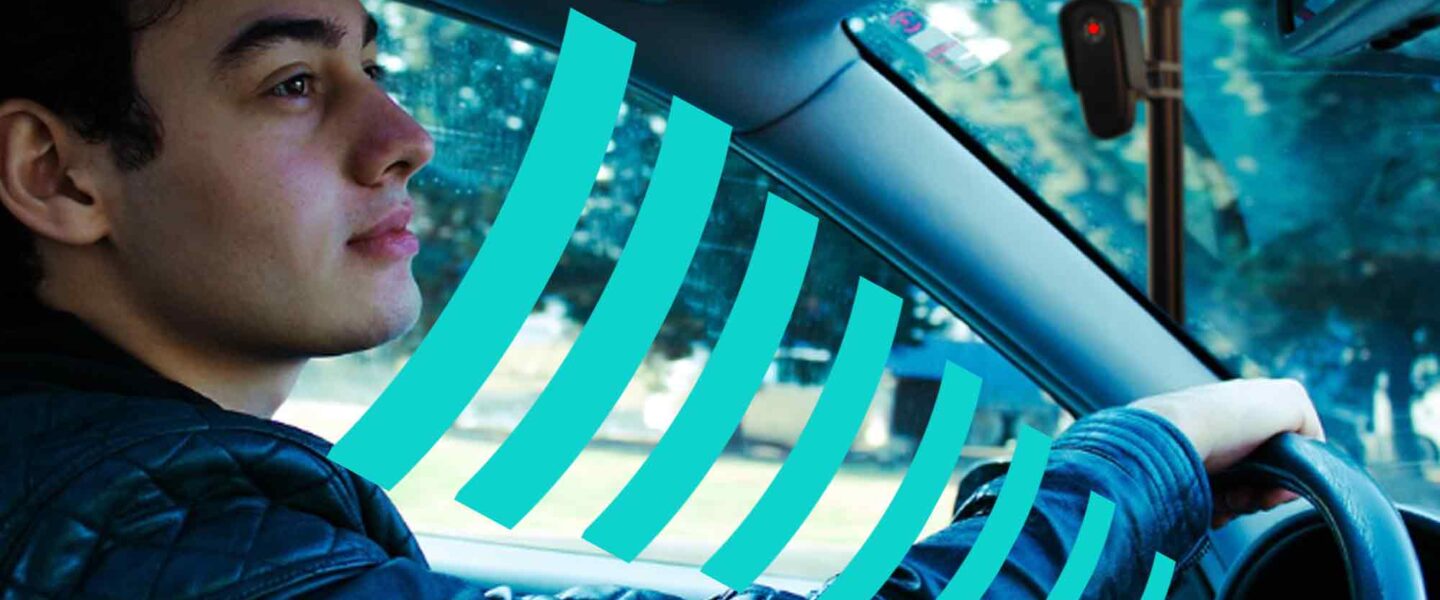
Saturday Hashtag: #DrivingUnderSurveillance
Welcome to Saturday Hashtag, a weekly place for broader context.
|
Listen To This Story
 |
Cars are being systematically transformed from privately owned vehicles into extractive digital platforms, while the roadways they drive on are being repurposed into an expanding surveillance infrastructure.
Much of this technology is marketed as “innovation,” but in reality, it increases monitoring and control at the expense of privacy, ownership, and even personal agency.
Automated Roadway Tracking
The now-ubiquitous Flock Safety systems have broadened their operations far beyond simply license plate identification, creating a vast surveillance network that continuously tracks vehicle movements and monitors public spaces.
Flock Raven, another of the company’s products, is an open-microphone gunshot detection system expanded to identify “distressed” human voices. One active system was shown to have only 8 percent accuracy in gunshot detection, raising serious concerns about the technology’s effectiveness and the consequences of false alarms.
The company whose technology has demonstrated a 92 percent failure rate is also deploying hundreds of flying drones through its Flock Aerodome system, under the guise of aiding 911 services and reading license plates from 2,000 feet. These deployments are already active in dozens of cities.
Separately, a new company, SignalTrace, is attaching sensors to existing Flock traffic camera systems to collect identifiers broadcast by devices such as smartphones, smartwatches, and laptops belonging to passengers and even nearby pedestrians. This data can be time-stamped, linked to passing vehicles or facial recognition data, and stored in searchable databases.
Eroding Driver Ownership & Control
Automakers are jumping into this market, too. They have already patented and even deployed technologies that dramatically expand surveillance and control over vehicles long after you purchase and “own” them.
Ford has registered inventions for in-car advertising systems that monetize not just your routes but your private conversations as well.
There is a self-repossessing system that can remotely return a car to the dealer if you miss a payment. This tech can also disable core features like air conditioning if your payment is late.
In an era of unstable Waymo self-driving car software and system vulnerabilities, these automated triggers can activate erroneously or from a targeted attack, disabling, taking over, or repossessing vehicles by mistake and leaving drivers stranded or even in danger.
Decline of Non-Connected Vehicles
At the same time, another shift is quietly dictating consumer vehicle options. Auto scrapyard and recycling facility fires are up 50 percent since 2020, many of them reportedly linked to improperly discarded lithium-ion batteries.
This means salvage inventories are shrinking, making replacement parts for traditional vehicles harder to find. As a result, repairs become more difficult and expensive while also driving up the cost of used cars already on the market.
Forced Vehicle Ecosystems
As consumer options narrow and new vehicles are built as networked, surveillance-ready platforms, affordable nonconnected used cars become scarcer, leaving buyers with fewer alternatives to connected vehicles. This is a manufactured constraint, not a demand-driven shift.
At the same time, as the used-car market dries up and the standardized connected-vehicle evolution unfolds, automakers are moving to subscription models to extract recurring revenue from their integrated mobile platforms.
General Motors executives frame subscriptions as a model to transform the company, turning features like navigation into monthly fees and replacing smartphone integration with proprietary software that restricts connectivity and converts once-included functions into recurring payments, eroding actual ownership.
Connected vehicles also extend manufacturer control well beyond the point of sale, allowing features to be enabled or disabled remotely, while some functions increasingly depend on online accounts or continuous connectivity.
If manufacturers discontinue online support, vehicles can remain mechanically sound while losing core digital functions like navigation, remote start, and charging. This software obsolescence will significantly impact the 871 billion used-car market by introducing instability in resale value, possible insurability barriers, and the risk of partial “bricking” if backend connectivity is shut down. This accelerates dependence on new connected vehicles.
Software-Defined Vehicle Risks
As vehicles become increasingly software-reliant, owners face growing cybersecurity risks, expanding right-to-repair restrictions, vehicle data ownership issues, targeted advertising, continuous location tracking, feature removal via automated software updates, dependence on cloud services, digital-key reliance, biometric monitoring, and routine government and legal access to vehicle data.
Automakers are also sharing driving data with companies connected to insurers without consumers’ knowledge, exposing drivers to higher premiums, reduced coverage, or even loss of insurance.
Automated Algorithmic State Escalation
One of the most disturbing aspects of this “innovation” is its ability to automatically report drivers to law enforcement based solely on algorithmic suspicion.
By giving algorithms the power to trigger police intervention, these technologies transform inevitable errors into police encounters — a dangerous step toward a synchronized, centralized surveillance state where artificial intelligence, not people, decides when the state intervenes. It’s a future that looks increasingly like the film Minority Report.
In an era of ever more vulnerable digital systems, increased malicious swatting incidents, and facial recognition wrongful arrests, false or erroneous reports are not just harmless mistakes — they can have devastating, even deadly consequences.
As cars have become more software dependent, real-world failures and glitches have already contributed to serious safety incidents and even deaths.
Ford rationalizes its expanding invasive technology patents as standard business practice intended to protect intellectual property and preserve future commercial opportunities.
End of Traditional Car Travel
Together, these developments point to a future in which the automobile is no longer the symbol of transportation and freedom it once was but rather a networked surveillance platform that monitors occupants, restricts functionality, monetizes personal data, and shares driving activity with insurers and law enforcement agencies.
This shift is reinforced by engineered disruptions in traditional used-car markets and financial incentives from subscription models and data commodification
As these systems become standard rather than optional, the question is no longer just what connected cars can do but how much privacy, ownership, and personal agency consumers are willing — or ultimately required — to surrender in exchange for the convenience and affordability of what we still call a “car.”
Hashtag Picks
A ‘Perfect Storm’ Points to a Much Smaller US Auto Market by 2040
The author writes, “Ten years ago, a record 17.6 million cars, trucks and SUVs were sold in the U.S. Some forecasts say the country might not come close to that number again. Analysts at consulting firm Bain & Company said several signs indicate the market is about to shrink even more. Falling birth rates, behavioral changes, high car prices and a growing array of alternatives could drive sales down by more than 2 million units by 2040, according to their analysis.”
Flock’s Surveillance Cameras Are Spreading Fast Across the US
The author writes, “Most people call them automated license plate readers, or ALPRs. They sit beside roads and log every car that passes. Flock Safety dominates the market. Engadget reports that Flock makes the vast majority of the 100,000-plus readers now blanketing the US. Calling them license plate readers undersells them. Reading plates is the main job, but the system can hunt for almost anything.”
Installation of Flock Raven Audio Devices Paused in Roanoke After 30 Installed in Wrong Locations
From Cardinal News: “The city of Roanoke says it will pause installations of Flock Safety’s Raven gunshot detector devices after 30 devices were mounted in incorrect locations. On April 20, the Roanoke City Council approved encroachment permits for 75 Flock gunshot audio detector devices to be placed in locations throughout the city. According to a city press release, a citizen complaint led the city to find on June 18 that multiple devices were in locations not approved by the council.”
Trillions of Miles of Data: Your Car Is Spying on You, and It’s Only Just the Beginning
From the BBC: “From your weight and facial expressions to your destination, cars collect a startling amount of data about you. Some of it may even raise your insurance costs. But you can take some simple steps to limit what they know about you.”
J.D. Power Auto Summit: Used Car Prices Have Structurally Reset
The author writes, “Average used retail prices at franchise dealers hit $30,202 in 2025 for vehicles aged 0-8 years, Jonathan Banks, vice president of product development for valuation services at J.D. Power, told attendees at last week’s J.D. Power Auto Summit ahead of the 2026 NADA Show.”
Your Car Could Be Ratting You Out to Your Insurance Company
From CNN: “About 90% of new cars on the road collect information on the driving behavior of whoever is behind the wheel, according to Telemetry, an automotive strategic advisory firm. Many automakers sell that information to third parties like insurance companies.”
Why You Might Never Stop Paying for That New Car
From AARP: “Until recently, buying a car meant full ownership: Pay once, and everything in it was yours. Today, that car purchase could come with a catch. Take, for instance, the case of Ronald Montoya, 47, of Los Angeles. When he bought his 2019 Mazda3, he liked the accompanying phone app, which allowed him to remotely lock and unlock the car, locate it by GPS and display its tire pressure. Three years after the purchase, Mazda emailed him to say he would need to start paying a monthly subscription fee of $10 or he would lose access to those features.”
Your Next Car Might Be a Subscription
The author writes, “For most of the past century, buying a car meant something simple. You purchased the vehicle, drove it home, and everything installed in it belonged to you. Heated seats, engine performance, and comfort features were permanent parts of the machine. If the hardware existed, you could use it. That assumption is now being challenged.”
Maintaining Privacy and Security With Connected Cars
From Brookings: “Connected cars can carry tremendous convenience for drivers and passengers, including allowing them to access digital resources when they are on the road and avail themselves of a range of entertainment options. At the same time, ubiquitous connections raise questions about privacy, security, legal liability, and consumer protection, especially given the vast amount of data collected by these vehicles. In this episode of the TechTank podcast, co-host Darrell West is joined by Ian Barlow, of counsel at Wiley and former deputy director of the Federal Trade Commission’s Office of Policy Planning, to discuss how these vehicles can impact consumers and what regulatory actions are needed.”