Saturday Hashtag: #USGerontocracyCrisis
Welcome to Saturday Hashtag, a weekly place for broader context.
|
Listen To This Story
 |
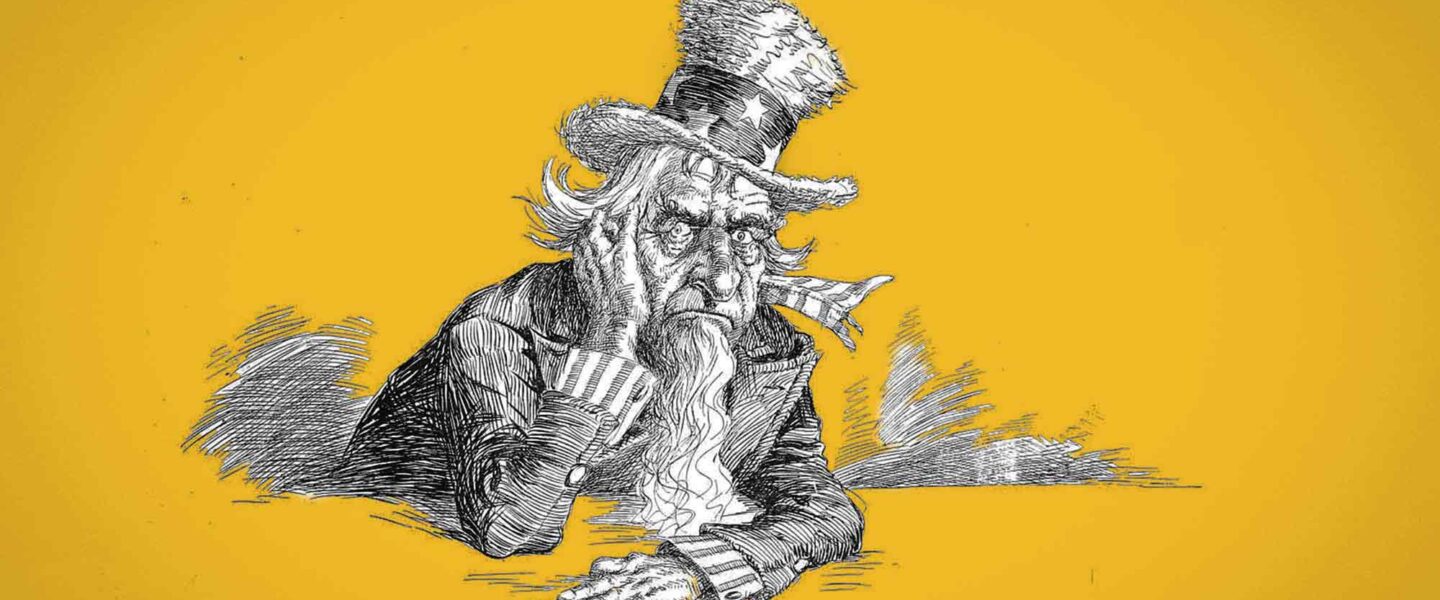
The United States is entering a demographic transition that its political, economic, and social institutions are fundamentally unprepared to confront. The nation is fast moving toward a historic demographic imbalance as fertility declines, life expectancies increase, and the population rapidly ages.
Fertility has fallen from 2.11 births per woman in 2001, near the replacement level, to just 1.6 in 2024, and by 2030, deaths are projected to outnumber births. At the same time, record longevity, reflected in a historically low death rate of 689 deaths per 100,000 people in 2025, is rapidly expanding the aging population.
As baby boomers retire, the US median age has risen from 35.6 in 2001 to 39.4 in 2025. By 2040, nearly 80 million Americans — about 1 in 5 people — will be 65 or older, more than double the number of Americans aged 65 and older in 2000.
This shift is not solely the result of declining birth rates but also of large generations moving through the age structure while living longer. The population pyramid is becoming increasingly rectangular, with fewer young workers and a growing number of older adults requiring support.
Yet the nation’s retirement, health care, labor, and housing systems remain rooted in mid-20th-century growth models based on a younger, faster-growing population. The economic consequences are already emerging.
The working-age population is projected to stagnate or decline, while the number of adults 85 and older is expected to more than double over the next few decades. This will leave fewer workers supporting Social Security and Medicare, and a growing demand for long-term care. Even if total population growth remains stable, the balance between workers and retirees is shifting, weakening the support structure that funds government programs and the broader economy.
While immigration has historically slowed population aging by adding younger workers, it has not been enough to offset persistently low birth rates. The Trump administration’s recent draconian immigration restrictions have further undermined a key source of US population growth and workforce expansion, intensifying the demographic challenge. The effects are already reshaping workplaces and communities.
Employers are responding with automation, delayed retirement, and greater reliance on older workers, who now represent 23 percent of the US workforce. However, these are short-term responses rather than comprehensive solutions.
Health care systems face caregiver shortages, many communities lack sufficient elder housing and long-term-care capacity, and public entitlement programs face increasing financial pressure.
Aging is also transforming suburban and rural America, where increasing older populations are changing school enrollment, housing demand, and local services.
The political system is struggling to adapt to this shift. Older Americans vote at the highest rates, making retirement security and health care major political priorities. As the median voter grows older, political incentives increasingly favor protecting existing benefits and accumulated wealth, while long-term investments for younger generations are delayed.
These dynamics are further reinforced by the Electoral College, which gives rural states with older populations greater electoral influence. When combined with older voters’ greater susceptibility to far-right misinformation media, this creates a growing gerontocratic influence in which misinformation shapes political outcomes and aging constituencies disproportionately influence national priorities.
The United States is not simply becoming older; it is becoming a fundamentally different society. A country traditionally built on population growth and a younger workforce is now facing longer lifespans, a smaller workforce, and greater dependency.
Without major reforms, the mismatch between America’s aging population and the institutions designed to support it will continue to grow, increasing fiscal strain, labor shortages, health care pressures, and generational inequality for decades to come.
Artificial intelligence and technological innovation are pushed by both industry and government as the cure for all society’s ills, including the gerontocracy crisis, but this optimism is largely misplaced.
The rapid adoption of AI has already introduced many new problems, including accelerating job displacement, widening inequality, costly technological transitions, and significant environmental consequences, while leaving the fundamental drivers of demographic change unresolved.
Instead of pursuing the serious structural reforms required, US power structures have embraced unregulated AI as a substitute for meaningful solutions, despite growing legislative and public opposition. This approach has so far only deepened existing economic and social inequalities.
Hashtag Picks
America at 250: Defining a Mature National Identity
The author writes, “When I grew up in the 90s, as ever before, it was commonplace to talk about America as a young nation. America’s precise age relative to certain European or Asian nations was never really the point; it was to suggest that America had the qualities of youth — growth, dynamism, ambition, optimism. We still have those qualities, but as we celebrate our 250th birthday, it’s worth reflecting on what it might mean to be a middle-aged nation. Even suggesting such a notion seems vaguely unpatriotic — America, middle-aged(!), how dare you? But as many of us can attest, while it comes with new aches and pains and perhaps a keener sense of limitation, middle age is not death. It’s just maturity.”
An Oligarchy of Old People
From The Atlantic: “Although political gerontocracy has operated overtly, the rising economic power of the elderly has escaped much notice. Over the past 40 or so years, American wealth has grown ever more concentrated among the oldest generations. In 1989, Americans over age 55 held 56 percent of it; today they hold 74 percent. During that same period, the share of wealth held by Americans under 40 has shrunk by nearly half, from 12 to 6.6 percent. The color of money is now gray.”
Ageing Is (in) the Future for the USA
The author writes, “The primary phenomena that all rich industrial countries will experience over the next 30 years is not ‘de-population’ — that is coming … just later — but ageing. Over the coming years the population of the labor force-aged will fall absolutely and the population of those over 65 will rise by about the same amount so the total population will stay about the same, but will be much older.”
America Is Not Ready for Its Own Longevity Crisis — And 2026 Is the Wake-Up Call
From Fortune: “Americans are living longer than ever before, which is a remarkable achievement. But making those additional years healthy, secure, and fulfilling will require better planning across households, retirement systems, employers, and communities.”
Five New Aging Trends to Watch in 2026
From the National Chrysler Retirement Organization: “In 2026, aging is no longer defined simply by years lived, but by quality of life, independence, and emotional resilience. Advances in technology, healthcare innovation, and shifting societal attitudes are reshaping what it means to grow older. For NCRO members and retirees everywhere, these changes offer exciting opportunities to stay engaged, informed, and empowered.”
Aging Advocates Brace for Uncertain Future
The author writes, “The political dynamics will change in 2026 with the critical midterm election according to Bob Blancato, a leading national expert on aging policy. He delivered a sobering overview of the future of aging programs under the Trump administration. … He outlined a legislative landscape filled with funding uncertainties, Medicaid cuts affecting millions, and the dismantling of protections for the most frail and vulnerable seniors.”
A Modern Day Sparta: The American Gerontocracy and the National Security Implications of Elderly Rule
The author writes, “Old age happens to all humans. Eventually, individuals with spritely, active youths, and sharp minds begin to falter and their mental and physical acuity begins to fade. While this is a rite of passage, it is a fact of life and, for the average U.S. citizen, one that occurs begrudgingly, but without posing nationally significant problems. For elected officials, those in Congress and appointed to important policymaking positions, the effects of aging pose substantial issues for the public, in few places more seriously than in national security.”