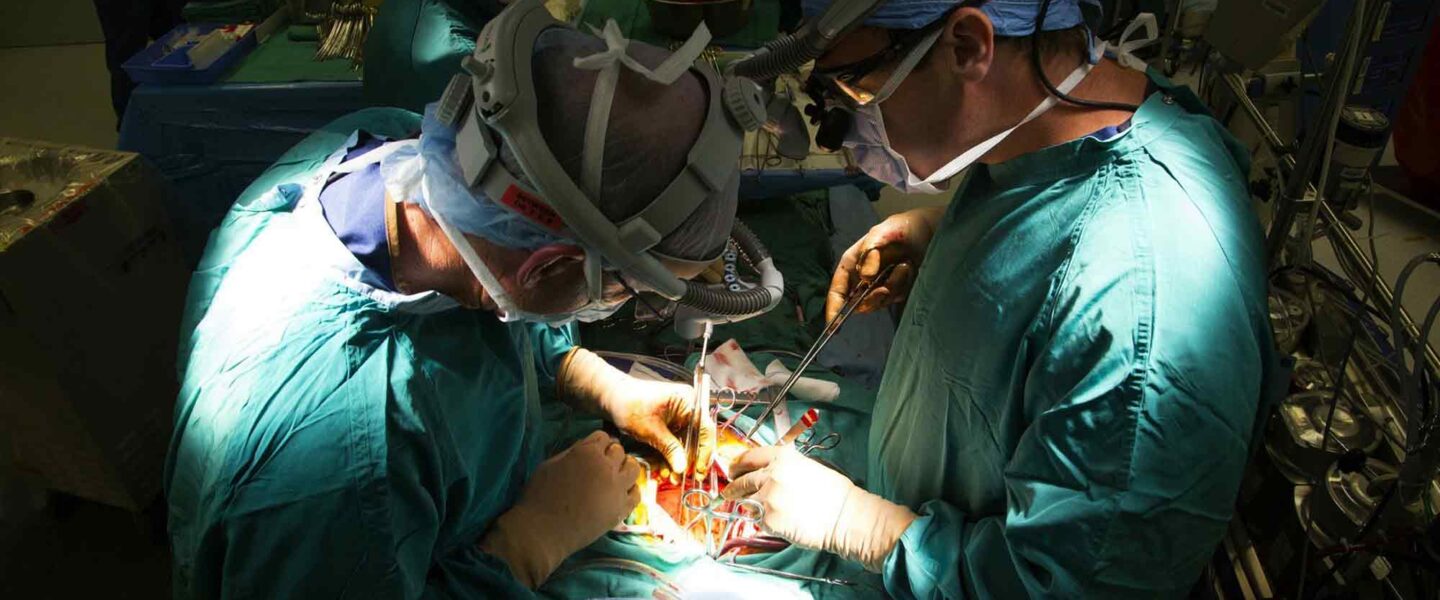
Wealthy Foreign Transplant Recipients Leave Sick Americans to Die
In a dystopian symptom of late-stage capitalism, organs donated by Americans go to wealthy foreigners so that hospitals can make a buck.
|
Listen To This Story
 |
The number of heart transplants in the US has risen sharply in recent years. Still, fewer than 5,000 of these surgeries are performed annually (which is more than half of the global total), and the number of patients who need these procedures is greater than the number of hearts made available by donors.
That means that thousands of potential recipients are waiting by the phone each day, hoping that they will get the call that a match has been found and their life might be saved.
I know because I am one of them.*
Medically, a heart transplant is a last-ditch effort. Doctors only recommend it when the patient’s heart will fail in the foreseeable future and all other treatment options have been exhausted.
While the vast majority of recipients survive the first year, there are substantial long-term risks. The primary concern is that their bodies will reject the new heart or that they will suffer from infections that a weakened immune system cannot handle.
According to The New York Times, some US hospitals are courting rich foreigners, most of them from the Middle East, who pay for their transplants (for hearts and for other organs as well) in cash and donations, which allow them to skip the line.
That is why the people who make it onto the transplant list are carefully chosen.
Regular patients undergo rigorous testing to demonstrate that they are otherwise in good health; they must be young enough to benefit from a new heart for a long time, and they must live a healthy lifestyle.
After all, donated organs are a scarce resource that should not be wasted.
However, there is another criterion that allows some patients to take a shortcut: money.
According to The New York Times, some US hospitals are courting rich foreigners, most of them from the Middle East, who pay for their transplants (for hearts and for other organs as well) in cash and donations, which allow them to skip the line.
As a result, some Americans on the list will die.
The Times detailed the case of a wealthy Japanese woman who got a new heart at the University of Chicago Medical Center within days after having been granted an exception that raised her priority level.
In her home country, she would have faced a lengthy wait.
Not in the US, one of the few countries in which “transplant tourism” is legal.
For the team performing the procedure, it was worth it. The patient not only paid for the procedure, the average cost of which is $1.9 million, out of pocket, but her husband’s charity also made a large contribution to the foundation of the surgeon’s wife.
This example is just one of many.
The Times analyzed every transplant performed in the US over the past dozen years and found that “patients who traveled from other countries received transplants faster than patients from America and were less likely to die waiting for an organ.”
Or, to put it more bluntly, the combination of foreign wealth (regardless of its source) and the “entrepreneurialism” of American hospitals determines who lives and dies.
It is noteworthy that, while wealthy foreigners are a drain on the organ pool in the US, undocumented immigrants are not. They account for more than 3 percent of donated organs — most of which go to Americans.
If that isn’t emblematic of late-stage capitalism, then I don’t know what is.
In fact, it seems as though we are just one step away from the plot of one of those dystopian movies in which the organs of the poor are harvested so that the rich can live.
The Times’s investigation has attracted the attention of some powerful congressional Republicans.
In a letter to the University of Chicago Medical Center, Rep. Jason Smith (R-MO), the chairman of the Ways and Means Committee, and David Schweikert (R-AZ), who heads the panel’s Oversight Subcommittee, state that the hospital’s decision to prioritize wealthy foreigners over Americans is “completely inappropriate.”
“As an organization that claims tax-exempt status as a charitable organization under 501(c)(3), you are bound by your exempt status to provide charitable care and benefits to your community,” the lawmakers write. “Contracting with a foreign government to provide these crucial services to foreign nationals over American citizens raises serious questions as to the nature of the community benefit that you are providing in order to maintain your tax-exempt status.”
In their letter, Smith and Schweikert demand that the University of Chicago Medical Center open its books and share with Congress how many transplants it performed on US citizens compared to foreigners, how much money it received in each case, and whether it has contracted with foreign governments or individuals regarding organ transplants.
A similar letter went out to the Montefiore Medical Center, in New York City, which, according to the Times, performed 20 percent of its lung transplants on foreigners.
The problem with giving international patients preferential treatment is not just that more Americans die, it is also that it exacerbates the organ shortage.
First of all, wealthy foreigners don’t contribute to the pool of available hearts, lungs, livers, kidneys, etc. in the US.
More importantly, however, Americans may be less willing to become donors if they think that their organs are being sold to the highest bidder instead of given to the most medically deserving person… especially if that highest bidder may be some foreign criminal or despot.
It is noteworthy that, while wealthy foreigners are a drain on the organ pool in the US, undocumented immigrants are not. They account for more than 3 percent of donated organs — most of which go to Americans.
And that really underscores the current state of the US transplant system, which favors rich takers at the expense of everybody else.
That is why we applaud the efforts of these Republican lawmakers to find some answers and, hopefully, initiate steps to come up with a system that benefits Americans.
*The author of this editorial is on an international transplant list and therefore not affected by any changes made to the US system in response to potential abuses.