What To Expect in Iran
Four days into this war of choice, Trump and Hegseth’s goalposts are careening all over the field.
|
Listen To This Story
 |
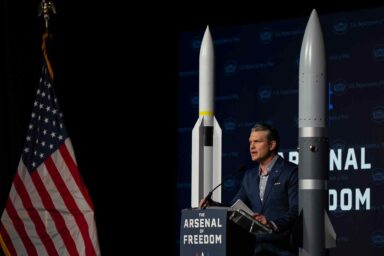
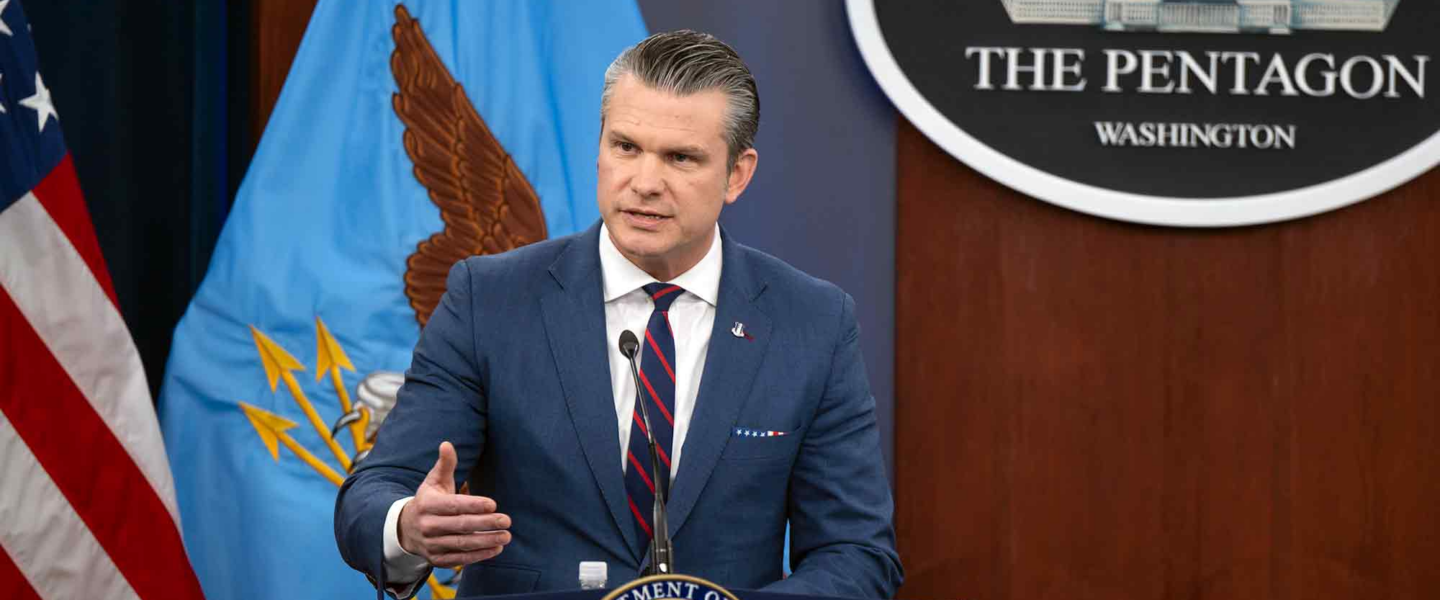
Pete Hegseth, America’s self-described “secretary of war,” appears thoroughly convinced that “Epic Fury,” the massive US and Israeli military assault against Iran, will topple the regime in Iran without the US having to fight yet another lengthy war.
“No stupid rules of engagement,” Hegseth said during the first news conference since the bombing began, “no nation building quagmire, no democracy building exercise, no politically correct wars. We fight to win, and we don’t waste time or lives.”
“This is not Iraq,” a clearly energized Hegseth continued. “This is not endless.”
Maybe so, but as a famous quotation, often incorrectly attributed to Albert Einstein, puts it: “Doing the same thing over and over again and expecting a different result is the definition of insanity.”
The US failed in Iraq, largely because the Republican administration of George W. Bush launched a war without a clear plan for what was likely to happen to Iraq’s civil society once military victory had been achieved. Now, the Trump administration appears to be repeating the same mistake.
Hegseth is right about one thing: Iran is not Iraq; it is three times the size of Iraq, and nearly two-and-a-half times the size of Vietnam when the US faced defeat there. There is plenty of opposition to the country’s repressive theocratic regime, but that doesn’t mean that it is ready to let either Israel or the United States decide its future.
Donald Trump’s strategy initially called for spending several days bombing Iran, and then leaving it up to the Iranians to figure out what to do next. The idea, in short, was to spread mayhem without an exit plan. To say that the strategy makes no sense is an understatement.
Even the operation’s title, Epic Fury, has an ironic twist. It expresses Trump and Israeli Prime Minister Benjamin Netanyahu’s testosterone-fed fury with Iran, but it might just as well be applied to the uncontrolled fury that four or five days of bombing is likely to trigger in Iran.
What can the Iranians do when attacked by the combined might of the United States and Israel? As it turns out, they can do quite a lot.
Trump’s operation has already closed the Strait of Hormuz, the key gateway for the transport of a fifth of the world’s oil and gas supply. The shutdown was not just the work of the Iranians; the deciding factor was the refusal of insurance companies to protect ships exiting through the strait.
To no one’s surprise, Iran immediately launched missile and drone attacks against several countries in the region that host US bases. As a result, Kuwait accidentally shot down three American fighter jets. The crews ejected safely, but the friendly fire incident is only the beginning.
Potentially more damaging, the joint Israeli-American operation makes future negotiations with Iran even more problematic. The fact that the US was pretending to negotiate seriously, while secretly waiting for the precise moment to launch a surprise joint attack — one, no less, that featured decapitation of the Iranian regime — makes it unlikely that America’s word will be trusted anytime in the near future.
The Iranians are not the only ones who have a right to be angry at what they no doubt see as a betrayal. Despite the US Constitution’s insistence on the president obtaining the advice and consent of Congress before going to war, Trump bypassed the American system and committed the entire country to fighting a potentially destabilizing war with only his personal judgment and limited knowledge to go on.
In effect, he acted as a dictator, not a president. As for the compliant Republican majority in Congress, it was on holiday when the attack took place.
It will take a while for the full repercussions to be felt by the American public. If the Strait of Hormuz remains closed, oil and gas prices will increase dramatically, and that will drive up the price of just about anything that requires transportation.
The idea of keeping the war limited to several days of airstrikes is not likely to survive either. Trump has already suggested that the operation may need to be extended to four or five weeks, if not “far longer,” and that more American troops will need to be sent into the region.
Far from crumbling, the regime in Tehran has remained remarkably intact. Iran’s top leadership, notably Supreme Leader Ali Khamenei, has been eliminated, but Khamenei, who was 86, was due to be replaced anyway. After last June’s attack against Iranian nuclear sites, the Iranians made a point of picking designated survivors. Khamenei’s assassination only accelerated what was already a done deal.
A regime change of some sort was inevitable. The difference this time around is that instead of a repressive theocratic government that at least felt that it had to make a pretense at following Islamic laws, its replacement is likely to emerge from the Islamic Revolutionary Guard Corps, the group that had served as Khamenei’s enforcer and the source of most of Iran’s adventures into international terrorism.
While it is, of course, always possible that the sudden jolt to Iran’s repressive regime just might clear the way for a more open and humane government to take over — or at least a government that is actually open to dealing with the US and Israel — the history of the region doesn’t suggest that that’s a likely outcome.
Any number of experts in the US State Department could have explained this to Trump, if he hadn’t already fired them.
Instead of expertise, we have Hegseth, a former weekend TV anchor for Fox News, and Tulsi Gabbard, a Vladimir Putin fan who now oversees US intelligence operations, struggling to understand how the world works. The safety net of at least semi-knowledgeable advisers that helped save Trump’s first term in office has been replaced by a cabinet of sycophants who execute Trump’s bidding without question.
Most Americans are probably unaware of what is likely to happen next. Americans have generally stopped reading newspapers or paying much attention to foreign news.
When prices start to rise even higher than they are now and Americans begin dying overseas, we will ask ourselves what happened and why. By then, it may be too late. As the experts might have warned us, it is easy to start a war. It is much harder to end one.