Putting Trump’s Muscular Foreign Policy to the Test
For Iran’s regime, survival is victory.
|
Listen To This Story
 |
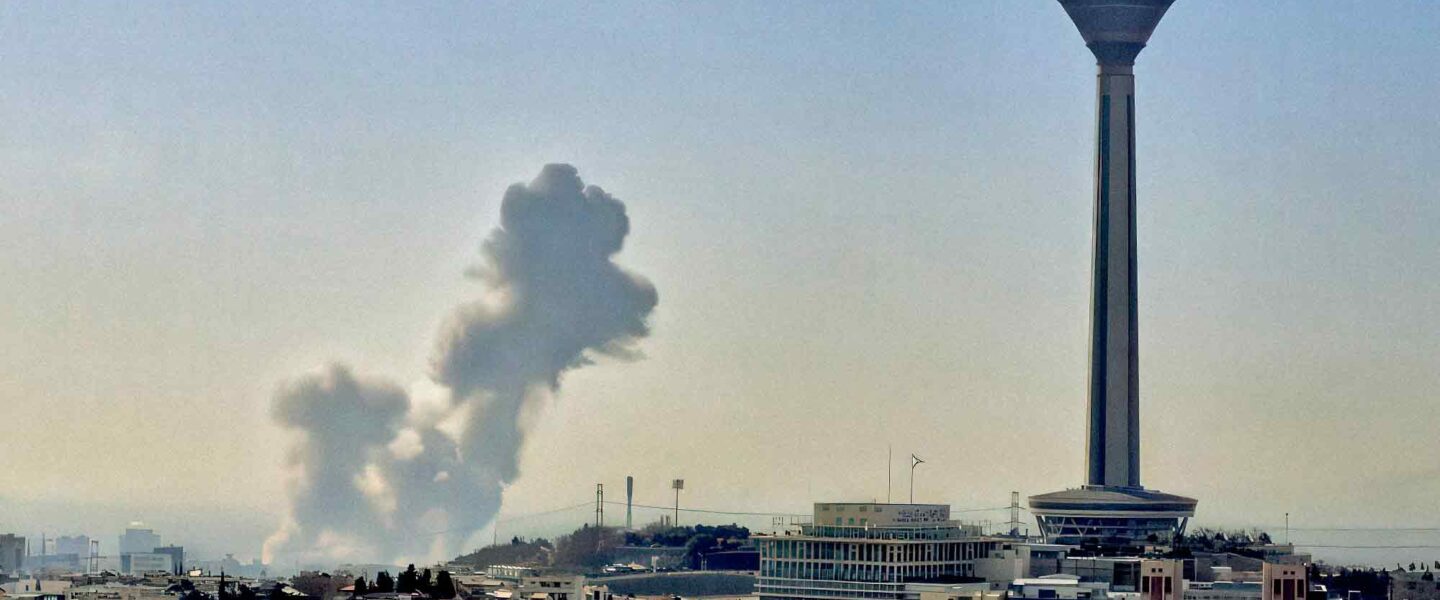
Iran is challenging the might-is-right cornerstone of Donald Trump’s foreign policy by refusing to bow to the US president’s demands and fighting a war that within hours expanded across the Middle East.
In doing so, Iran is going where no other country, including Venezuela and NATO ally Denmark, has been willing to go when threatened with military force if they did not accept Trump’s demands.
Iran was betting that Trump would want a quick strike that would not entangle the United States in a protracted conflict and potentially force it to put boots on the ground.
It was a miscalculation.
Joined by Israel in the attack on Iran, Trump and Israeli Prime Minister Benjamin Netanyahu have suggested that regime change was the attack’s goal. Trump has acknowledged that achieving that goal could involve protracted hostilities in which US troops may be killed.
Iran’s bet was rooted in a reading of post-World War II American history that no longer applies with Trump in office.
Iran saw a pattern of US military defeats and withdrawals starting with Vietnam in the 1970s and the 1983 pullback from Beirut following the US embassy and Marines barracks bombing and continuing to, most recently, the 2021 retreat from Afghanistan, which Trump is determined to correct.
Iran may prove a tough nut to crack, even if it’s no military match for the United States.
To declare victory and put a dent in Trump’s might-is-right foreign policy, all Iran’s leaders need to do is to survive.
That’s an achievable goal given that, in the absence of Iranians returning to the streets in support of the US-Israeli attack or high-level fractures in the regime, particularly in the Islamic Revolutionary Guard Corps, regime change will require boots on the ground.
In addition, Iran has long been preparing to ensure a smooth succession process should 86-year-old Supreme Leader Ayatollah Ali Khamenei die either a natural death or in a targeted assassination, or if US forces abducted him in an operation similar to the apprehension of Venezuelan President Nicolás Maduro.
Trump may be reluctant to dispatch US troops to a ground war in the Middle East in an election year; some 49 percent of the American public is opposed to US military intervention in Iran.
Even so, Trump has acknowledged that an attack on Iran risked sparking a regionwide war.
Iran’s firing of missiles at US military facilities in Gulf countries in the first hours of the conflagration significantly raised that risk, even if they were mostly intercepted.
While smaller Gulf states — like Qatar, the United Arab Emirates, and Bahrain, that host US military bases — may not strike back at Iran, the question is what the region’s behemoth, Saudi Arabia, will do after having been targeted alongside other Gulf states.
The Iranian strikes came as satellite pictures showed an increase in the number of US warplanes, including refuelling tankers, stationed at the kingdom’s Prince Sultan Air Base.
Saudi Arabia has told Iran it would not allow its airspace or territory to be used for military actions against the Islamic Republic.
Saudi Arabia was quick to condemn the Iranian firing of missiles against targets in the vicinity of the capital Riyadh. For now, Saudi Arabia and the other Gulf states are likely to adopt a wait-and-see attitude rather than fuel the fire.
However, it is unclear how they will respond if Iran and/or the Yemeni Houthis strike at international shipping in crucial Gulf waterways through which much of Asia’s trade and energy flows.
For Trump and Netanyahu to declare victory, they’ll have to either defeat Iran and force it to surrender or, at the very least, destroy what’s left of Iran’s nuclear program following the destruction of its main facilities during last June’s 12-day war; and they will have to obliterate the Islamic Republic’s ballistic missile capabilities.
****
The Gulf states are not the only regional nations worried about being dragged into a war they fervently tried to prevent. So are Turkey and Azerbaijan.
Turkish fears are fuelled by last week’s creation of a coalition of five Iraq-based militant Iranian Kurdish groups, some of which have enjoyed US and/or Israeli support in the past.
Turkey is particularly concerned about the inclusion of the Kurdistan Free Life Party (PJAK), the best-armed Iranian Kurdish group, which is aligned with the outlawed Kurdistan Workers’ Party (PKK).
The coalition plans to exploit a potential power vacuum in Iran to establish Kurdish rule in the Kurdish-populated regions of the country. The coalition said it was reaching out to other ethnic minorities, including Baloch and Azeri militants.
Ethnic minorities account for 39 percent of the Iranian population, with Azeris constituting up to a quarter of Iran’s 93 million people.
Their strategic importance is heightened by the fact that they straddle the Islamic Republic’s borders: Azeris in the northwest Turkish-Azerbaijani-Iranian triangle, Kurds in the west along the borders with Turkey and Iraqi Kurdistan, Arabs in the southwestern oil-rich province of Khuzestan that straddles the frontier with Iraq, and Balochis along the southeastern border with Pakistan and Afghanistan. Not to mention the Turkmens in the north and the Lurs in the south and southwest.
Despite being the most integrated into the general population, Azeris have, in recent years, asserted their identity more vocally, demanding schooling in their own language, turning to satellite Turkish and Azeri-language media for news and entertainment, and participating in cultural programs hosted by Turkish consulates in the Iranian Azeri provincial capitals of Tabriz and Urmia.
In addition, some Azeri municipal and provincial authorities have added Azeri-language designations to Farsi street names and encouraged the use of Azeri in official meetings.
In rare public support for Iranian Azeri nationalism, Turkish President Recep Tayyip Erdoğan in 2020 cited a poem during a military parade in Baku, the Azerbaijani capital, that laments Azeri speakers being divided between Iran and Azerbaijan.
The poem, entitled “Gulustan,” written by Azeri poet Bakhtiyar Vahabzadeh, reads, “They separated the Aras River and filled it with rocks and rods. I will not be separated from you. They have separated us forcibly.”
Azerbaijani President Ilham Aliyev has warned in the past that Azerbaijan “will do our best to protect the secular lifestyle of Azerbaijan and Azerbaijanis around the world, including Azerbaijanis in Iran. They are part of our people.”
Rising in Turkey, the 666-mile-long Aras River separates Iran from Turkey, Armenia, and Azerbaijan’s Nakhichivan Autonomous Republic.
The poem is an expression of pan-Turkism that seeks the unification of all Turkic peoples, including Iranian Azeris.
James M. Dorsey is an Adjunct Senior Fellow at Nanyang Technological University’s S. Rajaratnam School of International Studies, Associate Editor of WhoWhatWhy, and the author of the syndicated column and podcast, The Turbulent World with James M. Dorsey.