Trump, Surrogates Now Say War Will Benefit US Economy
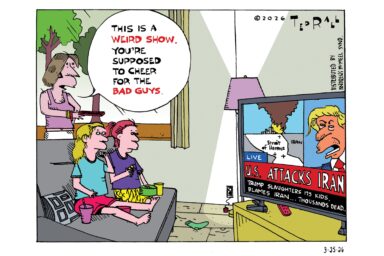
Donald Trump is trying to paint a rosy picture on the massive economic crisis that his war with Iran is causing. Will Americans faced with higher prices believe the president that the conflict helps the economy?
|
Listen To This Story
 |
With oil and gasoline prices spiking and the stalled maritime traffic in the Strait of Hormuz threatening the global economy in myriad ways, Donald Trump is now trying to convince Americans that the US will get rich from his war with Iran.
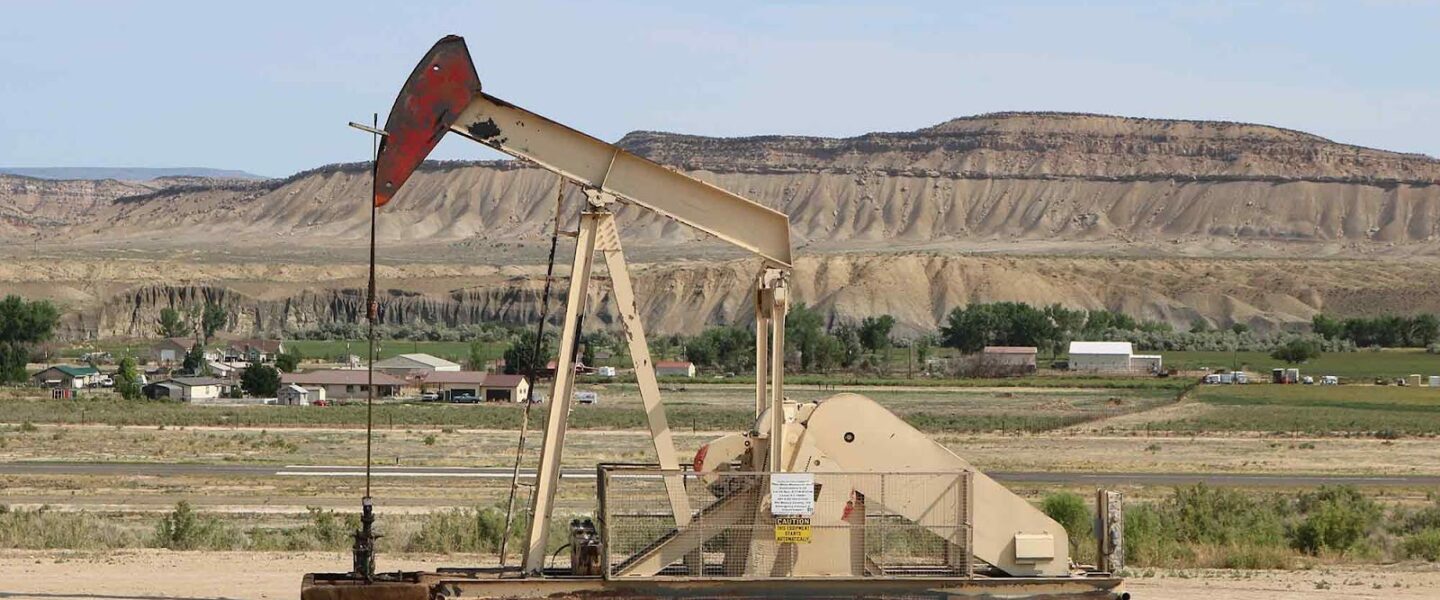
“The United States is the largest Oil Producer in the World, by far, so when oil prices go up, we make a lot of money,” the president wrote in a social media post on Thursday.
In case you are wondering, “we” in that sentence does not mean “the American people.” They will actually end up paying a lot more at the pump the longer this conflict lasts… and for everything else, because the bottleneck at the Strait of Hormuz that the war has created is not limited to oil but also includes other crucial products.
For example, the price of fertilizer has soared ahead of planting season, and these costs will eventually be passed on to American consumers in the fall.
Instead, it will be the oil companies who are making out like bandits because of the war.
The price of crude is up 50 percent already month-over-month, and there is more to come the longer the war continues. Earlier this week, Iran said the world should be prepared for oil prices reaching $200, which would be the highest ever by some margin.
But wouldn’t that mean that any profits those oil companies derive from these record prices would result in a windfall of corporate taxes and therefore benefit Americans?
Of course not.
Oil companies, which receive tens of billions of dollars in federal subsidies (courtesy of taxpayers) pay far less in taxes than the statutory corporate tax rate of 21 percent.
Since 2017, the top 11 US-based oil companies generated income of $554 billion. During that time, they paid $29 billion in federal, state, and local taxes. Ironically, even though the majority of the oil and gas they produced was extracted in the US, they paid $135 billion in taxes to foreign governments.
All of that sounds good to Energy Secretary Chris Wright, a former oil company CEO, who echoed Trump’s sentiment.
“Fortunately, for the United States, we produce more oil than we can consume, we’re a net oil exporter,” he said. “So overall for the US economy, this isn’t bad news.”
However, the oil companies are not “the US economy,” and, while they benefit from the war, consumers do not, as Lorne Stockman, research director of the nonprofit Oil Change International, pointed out.
“Trump’s comment lays bare the perverse incentives central to the fossil fuel system. Instability makes oil prices soar,” he said. “As geopolitical tensions rise, Trump’s fossil fuel billionaire donors reap windfall profits while people are being killed and working people around the world face higher energy and food costs.”
Republicans hope that Americans won’t mind.
Rep. Jim Jordan (R-OH), one of Trump’s main allies in Congress, on Thursday argued that the American people understand that stopping the Iranian regime comes at a cost for them.
“If that means prices go up for a short time, I think Americans understand we can live with that,” Jordan said.
Seeing how the administration has not demonstrated that Iran posed an imminent threat or even bothered to explain in a coherent way what the objectives of this war are, that seems like wishful thinking.
As it is, remember these quotes from Trump, Wright, and Jordan, because, if the conflict and the closure of the Strait of Hormuz drag on for much longer, chances are that you’ll be seeing them in Democratic campaign commercials this fall.