Politics Obstructs a US-Iran Nuclear Deal
Having backed out of an existing deal makes negotiating a new deal tougher. So do domestic political and ego-driven imperatives to “win.”
|
Listen To This Story
 |
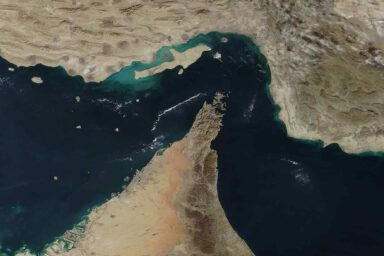
US President Donald Trump has made Iran’s nuclear ambitions, along with unrestricted passage through the strategic Strait of Hormuz, the key to permanently ending the war he began six weeks ago.
The contours of a potential agreement on the nuclear issue have been on the table since last June, when Israel launched its 12-day war against Iran, and the US bombed three Iranian nuclear facilities.
The contours remained on the table in negotiations earlier this year that were interrupted on February 28 when the US and Israel launched their latest assault on Iran.
The reasons US Vice President JD Vance and the chief Iranian negotiator, Parliament Speaker Mohammad Bagher Ghalibaf, failed to bridge the gaps between their positions during talks in Islamabad last week are rooted in domestic political realities. That is particularly true for Trump.
To justify his walking away from the 2015 international agreement that curbed Iran’s nuclear program and set off the events that culminated in the Iran war, Trump needs a new accord that is substantially better, from the US’s standpoint, than the one he chose to abandon.
As Pakistan proposes a second round of talks in the Pakistani capital later this week, there is no public indication that either the United States or Iran has moderated its position — beyond keeping the door open to further negotiations. Pakistani sources suggest one outcome of renewed talks could be an agreement to extend the two-week ceasefire that expires on April 22.
To justify his walking away from the 2015 international agreement that curbed Iran’s nuclear program and set off the events that culminated in the Iran war, Trump needs a new accord that is substantially better, from the US’s standpoint, than the one he chose to abandon.
Trump and Vance insist Iran must commit to never developing a nuclear weapon, a commitment Iran has consistently and repeatedly endorsed — even if the US and Israel have long accused the Islamic Republic of covertly putting the building blocks of a weapons program in place.
In addition, contrary to Trump’s assertions when he began bombarding Iran, there was no evidence that Iran posed an “imminent” nuclear weapons threat.
To produce a new, more stringent nuclear agreement, Trump is demanding an accord that would impinge on Iran’s sovereignty and legal rights under the 1968 international Treaty on the Non-Proliferation of Nuclear Weapons (NPT), of which Iran is one of the original signatories.
Under the NPT, Iran has the “inalienable” right to develop, produce, and use nuclear energy for peaceful purposes, with certain limitations on developing nuclear fuel.
The 2015 agreement that Trump unilaterally disavowed — titled Joint Comprehensive Plan of Action (JCPOA) — also acknowledged Iran’s right to enrich uranium for peaceful purposes on its soil, up to a maximum purity of 3.67 percent, sufficient for power generation.
Starting in 2019, to pressure Trump in his first term in office to return to the 2015 agreement, Iran began enriching uranium to a degree that would put it in range of a nuclear weapon — an action intentionally in direct violation of the scuttled agreement’s terms.
Trump’s recent demand that Iran surrender the right to domestically enrich for up to 20 years — and hand over its 400+ kilograms of highly enriched uranium, rather than allow the Islamic Republic to dilute it to mutually agreed levels under international supervision — is based on a school of thought that holds that intrusive inspections provide few guarantees to prevent a country from breaking out.
“What inspections alone can prevent is precious little and has been exaggerated for decades. Any country that makes nuclear fuel can break out and make bombs within weeks or months,” said nuclear experts Henry Sokolski and Sharon Squassoni in 2025.
Writing in Foreign Affairs, Federica Mogherini, the European Union’s onetime top diplomat and a negotiator of the 2015 agreement, and nuclear expert Sahil V. Shah noted that:
Iran is a country with deep scientific and industrial capacity. … Such knowledge cannot be bombed out of existence. Military action can destroy facilities, but facilities can be rebuilt deeper underground with greater resolve and with more domestic political support.
Mogherini and Shah pointed out that, unlike Trump and Vance, the 2015 negotiators recognized that all of Iran’s political factions, including the reformists, would reject demands for the total elimination of Iran’s nuclear program.
The negotiators “understood that Iranian negotiators operate within their country’s factional politics and that compromises would need to reflect what each side could concede without losing domestic support,” Moghrerini and Shah said.
Complicating Trump’s quest for a new agreement is that Iran insists any new accord include provisions that make it harder for any party to back out of it — a response to the president’s 2018 abandonment of the existing agreement and initiation of two wars, even as negotiations for a new agreement were achieving progress.
In a book on Iran’s grand strategy, published last year, Iranian-American scholar and former Obama administration adviser Vali Nasr argued that “what is most often missed in understanding Iran’s revolution and its Islamic Republic is [the] fundamental commitment to protecting national sovereignty and displaying independence on the world stage.”
Nasr argued that Iran’s principle of independence, “woven into the state’s understanding of the world and its strategy for meeting it involved a steely determination — and ethos of resistance.”
In response to Trump’s recent demands, Iran countered by agreeing to limit enrichment to 3.67 percent, a three-to-five-year pause on domestic enrichment, and a pledge not to stockpile enriched uranium.
In addition, Iran held open the possibility of US participation in a future civilian nuclear program in exchange for the lifting of sanctions.
Complicating Trump’s quest for a new agreement is that Iran insists any new accord include provisions that make it harder for any party to back out of it — a response to the president’s 2018 abandonment of the existing agreement and initiation of two wars, even as negotiations for a new agreement were achieving progress.
Such provisions could include anchoring a new agreement in international law through a United Nations Security Council resolution that embraces the accord, even if that turned out to be little more than a fig leaf, with violations of international law becoming the new norm in international relations.
James M. Dorsey, an associate editor of WhoWhatWhy, is an adjunct senior fellow at Nanyang Technological University’s S. Rajaratnam School of International Studies and the author of the syndicated column and podcast, The Turbulent World with James M. Dorsey.