Iran Raises a Critical Question: Who Do We Talk to To Get Out of This Mess?
Neither Donald Trump, Steve Witkoff, nor Jared Kushner knows who on the other side can be trusted to begin negotiations. It’s doubtful that the Iranians know themselves.
|
Listen To This Story
 |
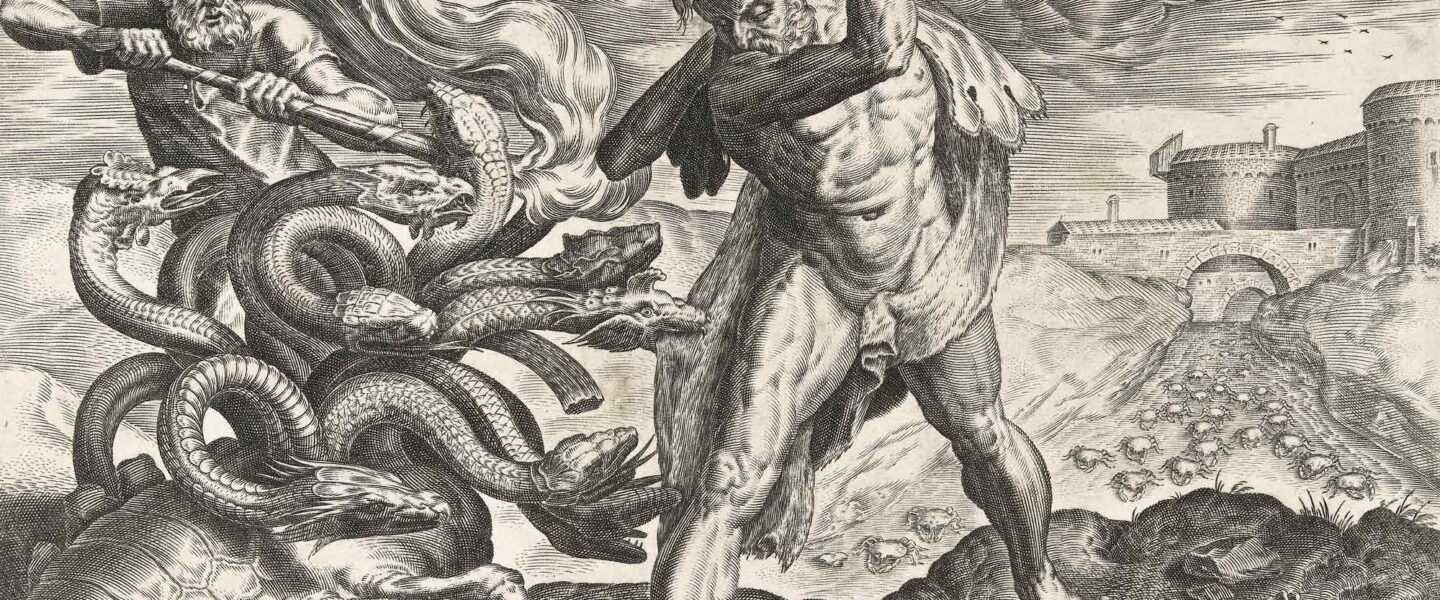
In Greek mythology, Hercules had to confront a multiheaded monster known as the Hydra. When you cut off the monster’s head, two more appeared in its place. In killing most of Iran’s known leadership, the American-Israeli bombing campaign against Iran has effectively created the modern equivalent of the Hydra.
The Iranians had already seen what an American-Israeli attack could be like during the massive American-Israeli bombardment last June. That attack was designed to knock out Iran’s nuclear program, but missed its cache of highly enriched uranium. Forewarned, Iran’s leadership created four layers of replacements for commanders who might be killed in a new assault. In addition to picking ready replacements for key personnel, they decentralized their forces, dispersing them into 31 semi-autonomous command centers, each equipped with its own supply of missiles and ammunition, and support troops. It’s a safe bet that any of the independent command groups have enough asymmetric firepower to keep the Strait of Hormuz closed, effectively paralyzing the global energy supply.
The assassination of Ali Larijani, a brutal but pragmatic politician who had headed Iran’s security apparatus, is just one example of the possible negative effects inherent in murdering Iran’s top leadership. Larijani may have been a reprehensible character, but if the US decided it needed to end the confrontation, he was one of the few people who had enough authority to convince Iran’s different commanders to stand down. The danger now is that one Iranian faction may agree to a ceasefire while another continues the attacks on Gulf shipping.

As it stands now, neither Donald Trump, Steve Witkoff, nor Trump’s son-in-law, Jared Kushner, knows who on the other side can be trusted to begin negotiations. It’s doubtful that the Iranians know themselves. The likelihood is that the individual commanders will need to go through a turbulent period before they can decide among themselves who is really in control.
What is apparent is that the government is now firmly in the hands of the Islamic Revolutionary Guard Corps (IRGC). Iran’s civilian population has suffered. The IRGC is more in control than it was before the bombing began. Not long ago, there was some speculation that different ethnic groups, notably the Kurds, might challenge the Guard’s authority. That option seems to have vanished as the Guard and its militia component, the Basij, have tightened their control over a shell-shocked population. It is a safe guess that if Iran was not really serious about building a nuclear device before, it certainly will be now.
In effect, Donald Trump and Israeli Prime Minister Benjamin Netanyahu kicked a hornet’s nest when they attacked Iran. Now it’s not clear how they will get out of the mess that they created.
The Greek myth about the Hydra was, of course, an allegory, an attempt to explain the situation the Greeks faced in ancient times by relating the problem and its solution to a simple story that everyone could understand. Hercules eventually realized that cutting off the heads of the Hydra couldn’t work. Instead, he used a torch to burn the heads to a stump. In today’s terms, that would mean stamping out each of Iran’s autonomous command centers. That’s unlikely to be done from the air.
The situation recalls a routine lecture I heard during the first day of US Army basic training. The lecture was delivered by a general whose name I’ve forgotten, but I remember his key point: “Air power and artillery are impressive,” he said, “but in the end it is always the rifleman on the ground who delivers victory.”
Donald Trump currently has two Marine expeditionary groups headed for Iran, along with another 2,000 troops from the 82nd Airborne Division, roughly two-thirds of America’s available rapid deployment force. The total is around 7,000 men. The Pentagon is refusing to confirm or deny a story that ran in The Wall Street Journal that Trump is now considering sending an additional 10,000 troops into the region.
In Vietnam, at the peak of US deployment, more than 500,000 US troops were on the ground. During the Iraq War, roughly 170,000 US troops were deployed. Both wars ended in failure, but it was really Vietnam that constituted a near-perfect study in the dangers inherent in asymmetric warfare. Wars are asymmetric when one side has overwhelming power, and the other has next to nothing, except ingenuity and a gift for doing the unexpected. The classic example was the duel between David and Goliath.
In the current struggle, the US and Israel find themselves playing the role of Goliath. Goliath’s fatal weakness was hubris, a failure to understand what the other side can suddenly come up with. What really matters in combat is not always obvious. Who could have imagined, in the case of David and Goliath, that a simple slingshot would prove more powerful than a sword?
Anyone can fall victim to hubris. In Vietnam, I remember an American Army colonel casually commenting that the war was all about money. “Whoever has the most,” he said, “wins.” I was dismayed at the colonel’s cluelessness. The US clearly had the most money, and it was clear, even then, that it was losing. “There are a bunch of guys out there dressed in black pajamas and wearing sandals made from airplane tires,” I told him, “and they are making fools out of the US Army. I don’t see how you can say it’s about money.”
In Vietnam, the US used helicopter-borne sophisticated sensors that could detect a human presence moving beneath a seemingly impenetrable jungle canopy. Once the sensors had detected a mass troop concentration, B-52 strikes were called in. The North Vietnamese caught on fairly quickly and began hanging plastic bags of urine in the trees. The odor tricked the helicopter-borne sensors into believing the enemy was still there, even though it had long since moved on. Countless B-52 strikes dropped hundreds of thousands of dollars of bombs on empty jungle. The only thing that had been accomplished was to blow up a bunch of trees and the US economy. The US has always been tempted by new technology that proved inconsequential or useless on the battlefield.
Vietnam’s total population during the war was less than half of Iran’s today. Iraq’s population during George Bush’s war there was less than a third of Iran’s population today. Considerably more than 7,000 men will be needed on the ground if the US really wants to control the situation. It may not be worth the effort. It is hard to see how the US can prevail in Iran, so it may make more sense not to try.
The Vietnam War was lost from the start because the US knew from the beginning that if it passed a certain limit, China would enter the war and overwhelm the US with sheer numbers. From the start, the whole affair became a war of attrition in which the US had a great deal to lose and nothing to gain.
The Iranians are considerably more technically sophisticated than Vietnam, and it is clear that Russia and China are more than ready to help Iran from behind the scenes. A number of Iranian missiles have been at least partially reengineered from Russian models. It is not clear how Russia and China will react if the US rampages through Iran the way it did in Vietnam and Iraq. Pushed too far, the situation could be the spark that ignites World War III, although it’s not likely to come to that. The more likely scenario is that Trump’s initiative will lead to some serious American casualties.
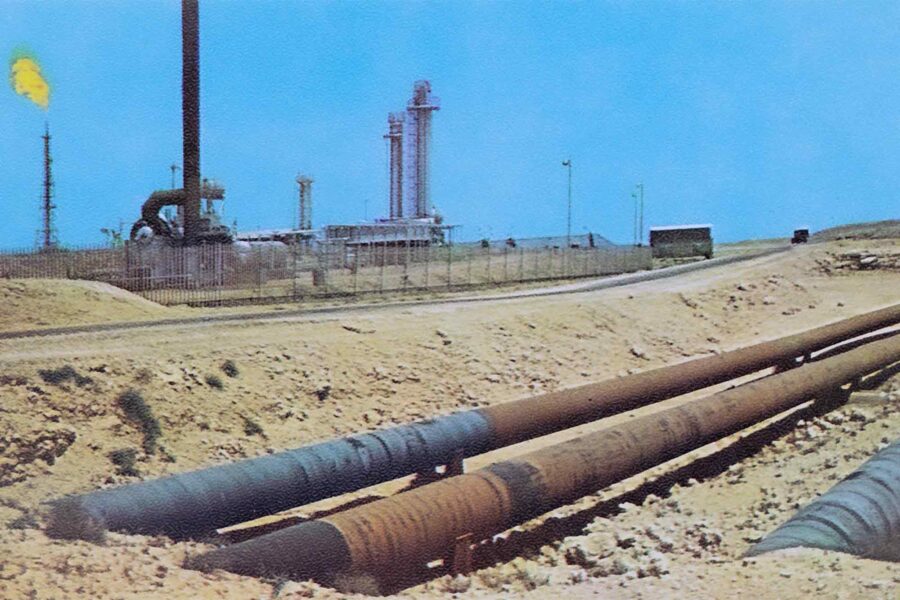
Trump may have been told that a few crack American combat groups can seize and hold Kharg Island, effectively cutting off all Iranian oil exports and strangling the country into submission. Holding Kharg Island, however, will make some of America’s crack troops a target for drone and missile attacks, which will not only lead to casualties but also exhaust US resources.
Part of the asymmetry of the current conflict is that Iran can produce its Shahed drones for as little as $20,000 a piece, and it is producing thousands of them. In contrast, a Patriot missile costs at least $3 million. The US burned through $2.4 billion worth of Patriots in just the first five days of its attack against Iran. That’s a boon to American arms manufacturers, but it is ultimately unsustainable as far as the US Treasury is concerned. Even if US troops survive a ground war in Iran, the damage to the flow of oil and gas needed to keep the world functioning would do critical damage to the entire world economy. None of this had to happen, but the fact is that Donald Trump made it happen.
Of course, not everyone sees the war as a bad thing. Saudi Arabia and some of the Gulf emirates have encouraged Trump to keep the attack going for a bit. The Saudis are concerned that fossil fuels may be on the way out, and the war gives them a chance to make billions on the increased cost of oil. The oil companies that invested millions in getting Trump elected are already earning billions of extra dollars from the surge in prices. Refueling at an admittedly notorious gas station in Los Angeles has already hit more than $8 a gallon. Russia has experienced a surge in profits, and even Iran is managing to make a bundle.
Trump insists that the US doesn’t need the Strait of Hormuz because it is a net oil exporter and isn’t afraid of shortages. But the price of oil depends on the total global supply. Energy costs will skyrocket everywhere, especially in the US, which transports nearly everything by truck. That said, Trump has done his best to sabotage alternative energy. In the midst of the bombing, he refunded nearly a billion dollars to the French oil company, Total, in order to take back its leases on a potential offshore wind farm that Trump wanted to kill. The condition was that Total promised not to invest the refunded money in wind energy.
Speculators also stand to gain from the war. During the Russian occupation of Afghanistan, the Kremlin became experts at dumping gold on the market just after they had created a crisis, and then watching the price skyrocket. The Wall Street Journal recently reported that a flurry of activity hit the American stock market just 15 minutes before Trump posted on Truth Social reassuring investors that a resolution was in sight and that oil supplies might not be shut off.
It’s not known if there was any connection, but Forbes and other news media reported that the Trump family holdings have nearly doubled since Trump took office, from $3.9 billion to from $6 billion to $7.3 billion. California Rep. Robert Garcia (D), and Oregon Sen. Ron Wyden (D) both wrote complaints to the White House, charging that Trump’s son-in-law Jared Kushner was carrying out negotiations in the Middle East for the US government while simultaneously attempting to raise millions of dollars from the Saudis as private investment in his personal equity fund.
Secretary of Defense Pete Hegseth has repeatedly stated that the US is no longer interested in “nation building.” Trump made it clear during his kidnapping of Venezuela’s President Nicolás Maduro that he doesn’t really care what kind of government is installed after the US has engaged in regime change, as long as it agrees to do business with the US on Trump’s terms. Trump may have similar plans for the Middle East. From a regional point of view, the massive bombing campaign looks very much like an attempt to reestablish colonialism, only this time with a larger share of the region’s oil going to the United States. It goes without saying that hardly anyone in the region is willing to accept that without a fight.
The real losers in the mess that Trump has created are ordinary Iranians who had hoped for a change in government once the 86-year old Supreme Leader Ali Khamenei had been forced to retire. With the IRGC now firmly in control, liberation from that brutal regime may not happen for decades. Australia has already begun refusing visas to Iranians, fearing a new surge in refugees fleeing the country. The only sensible resolution will ultimately have to come from diplomatic negotiations, and that will be difficult as long as the US and Israel continue attempting to bomb the country back to the Stone Age.
The rational approach is to let things cool off and eventually begin talking again. Unfortunately, as long as immense profits can be made from the chaos, it’s difficult to get anyone in Tehran or Trump’s administration to think rationally about long-term consequences.