Did Trump Threaten Iran With War Crimes If the Strait of Hormuz Stays Closed?
The International Criminal Court considered it a war crime when Russia targeted Ukraine’s electrical infrastructure. Now, Donald Trump is threatening Iran with the same.
|
Listen To This Story
 |
With every passing day, it becomes more apparent that the Strait of Hormuz is a 20-mile-wide thorn in Donald Trump’s side, and that, in spite of White House Deputy Chief of Staff Stephen Miller’s claim that the president had “calculated through every permutation” of how his war with Iran would play out, the administration had not considered what might happen if Tehran shut down the crucial waterway.
But it did, and, as a result, the global economy has been plunged into turmoil and oil prices (among other indicators) have soared. This, in turn, has forced Americans to pay significantly more to fill up their cars, which is an unacceptable outcome for a president obsessed with his approval ratings.
So far, his short-term (and short-sighted) fixes to lower the cost of gasoline, such as tapping into the strategic oil reserve and easing sanctions on Russian and Iranian oil at sea, have not worked. That’s hardly surprising since that’s like trying to use a Band-Aid to staunch the bleeding from a severed limb.
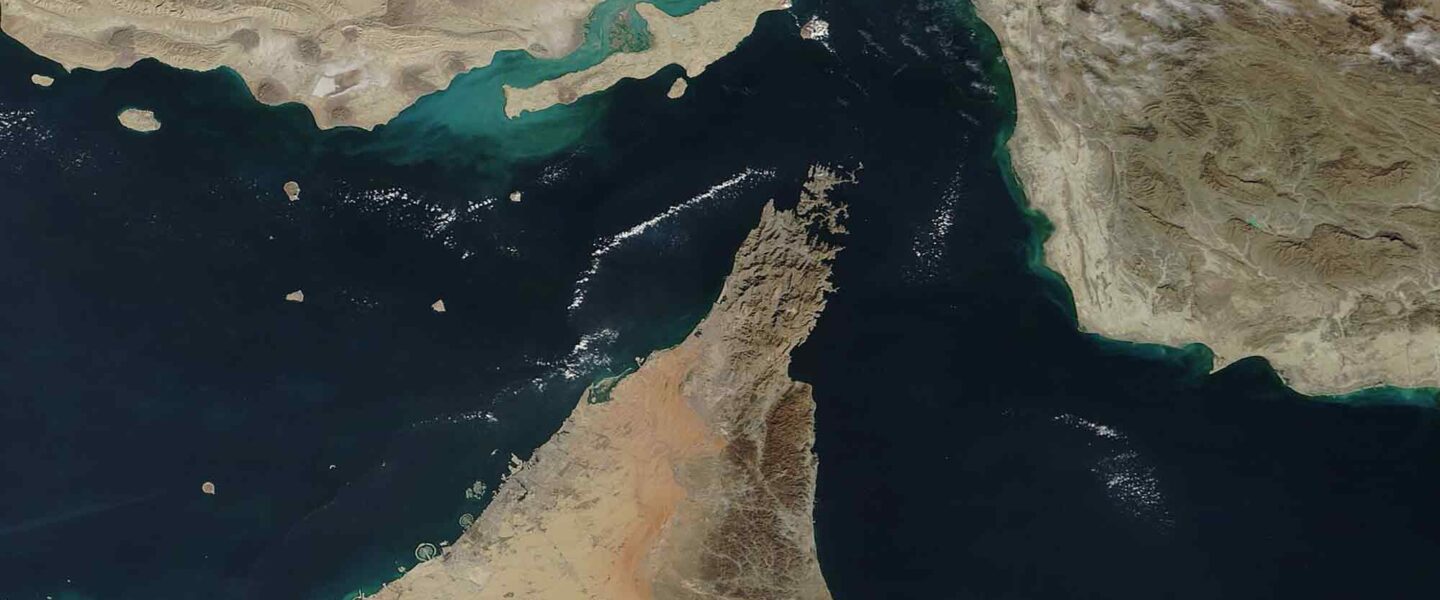
The only thing that will (slowly) bring down prices again is to open the Strait of Hormuz, the waterway that narrows to 20 miles off the coast of Iran and is used to transport 20 percent of the oil produced globally.
Even Trump and the brainiacs who didn’t foresee that Iran might close the strait in response to being attacked by the US and Israel have now figured this out, which is why the president has directed his efforts toward forcing Tehran to unclog this bottleneck.
So far, nothing has worked.
Which isn’t terribly surprising because Trump has mainly tried the “I don’t care about the Strait of Hormuz, anyways” approach, which should sound familiar to anybody who has been jilted by a potential prom date, and sought to browbeat countries he spent the past year alienating into cleaning up his mess.
On Saturday, he turned to a new tactic.
“If Iran doesn’t FULLY OPEN, WITHOUT THREAT, the Strait of Hormuz, within 48 HOURS from this exact point in time, the United States of America will hit and obliterate their various POWER PLANTS, STARTING WITH THE BIGGEST ONE FIRST!” he wrote in a social media post.
You don’t have to be a Geneva Conventions buff to realize that this sounds a lot like the US president threatening to commit a war crime.
But don’t take our word for it.
Here, for example, is United Nations Secretary-General António Guterres.
“If there are attacks either on Iran or from Iran on energy infrastructure, I think that there are reasonable grounds to think that they might constitute a war crime,” he told Politico earlier this week.
In addition, just a couple of years ago, the International Criminal Court (ICC) issued arrest warrants against two senior Russian military officials for committing the war crimes of directing attacks at civilian objects and causing excessive incidental harm to such targets.
Specifically, the ICC said there were “reasonable grounds to believe that the two suspects bear responsibility for missile strikes carried out by the Russian armed forces against the Ukrainian electric infrastructure from at least 10 October 2022 until at least 9 March 2023.”
In the case of Trump, the “reasonable grounds” for determining that the US president ordered the same type of attack would be him straight-up admitting on social media that this is the goal.
It should be noted that attacking a power plant is not necessarily a war crime if it can be demonstrated that the facility is used for military purposes.
This is explained in great detail in this post from the “Articles of War” blog that is run by the Lieber Institute for Law & Warfare at the United States Military Academy West Point.
It lays out Russia’s defense for attacking Ukraine’s energy infrastructure, i.e., that its targets could help the defending forces fight off Vladimir Putin’s invaders, and why it falls short.
“[Such] assertions increasingly ring hollow, for the Russian attacks have become so widespread that it is difficult to imagine that all of the targeted systems and facilities amount to military objectives either because they are being used or will be used to support Ukrainian military operations,” author and military scholar Michael Schmitt wrote.
If that was the case in Ukraine, it would certainly be true if Trump follows through on his threat to attack Iranian power plants.
After all, he and other US officials, such as former Fox News morning show host and current Defense Secretary Pete Hegseth, have maintained that Iran’s military no longer poses a threat.
Ten days ago, Trump claimed that the US has “already destroyed 100% of Iran’s military capability.” He has followed that up with many similar statements. Therefore, if we were to take him at his word, power plants would now be purely civilian targets and attacks on them would be meant to punish Iran’s general population, which would undoubtedly be a war crime.
Of course, Trump has given us no reason to take him at his word, which is why it will ultimately be up to international bodies like the ICC to sort out whether such a crime has been committed (if the US does attack these power plants).
If they do, then prosecutors will surely use the president’s social media post from Saturday evening as exhibit A.