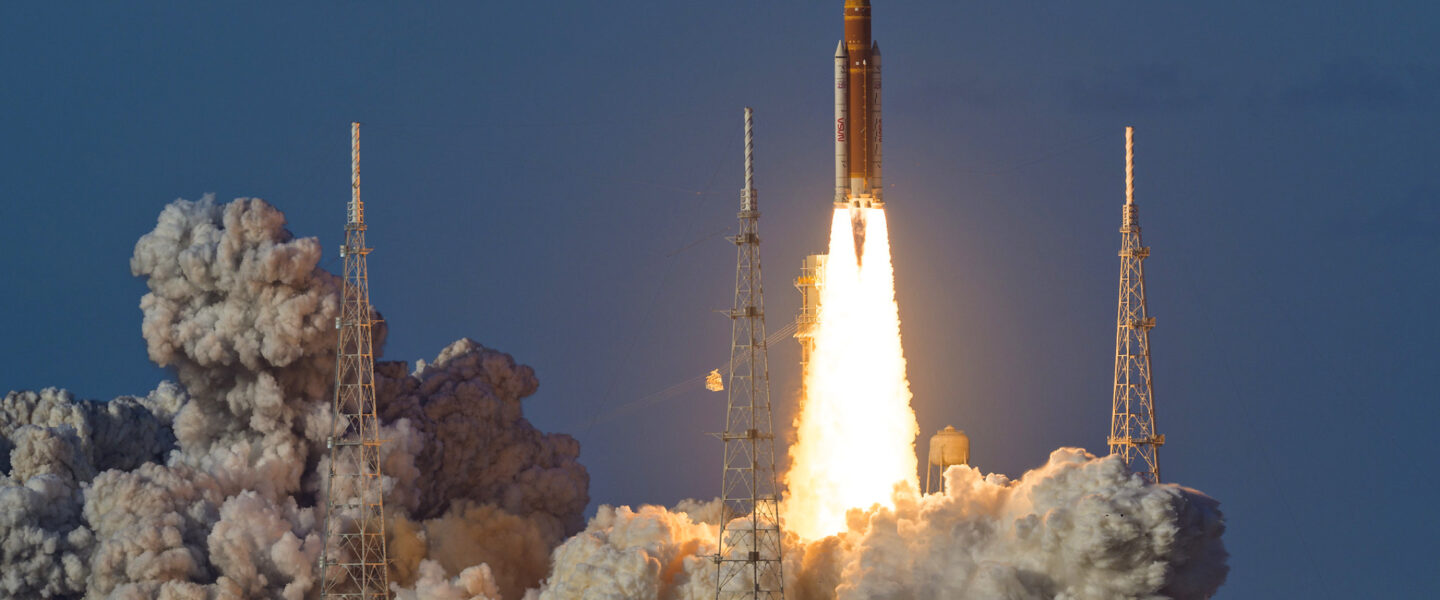
Artemis II Completes Record-Setting Moon Flyby
PICKS are stories from many sources, selected by our editors or recommended by our readers because they are important, surprising, troubling, enlightening, inspiring, or amusing. They appear on our site and in our daily newsletter. Please send suggested articles, videos, podcasts, etc. to picks@whowhatwhy.org.
|
Listen To This Story
 |
Artemis II Completes Record-Setting Moon Flyby (Maria)
The author writes, “Artemis II astronauts broke Apollo 13’s distance record at 1:57 p.m. Eastern Time on Monday, hugging each other in the cramped capsule as they made history for being the first four humans to travel the farthest from Earth.”
Grandmother Faces Trial in Alabama for Wearing Penis Costume to No Kings Protest (DonkeyHotey)
The author writes, “When the viral video cooled off, people thought the case against the 62-year-old would be dropped. Prosecutors doubled down.”
Trump Is Forcing Coal Plants To Stay Open. It Could Cost Customers Billions. (Reader Steve)
From Stateline: “In an unprecedented use of federal authority, President Donald Trump’s administration has invoked emergency powers to force a series of retiring coal plants to stay open. Utilities, states and grid operators have said the aging plants are expensive, in bad repair and no longer needed to meet regional energy needs. But Trump’s efforts to save the dwindling coal industry have forced plant operators to continue investing in the facilities — a move that some consumer advocates fear could mean billions of dollars in added costs for customers in dozens of states.”
Arctic Sea Ice Hits Lowest Winter Level as Unprecedented Heat Hits Smashes Records All Over Earth (Laura)
The author writes, “Vital Arctic sea ice shrank to tie its lowest measured level for the winter, the season when ice grows, as a warming Earth shattered records across the continents. Arctic sea ice levels, especially in the summer, are crucial to Earth’s climate because without the ice reflecting sunlight, more heat energy goes into the oceans. Ice of all kinds around the poles acts as Earth’s refrigerator. Wildlife, such as polar bears and seals, also depend on sea ice. Lack of sea ice in the Arctic creates new shipping routes and in doing so causes geopolitical disruptions, making once-ignored places such as Greenland, more desirable.”
COVID‑19 Variant BA.3.2 Is Spreading Quickly Across US — A Doctor Explains What You Need To Know (Sean)
The author writes, “A variant of COVID-19 called BA.3.2, which has circulated under the radar since late 2024, is now spreading quickly across the United States. As a pulmonary and critical care doctor, I see many patients who are at high risk for severe COVID-19 due to chronic lung disease, as well as patients living with long COVID. All of them ask me how worried they should be about new variants of the virus. There’s no sign so far that BA.3.2, nicknamed Cicada, is any more dangerous or causes more severe disease than the variants that were circulating in the winter of 2025-26. But because it’s significantly different from them, the current COVID-19 vaccine may not be as effective against it.”
People 65 and Older Can Get Better With Age, Study Shows. This Is the Key. (Russ)
From The Washington Post: “When Diana Nyad was 64 years old, she swam 110 miles from Cuba to Florida, becoming the first person to do so without a shark cage. It was her fifth attempt over the course of 3½ decades. ‘I said when I did that swim, which was 12 years ago, that that was the prime of my life,’ Nyad said during a phone interview this month. She felt in better shape physically and mentally than she ever had before. ‘And honestly, at 76, I’m even better now than I was then.’ Nyad is one of many examples of older people accomplishing things their younger selves could only dream of — but are these people anomalies? Or could many of us get faster, stronger and sharper with age?”
43 Years Ago, Scientists Dropped Gophers Onto a Volcano. Today, They’re Tiny Heroes. (Dana)
From Popular Mechanics: “It would probably be pretty alarming to learn that, in the early 1980s, scientists decided to drop off a bunch of gophers at the site of a volcanic eruption. But don’t worry, it’s not as bad as it sounds. In fact, according to a report from the University of California, this particular gopher-volcano encounter proved to be such a net positive that its effects are still being felt 43 years later.”