Flurry of Decisions Gives Both Parties Something to Cheer
Various legal battles across the country that could have a major impact on the outcome of the midterms are heating up with less than two months to go before Election Day.
|
Listen To This Story
 |
In a trend that has been fairly consistent all year, when cases come before them concerning attacks on free and fair elections, federal judges usually side with democracy while the Supreme Court mainly rules in favor of the GOP.
We saw this play out once again on Friday, when various decisions gave both Republicans and Democrats something to celebrate.
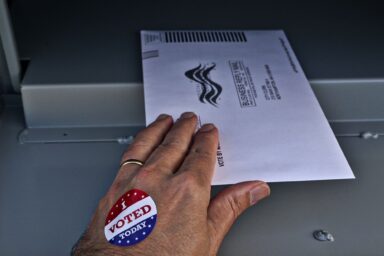
In the most impactful ruling, Massachusetts District Court Judge Indira Talwani issued a preliminary injunction that bars the Trump administration from meddling in who gets to vote by mail. In doing so, she extended her own two-week prohibition blocking the United States Postal Service (USPS) from implementing a federal regulation that would force states to submit lists of eligible voters.
In her decision, Talwani makes it clear that states would be free to voluntarily comply with that USPS rule since they are the ones administering elections and not the federal government, no matter how much Donald Trump would like to put his finger on the scale.
However, she also pointed out that this would lead to chaos and almost necessarily disenfranchise eligible voters.
“Now, 60 days before the November 3, 2026 midterms, the Final Rule would require 10,000 different election jurisdictions to conform to new ballot design requirements (requiring many to re-design their ballots), have a wave of new designs undergo Mail Design Analyst review, print new designs from their vendors (typically ranging from four to sixteen weeks in lead time), and then, contingent on technological capabilities, collate and submit voter information to a portal that does not yet exist and has not been proven to work,” Talwani wrote.
“Having considered this series of hurdles for officials against the backdrop of an impending election, and mindful of the fact that any minor malfunction will result in the denial of mail ballots, the court concludes that disenfranchisement for Plaintiff Organizations’ members, regardless of residence, is practically inevitable,” she added.
This is a big win for the tens of millions of Americans who want to vote by mail. However, even though the Constitution does not give the executive branch a role in elections and the first ballots are already being sent out, Talwani’s decision may not be the final word since the Supreme Court has repeatedly sided with the president and Republicans over the the plain language of the Constitution, well-established precedents, and landmark laws like the Voting Rights Act.
On Friday, its right-wing majority once again bailed out the GOP by overturning a ruling from last week which stated that only candidates and not also political parties and joint fundraising committees were eligible for the lowest advertising rates a broadcaster can offer.
By overturning that decision (and long-standing practice), the high court is helping Republicans make up the fundraising disadvantage many of their candidates experience. For Americans, the net effect of the decision will be that they are going to see a lot more GOP ads ahead of the midterms.
Finally, according to the Philadelphia Inquirer, in another blow to the GOP, Pennsylvania Commonwealth Court Judge Stella Tsai ruled that a former Republican accused of running as a Green Party candidate to siphon votes away from a Democrat in one of the most competitive House races will be disqualified in the state’s 7th Congressional District.