Democrats Notch Big Win in Court Battle Over Political Ad Rates
A federal appeals court ruling declaring that only political candidates are entitled to purchase campaign ads at the lowest rate is a major setback for the GOP.
|
Listen To This Story
 |
In the battle over who controls Congress next year, both parties are trying to gain any edge they can get. Some of these advantages only affect individual contests. In Pennsylvania, for example, a Republican is trying to get on the ballot as a Green Party candidate to syphon votes away from a Democrat in one of the closest House races. Others have huge implications, like the mid-decade gerrymanders that are expected to net the GOP up to 10 House seats.
While most of those “big” things attract a lot of attention, some of them also happen in relative obscurity — like a court decision on Tuesday that, for now, thwarts the Trump administration’s attempt to make campaign ads cheaper for political parties.
At issue is the “lowest unit charge,” a term that most Americans have likely never heard of.
In plain English, the LUC, as it is also known, ensures that broadcasting stations charge political candidates the lowest possible rate for their political ads in the 60-day period ahead of a general election (and 45 days ahead of a primary).
In other words, if a local furniture store that advertises a lot on a particular station pays a discounted rate of $10,000 for a 30-second spot during the local evening news, then a candidate for office cannot be charged more for the same time.
This rule has never before applied to political parties or joint fundraising committees, which have to pay significantly more — in some cases even a multiple of the LUC — for their ads.
However, in the wake of a Supreme Court ruling earlier this year that lifted restrictions on how much political parties could spend in coordination with the campaigns of their candidates, the Federal Communications Commission’s (FCC) media bureau said the lowest unit charge also applied to “all authorized committees,” e.g., the National Republican Congressional Committee (NRCC) or the Democratic Senatorial Campaign Committee (DSCC).
This would have greatly benefited the GOP because the party’s coffers and its joint fundraising committees are flush with cash since they can accept much larger donations than individual campaigns.
For example, the Republican National Committee had $130 million cash on hand at the end of last month while the Democratic National Committee had only about 16 million (and nearly $18 million in debt).
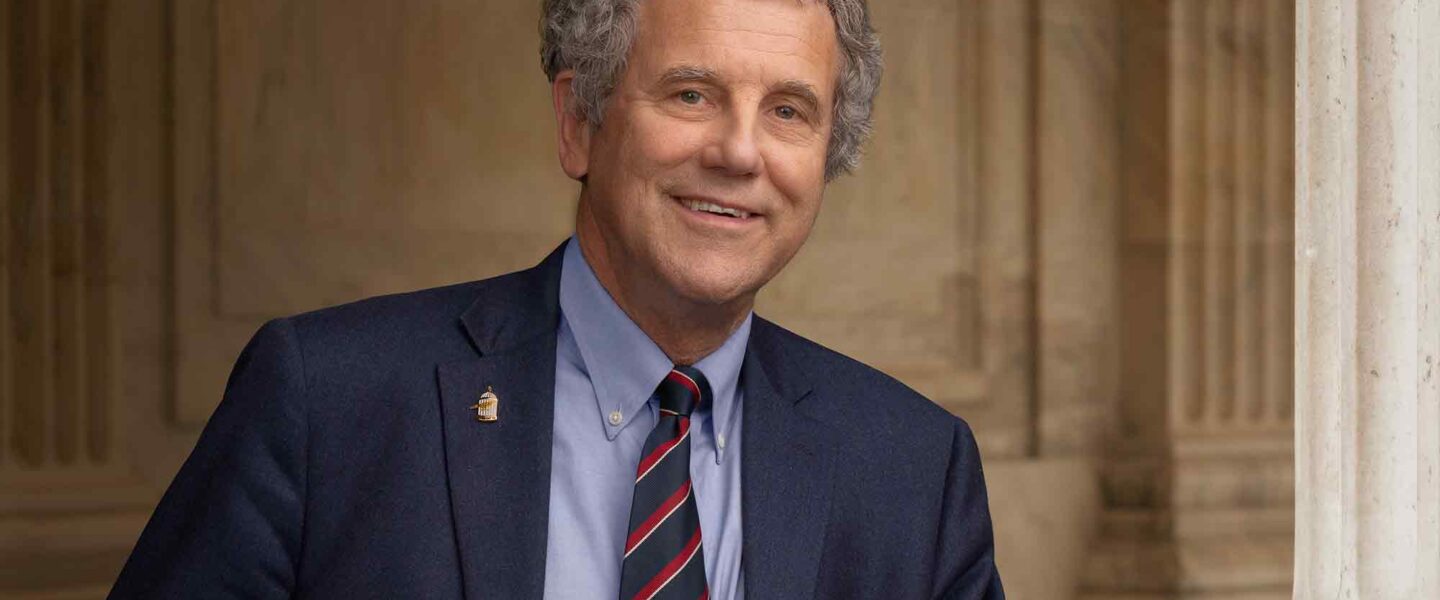
Conversely, Democratic candidates are miles ahead of their Republican counterparts in many key races. At the end of the second quarter, Sherrod Brown (D) had nearly twice as much cash on hand as Sen. Jon Husted (R) in Ohio, while Sen. Jon Ossoff (D) holds a 20-1 advantage over his challenger Rep. Mike Collins (R) in Georgia.
Therefore, not surprisingly, both of these Democrats were parties to a lawsuit that challenged the FCC’s guidance on who is eligible for the LUC. They believe that it should only be the candidates themselves and not entities like the RNC.
On Tuesday, the US Court of Appeals for the Fourth Circuit agreed, saying in its decision that “campaign finance statutes are clear that neither political parties nor joint fundraising committees with non-candidate members can be entitled” to the cheapest ad rates.
Unless that decision is overturned, as the GOP is certain to appeal the ruling, it will benefit individual candidates with a cash advantage, i.e., mostly Democrats, because they can stretch their dollars further than groups like the RNC.
“The DSCC and the [Democratic Congressional Campaign Committee] dealt Republicans a major blow in their latest attempt to rig the rules in their favor,” the two groups said in a joint statement, adding that their candidates’ “strong grassroots fundraising amplifying the voice of everyday Americans remains a fundamental advantage in the midterms.”