The Workers Caught in Trump’s Offshore Wind Crackdown
The Trump administration’s war on renewable energy is jeopardizing exactly the kind of jobs that the president claims to want to create.
|
Listen To This Story
 |
Over two years the work had become routine.
Each shift marked another step toward completing Revolution Wind, an offshore wind farm expected to generate enough renewable electricity to power more than 350,000 homes and businesses across Rhode Island and Connecticut.
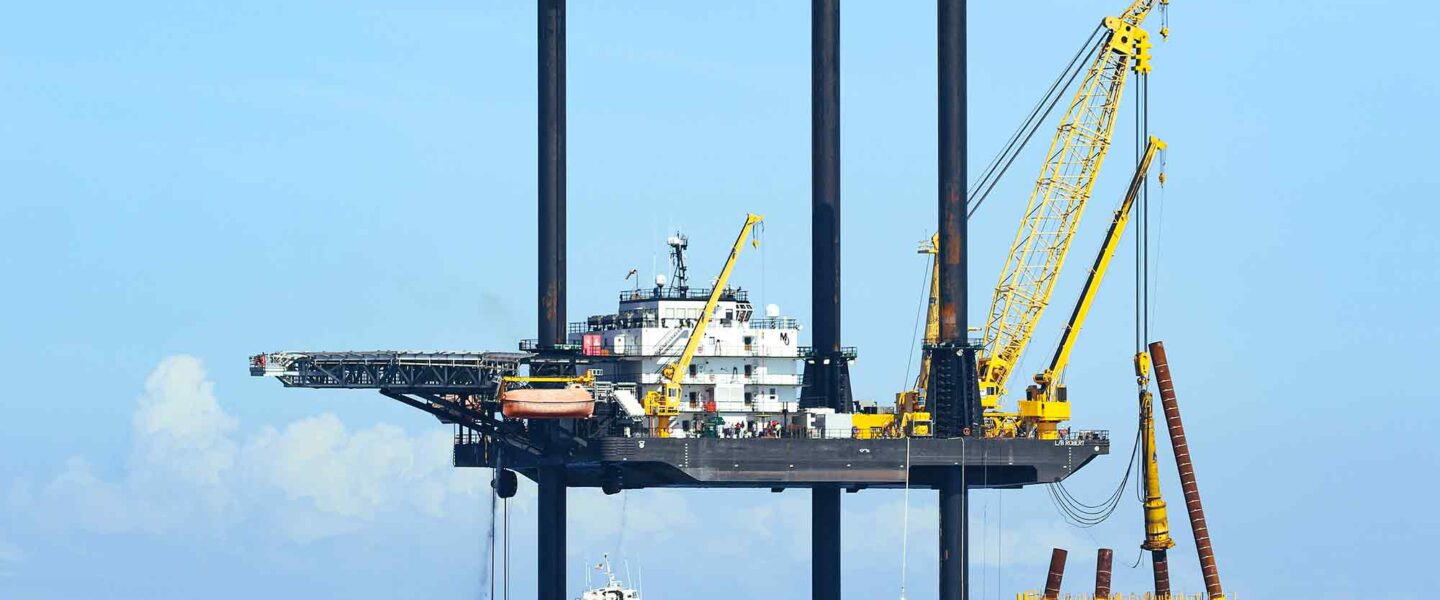
Crews traveled miles off the coasts of the two states, installing foundations, preparing electrical systems, transporting massive turbine components, and carrying out the highly specialized work required to construct the 704-megawatt power plant.
Then, one day, everything stopped.
Antonio Gianfrancesco, a wind turbine technician on the project, remembers exactly where he was when word spread that the Department of the Interior had issued a stop-work order.
“I was at home, and I woke up to a call from my coworkers,” he said. “They were all frantic, they didn’t know what was going on, and honestly, that is kind of how I felt at the moment.”
Gianfrancesco and his coworkers were collateral damage in the Trump administration’s broader war on renewable energy and, in particular, the president’s long-standing campaign against wind power. Ever since a Scottish court ruled against his attempt to halt the construction of an offshore wind farm near his golf resort in Aberdeenshire, Scotland, in 2015, Donald Trump has repeatedly railed against wind turbines. His opposition to offshore wind has since become a defining feature of his energy agenda.
The administration’s actions against Revolution Wind and other offshore wind projects have raised questions not only about the future of renewable energy in the United States but also about whether the administration’s approach is consistent with its stated goals of American job security and domestic industry dominance.
In a statement made at the time, Jason Grumet, CEO of the American Clean Power Association (ACP), argued that the administration’s actions were undermining those very goals. He warned that the president’s attacks on offshore wind were harming American workers while allowing political ideology to determine which energy projects proceed in the country.
Gianfrancesco’s experience highlights the implications of Trump’s ideological energy agenda for America’s blue-collar workers in the renewable energy sector.
“I was worried about being out of a job, not being able to support my family,” he said. “It caused me anxiety, and I think that is how a lot of people felt.”
A Project Brought to a Halt
Rhode Island has spent years pursuing an ambitious clean energy agenda. In 2021, the state strengthened that commitment by passing the Act on Climate, which established legally enforceable targets to reduce greenhouse gas emissions 45 percent below 1990 levels by 2030 and 80 percent by 2040, and to achieve net-zero emissions by 2050. Reaching those goals would require a significant expansion of renewable energy generation, placing offshore wind projects like Revolution Wind at the center of the state’s long-term climate and economic strategies.
Rhode Island’s clean energy agenda reflects a broader effort by some states that have historically consumed energy produced elsewhere to take greater control over how their energy is generated. Rather than relying solely on fossil fuels mined outside their borders, states like Rhode Island, Connecticut, Massachusetts, and New York have invested in a combination of renewable energy sources, such as offshore wind and hydropower, to build a more domestically based energy supply and create new industries around it. Revolution Wind was designed to become a cornerstone of that strategy.
Developed jointly by Ørsted, a Danish renewable energy company, and Skyborn Renewables, a Germany-based offshore wind developer, the project also reflects a transformation taking place within the energy industry itself.
Once one of Europe’s most coal-reliant energy companies, Ørsted spent nearly two decades transforming its business model, gradually phasing out fossil fuels and investing heavily in offshore wind and other renewable energy sources. That transition culminated in 2024, when the company shut down its last coal-fired power plant in Denmark.
But while certain states and companies have been working to move away from dependence on fossil fuels, the Trump administration is pushing the country in the exact opposite direction, prioritizing fossil fuel production while placing new obstacles in the path of renewable energy projects.
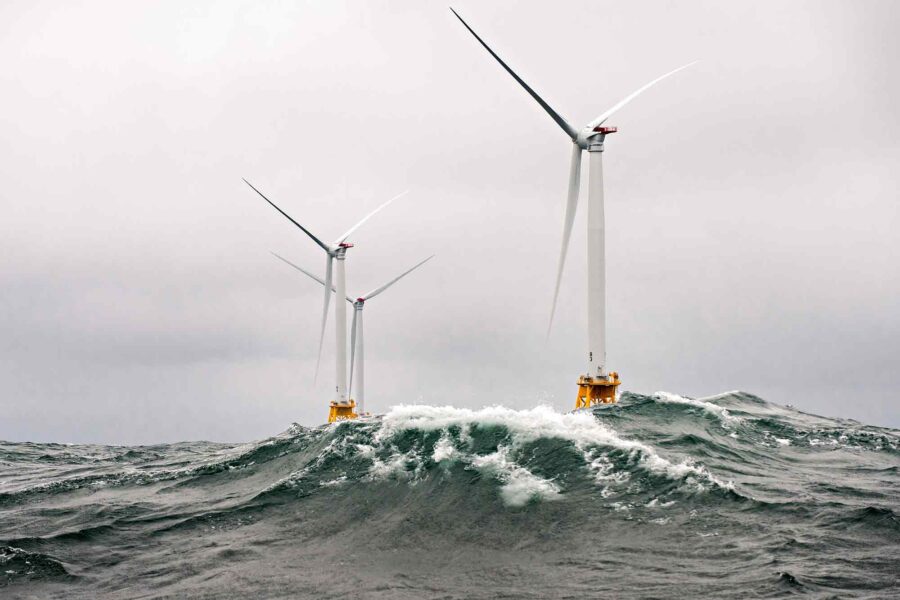
Photo credit: DOE / Wikimedia (PD)
Harry Antone, the labor liaison at Climate Jobs Rhode Island, added that Revolution Wind was helping lay the groundwork for a new economic ecosystem in Rhode Island. The project was not only advancing the state’s renewable energy goals but also helping establish the workforce and infrastructure needed to support a new domestic industry.
“A whole energy economy is being built here. [Revolution Wind] has created manufacturing jobs, operations and maintenance jobs,” he said. “It has brought hubs of Ørsted, and other offshore wind developers and subcontractors, to open offices here [in Providence] and in Boston.”
At the center of this growing industry, Antone noted, are more than 1,000 local union jobs created by Revolution Wind — jobs that offer American workers high wages, benefits, and the opportunity to build careers in an emerging market. In other words, the exact kind of jobs that Trump promised during his presidential campaigns to protect and maintain.
But suddenly, on August 22, 2025, when Revolution Wind was approximately 80 percent complete, the Trump administration ordered work on the project to stop.
Federal officials said the halt was necessary while the Department of the Interior reviewed the project’s federal approvals as part of a broader reassessment of offshore wind permitting issued by the Trump administration. Five other offshore wind projects along the East Coast were ordered to halt construction.
The Bureau of Ocean Energy Management (BOEM) cited national security concerns, specifically the potential for the project’s turbines to interfere with military radar technologies, but they did not publicly elaborate on those concerns.
The Trump administration’s stop-work orders were dubious, given that all projects targeted by the administration had already undergone extensive federal review. Each had been vetted through the regulatory and permitting processes of the Biden administration, with federal agencies evaluating their potential environmental, economic, and national security impacts.
In other words, these projects were not new proposals that had emerged without federal scrutiny; they had each already passed through years of thorough review before being halted.
For Grumet, neither the halt nor the administration’s rationale made sense; instead, he characterized the decision as another example of “extreme partisan politics” derailing sound energy policy.
The Legal Battle in Washington
Revolution Wind’s workers were forced to wait as Ørsted filed a lawsuit against the Trump administration on September 4, 2025, in the US District Court for the District of Columbia. They did not know if they would be returning to their jobs.
In Washington, Ørsted’s lawyers argued that the stop-work order was unlawful, arbitrary, and inconsistent with records supporting the project’s approval, but workers hundreds of miles away faced far more immediate concerns.
A crane operator who wishes to remain anonymous describes being left in the dark as the lawsuit moved forward.
“We really did not fully understand the context of the lawsuit,” he said. “A lot of us were just worried about getting the next paycheck.”
But the uncertainty created by the stop-work order extended beyond the next paycheck. For workers who had spent years developing the skills necessary to work in offshore wind, the halt raised a much larger question: whether the industry they had been encouraged to build careers around could offer the stability they had expected.
Offshore wind construction depends on highly specialized workers with technical certifications, extensive safety training, and years of experience. Workers often commit to long apprenticeships and specialized instruction with the expectation that one project will lead to another, particularly in Northeastern states that have made offshore wind part of their long-term energy strategies.
Rhode Island had already demonstrated its ability to grow and sustain an offshore wind industry.
“We’ve quite clearly proven that we have the ability to build a highly skilled workforce and deliver on projects like these,” Antone said. “The first offshore wind farm in the United States was in Rhode Island: the Block Island Wind Farm.”
However, when the federal government abruptly halted Revolution Wind, the prospect of future offshore wind projects became far less certain.
“For many, it signaled instability in this job market,” Antone said.
It is an instability that has been created by the Trump administration’s ideological energy agenda. The administration has made clear that it views fossil fuel dependence as central to the future of American energy. But its efforts to curtail states’ clean energy agendas — and offshore wind in particular — have extended far beyond a simple policy preference.
Trump’s long-standing opposition to wind turbines has increasingly shaped federal energy policy, with consequences that extend beyond the projects themselves to the American workers whose careers and livelihoods depend on them.
Back to Work, but Not Without Uncertainty
On September 22, 2025, District Judge Royce Lamberth ruled in favor of Ørsted and the Revolution Wind workers, immediately lifting the legal block. Construction on the project resumed in the following days.
But while the ruling allowed Revolution Wind’s workers to return to their jobs, it could not restore the sense of stability that had existed before the project was halted.
Just three months later, on December 22, the Trump administration issued a second stop-work order on Revolution Wind, once again bringing construction to a halt and once again leaving workers wondering if they would have a job to return to.
The dispute returned to federal court, where Lamberth once again removed the administration’s block on the project. Workers returned to their jobs for a second time on January 12, 2026.
Significantly, Revolution Wind was one of five offshore wind projects halted by the Trump administration, and one of two that were halted more than once, meaning that the uncertainty and panic that these orders caused likely affected several thousand of workers, families, and communities. With a single decision, the Trump administration was able to disrupt a renewable energy industry that had become a major part of the economy in many Northeastern states.
The disruption, however, extends beyond harm done to American industries and workers. By abruptly halting projects that had already attracted significant investment and undergone years of federal review, the administration has introduced tremendous uncertainty into the US renewable energy market that could influence future investment decisions. For global companies such as Ørsted and Skyborn Renewables that are deciding where to invest in the next generation of clean energy infrastructure, the instability surrounding US projects may make other countries appear more predictable — and ultimately more attractive — as places to invest.
This could have significant consequences, raising the risk that the US falls behind countries that are continuing to invest in and expand their renewable energy industries. As other nations build the infrastructure, supply chains, and skilled workforces needed to compete in the global clean energy economy, the loss of investment and expertise could leave American companies and workers struggling to catch up. What is at stake, then, is not only the future of individual projects, but the US’s ability to remain competitive in an industry that is rapidly expanding around the world.
Revolution Wind is now nearing completion and is already delivering electricity to New England’s power grid. But for the American workers who built it and the domestic industry that supports them, the two stop-work orders have left a glaring question of uncertainty: Can they count on there being other projects when this one ends?
This story was written by a member of our Mentor Apprentice Program (MAP). It gives aspiring journalists an opportunity to hone their craft while covering national and international news under the tutelage of seasoned reporters and editors. You can learn more about the MAP and how you can support our efforts to safeguard the future of journalism here.