The Floods in Nepal May Be Sending Us a Message
The cataclysmic flood in Nepal is the most recent in a number of heat-related events to hit the planet this year.
|
Listen To This Story
 |
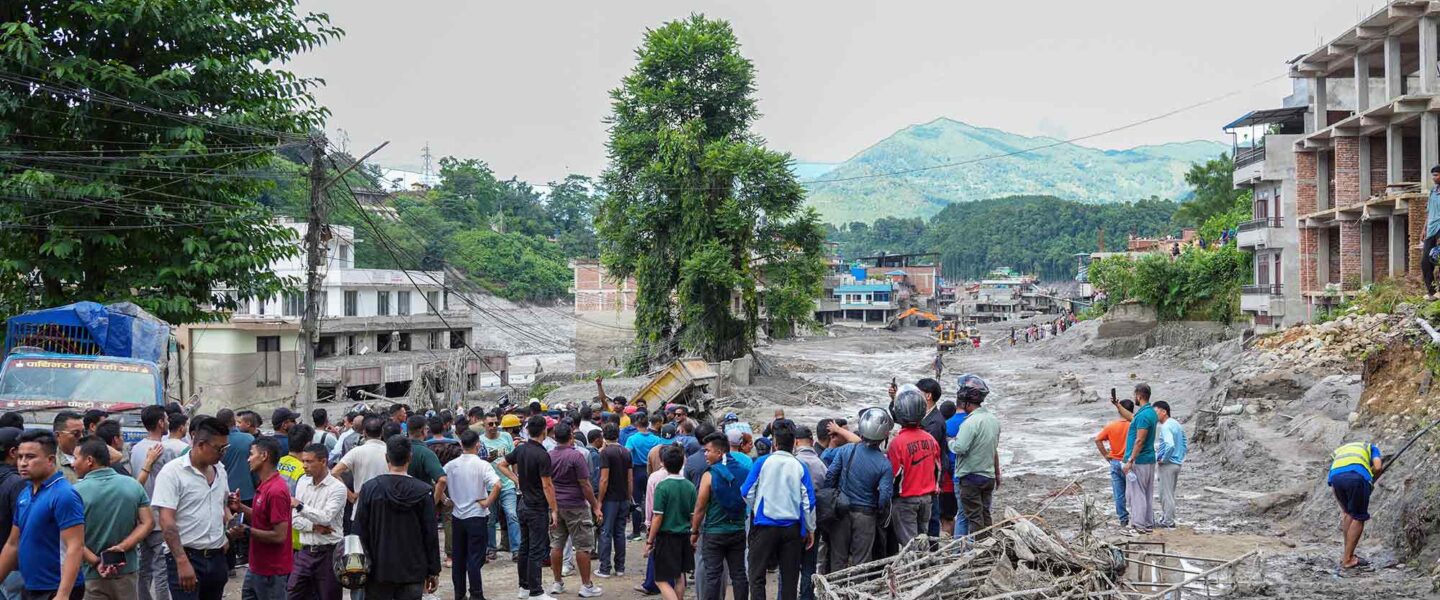
It would be easy to dismiss the sudden flood that struck Nepal last Wednesday as just another example of what insurance companies like to call “an act of God” — a natural catastrophe that no one could have predicted, much less controlled. But the torrent of mud and water that wiped out several villages and left more than 1,000 people reported as missing could also be an early warning of what to expect as global warming begins to reach a critical stage.
Europe has been hit with a murderous heat wave that has led to an estimated 35,000 deaths. Wildfires in France led to mass evacuations and threatened Bordeaux, along with the French wine crop. Both the Rhine and Danube rivers have lost so much water from the lack of snowfall and drought conditions that barge traffic that usually uses the rivers has been curtailed. The level is so low that a nuclear power plant that provides half of Hungary’s electricity had to be shut down because the pipes used to cool the plant couldn’t reach the water.
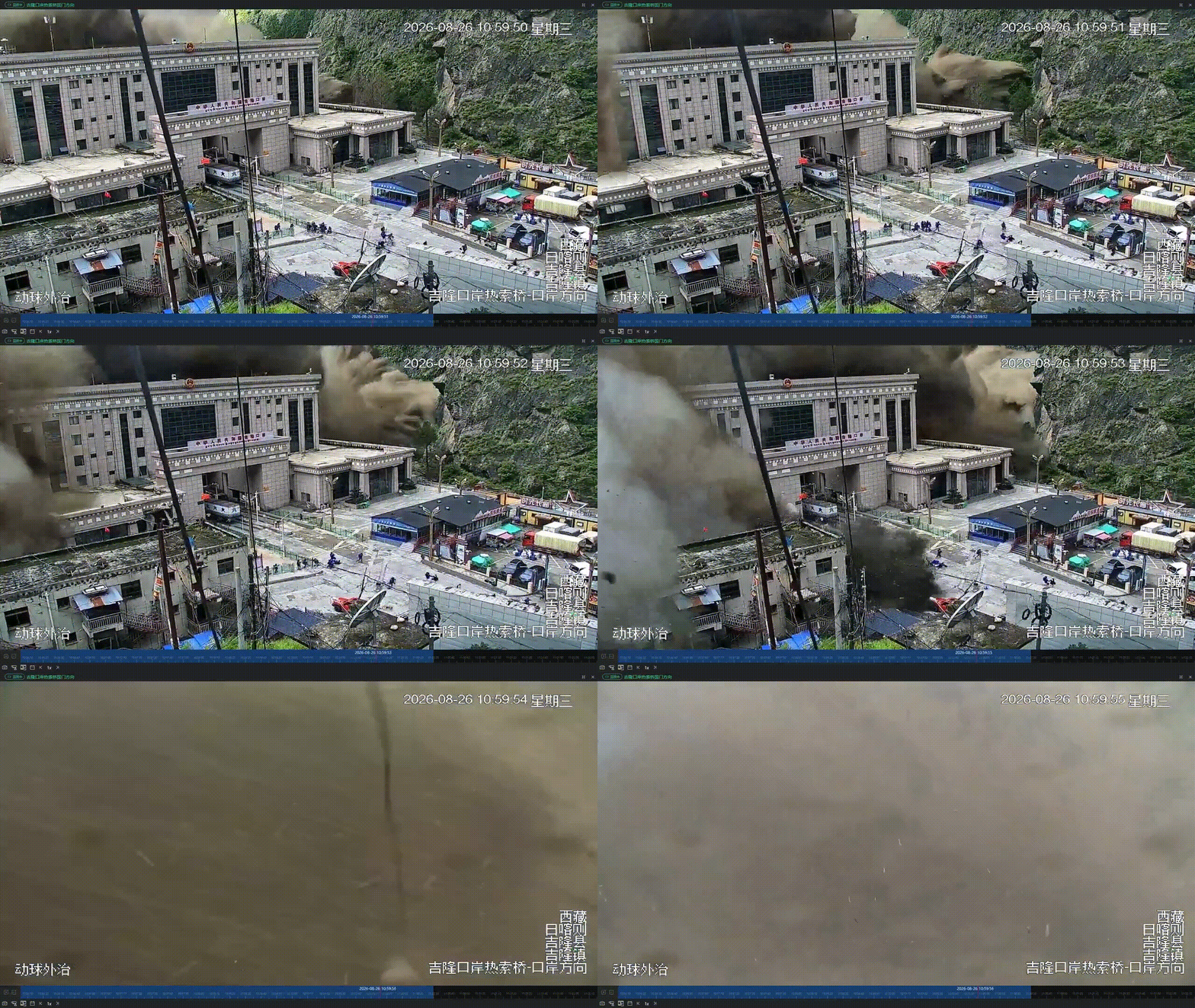
In Nepal, satellite photos confirm that the flood coincided with the collapse of a large part of a mountain in the Himalayan range that extends into Tibet. The region, known informally as the “Third Pole,” holds the planet’s third largest single mass of frozen water, surpassed only by the North and South poles. As these glaciers melt, they often form temporary lakes, and when the terrain shifts suddenly, the release of pent-up water can be dramatic.
It should not surprise anyone that the rapid melting of Arctic ice is being matched by similar melting in the Himalayas. The difference is that while relatively few people live in the Arctic, the floods resulting from melting snow and ice in the Himalayas have an impact on one of the most densely populated regions in the world.
Together, the Himalayas and Hindu Kush feed 10 major river systems, including the Ganges, Brahmaputra, Yangtze, Mekong, and Yellow rivers. The people affected by these rivers constitute roughly a fourth of the world’s population.
The international community is just waking up to the fact that what appear to be isolated floods are likely part of a cascading series of economic and political crises that will ultimately affect the entire planet.
Until now, the most visible results of climate change have been widespread wildfires and floods. As the flood in Nepal demonstrates, a disaster instantly kills some people on the spot and leaves others homeless. The aftereffects tend to last longer and can be just as damaging.
The greatest danger may come from excessive heat that reduces agricultural production, leading to famines and social unrest. When people can’t feed themselves, they either scramble to get what’s left or, if nothing remains, move on to where they see a ray of hope. Some end up in refugee camps. Others attempt to migrate to parts of the world that are still functioning; the favored landing zones have traditionally been the US or Western Europe, often with dramatic economic, cultural, and political consequences.
The US has hardly been exempt from radical changes in weather, which are likely to become even more intense this year thanks to the super El Niño. According to Climate Central, which tracks major disasters, the average number of billion-dollar weather and climate disasters affecting the US in the 1980s was about three per year. The annual rate now stands at more than 20.
The National Oceanic and Atmospheric Administration’s (NOAA) Billion-Dollar Weather and Climate Disaster database estimates that weather-related disasters have cost American taxpayers more than $2.9 trillion over the last five decades. The database was created to track the cost of major weather events. After NOAA reported on 27 disasters that hit the US in 2024, the Trump administration shut it down.
At the same time, the administration proposed a $1.7 billion cut to NOAA and the elimination of virtually all its research into climate change. In order to roll back existing alternative energy programs, Trump paid another $765 million to cancel authorizations to build offshore wind farms that might have provided an alternative source of electricity. Instead, the administration tried to revive coal- and gas-powered generating plants.
The Trump administration’s motives are not hard to discern. Before the 2024 election, Trump pleaded with the heads of the fossil fuel industry to donate a billion dollars to his reelection campaign. The industry responded by donating at least $75 million to his campaign and political action committees, and fossil fuel executives contributed another $11.5 million to Trump’s inauguration.
Apparently the industry leaders got their money’s worth. Since retaking office, Trump has carried out an unprecedented crusade to eliminate nearly all the Biden administration’s efforts to shift the US toward clean energy. That includes stopping tax incentives that favored purchasing electrical vehicles and stopping a federal program to make more vehicle charging stations available to drivers.
It might be tempting to compare the administration’s approach to the proverbial frog in a pot who, being cold-blooded, fails to notice he is about to be boiled to death, except that scientific experiments indicate that any frog with a functioning brain will jump out of the pot to save itself. The frog understands something that the current administration apparently does not.
Part of the tragedy about the flood in Nepal is that until now the major causes of global warming have come from the industrialized world, which has the resources to change the situation but has decided not to act, while most of the damage is occurring in countries that have no possibility of escaping or influencing the worsening situation. As global warming increasingly affects Europe and the United States, that may change.