Trump’s Midterm Endgame
Why it may take a “Hungarian Solution” for the Democrats to win.
|
Listen To This Story
 |
We are now on the cusp of Labor Day. The midterm elections are barely two months away, and Donald Trump is acting like a president who understands exactly what losing the House would mean for the remaining two years of his presidency.
No one needs to be reminded of the stakes. A Democratic House would abruptly change the dynamic in Washington. Instead of spending the next two years aggressively implementing his agenda and expanding presidential power, Trump would find himself responding to subpoenas, investigations, hearings, and potentially impeachment.
And he is desperately trying to prevent that from happening.
We have been watching pieces of this for months: the attacks on mail voting, demands for state voter files, citizenship verification, federal involvement in election administration, pressure on Republican states to redraw congressional districts. But with the election approaching, some of those efforts have moved from rhetoric and planning into implementation, while others have encountered serious resistance.
So this seems like a useful moment to take stock.
What exactly is Trump doing? How much of it is working? How much authority does he actually have? What could he still do between now and November? And what happens if control of the House comes down to three or four disputed races?
I’ve tried to approach those questions somewhat as I would an intelligence problem: start with what we know, distinguish intentions from capabilities, look at what could constrain him, and then make the best estimate possible about what comes next.
My conclusion is troubling but stops short of some of the apocalyptic commentary I’ve been reading.
Trump is plainly trying to improve his chances of holding the House in ways that go well beyond ordinary campaigning, and in many cases are either plainly or arguably unconstitutional. Some of those efforts are succeeding. Others are running into courts, state governments, and the limits of presidential power. And some may not matter at all — unless the election is extremely close.
That last point may be the most important one.
The closer the election, the more Trump’s efforts will prove decisive.
The Fight Over Mail Voting
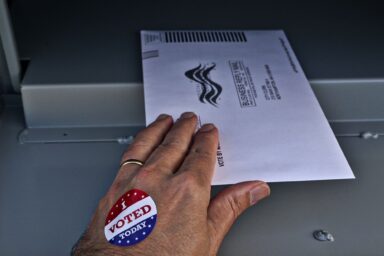
Probably the most important recent development involves Trump’s attempt to change how mail ballots are handled.
On March 31, Trump directed the Postal Service to establish new nationwide requirements governing mail ballots in federal elections. States using the mail would have to provide USPS with information identifying eligible mail voters. Ballot envelopes would have to comply with federal design and barcode requirements, and the system could prevent USPS from transmitting ballots that failed to satisfy those requirements.
The constitutional problem is obvious.
The Constitution assigns responsibility for the “Times, Places and Manner” of congressional elections primarily to state legislatures, while giving Congress authority to override state rules. It does not assign that power to the president.
Federal Judge Indira Talwani in Massachusetts blocked the administration’s plan.
Then the case reached the Supreme Court last week.
The Supreme Court had an opportunity to address Trump’s authority over mail voting and essentially declined to do so.
Related: Mail-In Voting: SCOTUS Drops Another Elections Bomb
By a 6–3 vote, the Court lifted the lower-court injunction, but not because the majority concluded that Trump possessed the authority he was claiming. Instead, the Court decided that the states had challenged the plan prematurely. At the time they sued, the Postal Service had not yet issued its final rule, so the states could not demonstrate that the rule was actually injuring them.
In effect, the Court didn’t say, Trump can do this. It said, Come back when there is actually something to challenge.
Now there is.
The Postal Service subsequently issued its final rule. The states promptly returned to Talwani, and on Thursday she blocked it again for 14 days. A hearing is scheduled for September 3 on whether to impose a longer injunction.
So despite some of the headlines surrounding last week’s Supreme Court decision, the central constitutional question remains unresolved.
And the clock is becoming important.
States are preparing ballots. Overseas ballots will soon begin going out. Election administrators have systems to program, envelopes to print and voters to notify. Another appeal could put this back before the Supreme Court very quickly — except that next time the justices would be considering an actual Postal Service regulation rather than a proposed one.
Presidential determination and presidential power are not the same thing.
Trump is pushing.
Other parts of the system are pushing back.
There is even an interesting problem here for the Court’s conservative majority. Its own “major questions” doctrine says, broadly speaking, that executive agencies cannot discover enormous new powers in ambiguous statutes unless Congress has clearly given them those powers. The Court repeatedly invoked that principle against major Biden administration initiatives.
Allowing the Postal Service to impose nationwide conditions governing which election ballots it will carry would seem, at the very least, to raise the same question.
We may soon learn whether the Court thinks so.
The Battle Over the Voter Rolls
At the same time, the Justice Department has been conducting an extraordinary campaign to obtain state voter-registration data.
DOJ has demanded complete voter lists from states around the country, including information that states normally protect from public disclosure. It has filed 31 lawsuits seeking voter data.
The administration says there is a legitimate reason for doing this. Federal law requires states to maintain accurate voter rolls. Non-citizens cannot vote in federal elections. DOJ has authority to enforce federal voting laws, and the administration argues that access to these records is necessary to determine whether states are complying.
That explanation deserves to be taken seriously.
But so does another fact.
The administration has been losing.
By early August, it had lost 21 consecutive court battles over its demands for voter information. Judges appointed by presidents of both parties have rejected the government’s arguments. The administration is appealing many of those decisions.
That is an important reminder that presidential determination and presidential power are not the same thing.
Trump is pushing.
Other parts of the system are pushing back.
A Much Larger Federal Presence
The DOJ is also expanding its physical presence around elections.
Federal election monitoring itself is nothing new. The Justice Department has long dispatched officials to polling places, historically with a strong emphasis on enforcing federal voting-rights laws.
What is different is the broader context in which monitoring is taking place this year — and the scale of the federal presence the administration is contemplating for November.
We got a small preview of the potential friction last week in Wyoming.
DOJ officials appeared at polling locations during the Republican primary. Local election officials objected to their conduct, and Republican Gov. Mark Gordon subsequently ordered an investigation.
Wyoming is hardly a Democratic state looking for an excuse to resist Donald Trump.
That is precisely why the incident is worth noticing.
It illustrates one of the fundamental constraints Trump faces. American elections are not administered from Washington. They are administered by thousands of state and local officials operating under different state laws.
And even some Republican officials do not necessarily regard the president or his Justice Department as their boss.
What Does All of This Add Up To?
Trump has done his best — cynically, for sure — to build the case that American elections are vulnerable to fraud. His administration argues that voter rolls contain ineligible people, citizenship verification is inadequate, and mail voting creates vulnerabilities. It believes the federal government should enforce existing election laws far more aggressively than previous administrations have.
Accept those premises as legitimate and much of what Trump is doing follows logically. At least that’s apparently Trump’s theory about how his actions will be accepted by the American people and even the Supreme Court, when it gets there.
But that explanation becomes harder to accept as the complete explanation when Trump’s own words are added to the evidence.
In February, Trump said Republicans should “take over the voting” and “nationalize” voting in at least 15 places. He has repeatedly treated mail voting as inherently suspect. And he has a long history of treating elections he loses — or fears he may lose — as fraudulent in ways that elections Republicans win somehow are not.
Then look at the pieces together.
The administration is attempting to build a federal citizenship-verification system. It wants federal access to state voter rolls. It is trying to impose federal requirements on mail ballots. It is expanding the federal presence around polling places. And Trump has aggressively encouraged Republican states to redraw congressional districts before November.
These things are not all equivalent. Redistricting, for example, is legal partisan hardball practiced by both parties and belongs in a different category from a president claiming authority over state mail-ballot procedures.
But they move in a common direction.
They give Trump more potential leverage over the conditions under which the November election will be conducted — and more potential tools to challenge an outcome he does not like.
That is why I think looking for a single master plan may actually obscure what is happening.
Trump doesn’t know what November 3 will produce. He doesn’t know which states or congressional districts might be close. He doesn’t know whether mail ballots will be decisive somewhere or whether disputed voter eligibility will matter.
So he is creating options.
Here Is Where the Margin Becomes Critical
Suppose Democrats have a very good night and emerge with 235 House seats to 200 for Republicans.
Trump can claim fraud. The DOJ can investigate. Republican candidates can sue. Disputes can arise over mail ballots or voter eligibility.
But the practical problem confronting Trump would be enormous.
He cannot litigate away 18 seats. A single dispute involving 2,000 ballots in Pennsylvania cannot change control of Congress. Even a small cluster of 4–5 disputed results won’t make a difference.
Trump would have lost the House. And he would confront precisely the congressional investigations and constraints he has spent this year trying to avoid.
Now imagine a different morning after the election: Democrats 219 – Republicans 216.
And suppose two (or more) of those Democratic seats involve margins of a few thousand votes.
Everything changes.
Suddenly questions about mail ballots matter enormously. Challenges to voter eligibility matter. The federal citizenship database matters. DOJ investigations matter. Lawsuits matter. Certification disputes matter. Pressure on individual Republican state officials matters.
Trump would not necessarily win those fights.
But he would get to have them.
And control of the United States House of Representatives could depend upon their outcome.
This is why I think the most important variable in assessing Trump’s midterm strategy may ultimately be one that Trump himself cannot control.
The margin.
What Could Stop Him?
Trump cannot do this by himself.
If disputed congressional elections were actually going to be turned into a different House majority, other people and institutions would have to cooperate: Justice Department officials, Republican candidates, governors, attorneys general, state and local election officials, judges, and ultimately members of Congress.
We learned something about the importance of those people in 2020.
Trump pressured Georgia Secretary of State Brad Raffensperger to “find” enough votes to change Georgia’s result. Raffensperger refused. Trump pressured state legislators. They did not overturn their states’ results. He pressured Justice Department officials. Some threatened to resign. He pressured Mike Pence. Pence refused.
Courts — including judges Trump appointed — repeatedly rejected his claims.
The system held.
But there is an important danger in drawing too much reassurance from that experience: The people occupying some of those positions have changed.
Trump’s second administration was constructed with much greater attention to loyalty and presidential control. Election deniers and people who embraced Trump’s claims about 2020 now occupy important positions in the federal government. And at the state and local level, the picture is mixed. There are still Republican election officials who have demonstrated considerable independence. But there are also Trump allies and election deniers in state legislatures and in positions that can influence election administration.
That makes decentralization something of a double-edged sword.
The fact that America has no national election commissioner makes it extraordinarily difficult for Trump simply to order a national result changed. But in a very close election, he may not need anything remotely that ambitious. He may need cooperation in only a few places.
And that brings us back to the 219–216 scenario.
Imagine that control of the House depends upon three races in three states. The question is no longer whether Trump can commandeer the American election system. It is whether the officials who matter in those particular jurisdictions resist him, accommodate him — or actively agree with him.
That is a considerably less reassuring question than it was in 2020.
None of this means Trump could simply manufacture a Republican House majority. Courts remain an enormous constraint. Democratic officials control election machinery in many states. Plenty of Republican officials remain committed to following state election law regardless of what Trump wants. And American elections remain extraordinarily decentralized.
But I would no longer simply say, “The system held in 2020, therefore the system will hold again.”
The better conclusion is that the system held because particular people, occupying particular positions at particular moments, chose to make it hold.
In November, we may discover how many of those people are still there.
And that is another reason the margin matters so much.
The Hungarian Solution
Hungary held an election this April.
Viktor Orbán entered it after 16 years in power and after spending much of that time constructing an electoral environment strongly favorable to his Fidesz party.
Election laws had been rewritten. Districts had been redrawn. Fidesz and its allies had accumulated extraordinary influence over Hungarian media. Allies of the government occupied important institutions throughout the state.
The system was sufficiently tilted that analysts calculated the opposition needed considerably more than a narrow plurality of the national vote to be confident of winning control of Parliament.
Then Hungarian voters rendered the calculations irrelevant.
Péter Magyar’s Tisza party won roughly 53 percent of the vote to 39 percent for Fidesz.
It wasn’t close.
Tisza captured 141 of Parliament’s 199 seats — a two-thirds constitutional majority.
Orbán conceded.
There are enormous differences between Hungary and the United States, and Trump has nothing approaching the institutional control Orbán accumulated during 16 years in power.
But I keep coming back to one very simple lesson from what happened there.
A tilted playing field matters most when the game is close.
Orbán had constructed a system capable of giving him substantial advantages in a competitive election.
Hungarian voters produced an election that wasn’t competitive.
They overwhelmed the tilt.
It Shouldn’t Have to Be This Way
There is something deeply unsatisfactory about calling this a “solution.”
Democratic voters should not have to win overwhelmingly in order to be confident that winning will be enough.
A party that legitimately wins 219 House seats is supposed to control the House just as surely as a party that wins 235. Fifty percent plus one is supposed to count.
Elections are not supposed to require a margin of safety against presidential intervention.
The fact that I find myself looking at Hungary and concluding that the safest protection against the machinery Trump is assembling may be an electoral result too large to contest is itself evidence of how much has changed in the United States.
It is evidence of democratic erosion.
But acknowledging that unfairness does not make the arithmetic disappear.
If Democratic voters turn out in enormous numbers — and if they are joined by independents dissatisfied with Trump and even some Republicans who decide that whatever their disagreements with Democrats, they do not want to give this president another two years of largely unchecked power — then most of the machinery described above becomes far less consequential.
A 235–200 Democratic House would not solve the deeper problem. Trump would remain president. The struggle over executive power would continue. The damage to American election norms would not magically repair itself.
But it would answer one question decisively.
Trump could denounce mail voting. He could allege fraud. The DOJ could investigate. Republican candidates could file lawsuits.
What he could not realistically do is turn 200 seats into 218.
A 219–216 House is something else entirely.
Give Trump two disputed congressional races standing between him and continued Republican control of Congress, and almost every tool his administration has spent this year assembling suddenly becomes relevant.
That is my best estimate of where we stand as the final stretch begins.
It is unfair, to say the least, that American voters should have to deliver an overwhelming verdict simply to be confident that their verdict will be honored. In a healthier political system, winning would be enough.
I do not see an inevitable march toward a stolen election. Nor do I see evidence that Trump possesses some hidden mechanism capable of overriding a decisive verdict from American voters.
What I see is a president creating as many options as he can before an election whose consequences he understands very well.
The closer the result, the more dangerous those options become.
It is unfair, to say the least, that American voters should have to deliver an overwhelming verdict simply to be confident that their verdict will be honored. In a healthier political system, winning would be enough.
But Hungary offers a recent reminder that even a badly tilted playing field has limits.
Sometimes the answer is to overwhelm the tilt.
As a service to our readers, we curate exceptional stories through partnerships with outside writers and thinkers. Michael D. Sellers is a former CIA officer currently working as a criminal defense and civil rights investigator. This column has been adapted with the author’s permission from his substack Deeper Look with Michael Sellers.