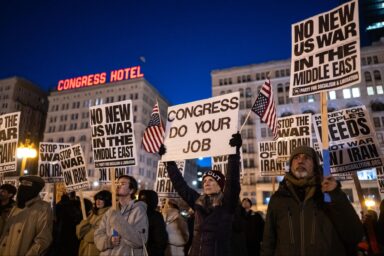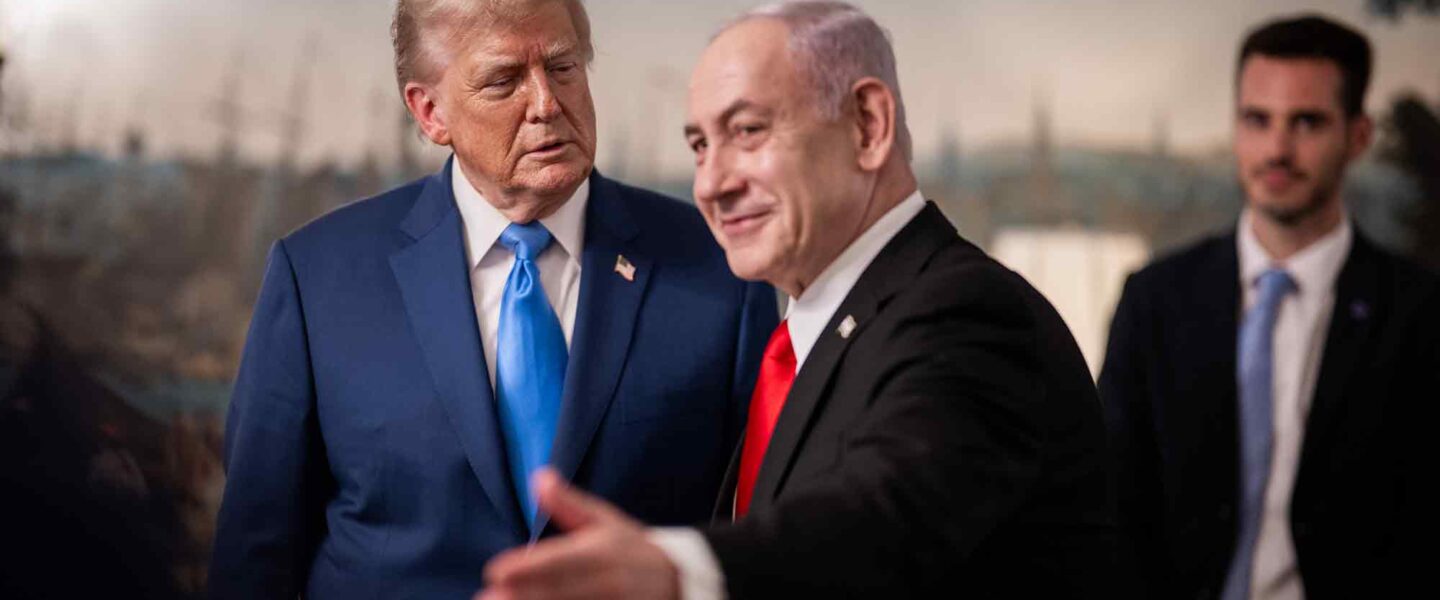
More Bombing Won’t Stop Iran From Turning Into a Quagmire
So far, American bombing has succeeded in strengthening Iran’s geopolitical position and influence over the global economy.
|
Listen To This Story
 |
A quick look at Donald Trump’s handling of the Iran crisis gives the impression of a trapped bird trying to escape an enclosure by flying through a plate-glass window. After it’s knocked to the ground several times, the bird must know that escape is impossible, but it keeps on trying because it can’t think of an alternative.
The glass window in Trump’s case is a potentially fatal refusal to accept the fact that starting a war with Iran was not only unnecessary but was also a much riskier and more costly enterprise than he imagined.
Trump believed that bombing Iran back to the Stone Age would produce results; it didn’t. Now that Trump wants to put the war behind him, he can’t.
A major obstacle to a quick resolution is Trump’s global reputation as a compulsive liar. As the Iranians see it, no treaty or agreement that the US government signs can be trusted for very long. The word of the Trump administration, in short, is essentially worthless.
Before Iran can agree to a lasting peace, it needs a concrete guarantee that the US won’t simply resume bombing and murdering its leaders at a later date. Under Trump, the US has twice launched surprise attacks against Iran while pretending to negotiate a truce. The only guarantee at the moment that the US won’t go back on its word again is Iran’s ability to block the Strait of Hormuz — one of the paramount routes for bringing oil from the Middle East to industrial countries around the world.
That Ship Sailed
By now it should be abundantly clear to just about everyone that the US had nothing to gain when it attacked Iran. Trump simply fell victim to the reality-distortion field wielded by Israel’s Prime Minister Benjamin Netanyahu, whose primary strategy for maintaining his position seems to be perpetual war. As even Trump has discovered, it’s possible to love Israel, and still ask serious questions about Netanyahu’s motives and effectiveness.
But Trump’s problem is that, having been manipulated into a war that he cannot win, he can’t admit that he has made a disastrous mistake. Everyone else is consequently hostage to his blunders.
What the misbegotten attack did achieve was to alert friends and foes alike to the leverage over the world’s oil supply that Iran has always had, but was previously reluctant to use.
Even more damaging, the attack revealed to the world that the US Navy is not capable of providing enough security to convince insurance companies to risk their money by underwriting shipping through the strait. If Iran did not fully realize just how much power it is capable of exerting over the global economy before, it certainly does now.
Trump keeps insisting that the mounting cost of the war will turn out to be worth it if he can guarantee that Iran doesn’t get its own atomic bomb. Unfortunately, that ship sailed long ago. The only way to get access to Iran’s current stock of enriched uranium is to launch an all-out ground war, which would inevitably result in thousands of US casualties — an outcome all players know would be politically unacceptable to the American public. Even Trump understands that. Which means that thwarting Iran’s nuclear ambitions is effectively off the table.
How Iran Learned to Stop Worrying and Love the Bomb
Ironically, Iran’s obsession with developing an atom bomb is to a certain extent an unintended consequence of past US diplomacy. The US has increasingly tended to regard fellow nuclear powers seriously and treat nonnuclear powers as second-string players that can safely be ignored. India and Pakistan rushed to develop a bomb not because they ever intended to use it, but simply because they needed to be considered nuclear powers in order to have a seat at the table.
Iran has always had mixed feelings about the bomb. When I interviewed one of the Islamic government’s early defense ministers, Akbar Torkan, in the 1990s, his assessment was that developing a nuclear weapon was a useless expense. It made more sense to put the money into developing and training a functional army. With the changing demands of waging war today, much of that money is now being spent on missiles and drones.
But the globally aggressive posture of the United States in recent decades has altered that assessment. To protect and project national sovereignty these days — for any country determined to claim a role on the international stage — a nuclear capability is essential.
Plenty of American Middle East experts understand that, but the Trump administration decided early on to cast aside any experienced civil servants and academic consultants with technical and diplomatic expertise. Trump 2.0, in fact, consists of an 80-year-old narcissist who speaks with an 8th-grade vocabulary and has surrounded himself with incompetent sycophants. With limited intellectual and analytical resources, he tries to deal with a complex world by trusting his gut instincts.
One result has been Iran’s somewhat inadvertent discovery of its power to close the Strait of Hormuz as a new way of making itself heard — a new, loud instrument in its military/diplomatic band. While it won’t fit the bill when it comes to long-term geopolitical respect, and is vulnerable to the eventual construction of pipelines bypassing the strait, Iran’s demonstrated chokehold on Hormuz certainly serves Iran’s short-term military/diplomatic needs. And unlike nuclear weapons, it can actually be used non-suicidally for leverage — as recent events have borne out.
The Price of Not Knowing Your Enemy
That Trump understands next to nothing about Iran is pretty obvious. His references to Iran’s leadership as “scum,” and his repeated claims that previous US administrations have ignored Iran for the last 47 years, make that clear. Previous administrations were well aware of the sensitivities in the Middle East and the danger of getting it wrong. They merely sidestepped the most obvious risks.
A crucial step in any negotiation is to understand what your opponent wants and actually thinks. What is the source of his hostility? Why does he act the way he does? Denouncing your opponent as “scum” is not a good beginning. It’s proof, if any were needed, that you simply don’t get it.
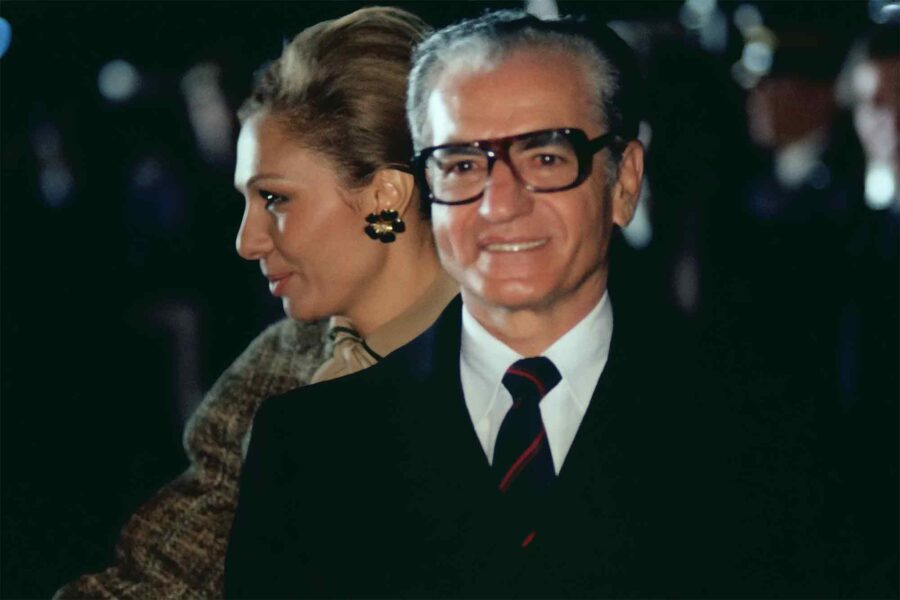
By now, everyone in the Middle East knows that America’s CIA played a critical role in overthrowing the democratically elected government of Iranian Prime Minister Mohammad Mosaddegh and imposing the dictatorial shah in an infamous 1953 coup.
The rationale for the coup was Mosaddegh’s decision to nationalize the Anglo-Persian oil company. Britain, especially, felt that continued access to Iran’s oil was critical to its economy and military standing, and London succeeded in convincing Washington to launch the coup.
In fairness, the overthrow was about more than just money. In World War II, Winston Churchill realized that Britain’s defense, and the continued existence of the British Empire, depended heavily on the Royal Navy and the Royal Air Force, both of which needed oil. He saw British control of Middle Eastern oil reserves as a question of national security. Unfortunately for the Iranians, it was the national security of Britain, and indirectly the United States, that was at stake, leaving Iran’s loss of independence as collateral damage.
Once access to Iran’s oil was guaranteed, hardly anyone paid attention to the shah’s increasingly repressive regime. The US-orchestrated coup and the enormous wealth provided by oil overturned the traditional political balance between the shah, the Bazaaris — Iran’s influential merchant class — and the Islamic clergy.
In earlier times, the shah had been forced to negotiate with Iran’s merchants and clergy in order to wield the power he needed to rule. The immense wealth he acquired thanks to state control of the country’s oil meant that he no longer needed to listen to either the Bazaaris or the clergy, or for that matter the mass of Iran’s population.
As the regime wallowed in luxury, condemning the rest of the country to poverty, the shah reacted to public protests by increasing repression via his secret police force, SAVAK, which in turn often engaged in unspeakable tortures that actually amounted to crimes against humanity. SAVAK was aided to a significant extent by Israel’s Mossad, which saw the shah as an important ally in its efforts to fend off Arab intimidation.
Although most Americans and even the Israelis saw Iran under the shah as an independent entity that had nothing to do with them, most Iranians were aware that the shah was in power mainly because of the US. The shah’s excesses were consequently attributed to the US. Israel was to a large extent dismissed by much of the Islamic world as an American surrogate.
As protests and repression erupted across Iran, SAVAK spent its time rounding up the protesters. Many were university students who were subsequently tortured or killed. What both SAVAK and the shah failed to notice was that many of SAVAK’s victims were the children of Iran’s leading families. In fact, just about every Iranian family could count someone who had been arrested and tortured.
Jordan’s King Hussein, probably the most able monarch in the Middle East at the time, warned the shah against his continuing excesses. The shah refused to listen. The US State Department also advised caution, but the shah became particularly adept at playing the White House off against the better advice from Middle East experts in the State Department. The shah’s increasingly brutal repression finally left Iran’s mosques as the only place in which it was possible to talk freely. Inevitably, resistance to the shah’s injustices developed inside Iran’s religious establishment.
The Islamic governments that followed in the wake of the 1979 revolution went through a number of transformations and were often just as brutal as, or even more so than, the shah’s had been. But, in the minds of many Iranians, the excesses of the post-revolutionary Islamic regime did not excuse the fact that the US had engineered the 1953 coup that created the harsh regime under whose lash they had suffered for a quarter century; to most Iranians, it was clear that the only thing the US had really cared about was Iran’s oil.
Trump’s loose talk about his various money-making schemes and his obsession with turning every transaction into a scramble for profit, either for his family or for American companies allied with him, effectively confirmed nearly every anti-American stereotype and prejudice that Iranians have ever maintained about Washington’s intentions.
Neck Deep in the Big Muddy: Quagmires Past and Present
Despite the fact that the war has already cost US taxpayers more than $37.5 billion — a figure that is estimated to reach $150 billion — while gaining absolutely nothing, Trump nevertheless seems determined to forge on rather than admit that he made a mistake.
Many Americans dismiss Iran as a distant and incomprehensible problem that they really don’t care much about, but in the long run the real cost is likely to be more than the money that has already been spent.
Trump has alerted the US’s enemies as well as its competitors to the fact that its vaunted military might really be nothing more than a paper tiger. Even more consequential conflicts in other parts of the world — such as the Far East stand-off between mainland China and what China’s leaders consider the rebellious province of Taiwan — could heat up in the future as the United States’ weaknesses become apparent. The Iranian adventure has squandered much of the US’s stockpile of ammunition and sophisticated missiles, as well as global confidence in the White House’s judgment.
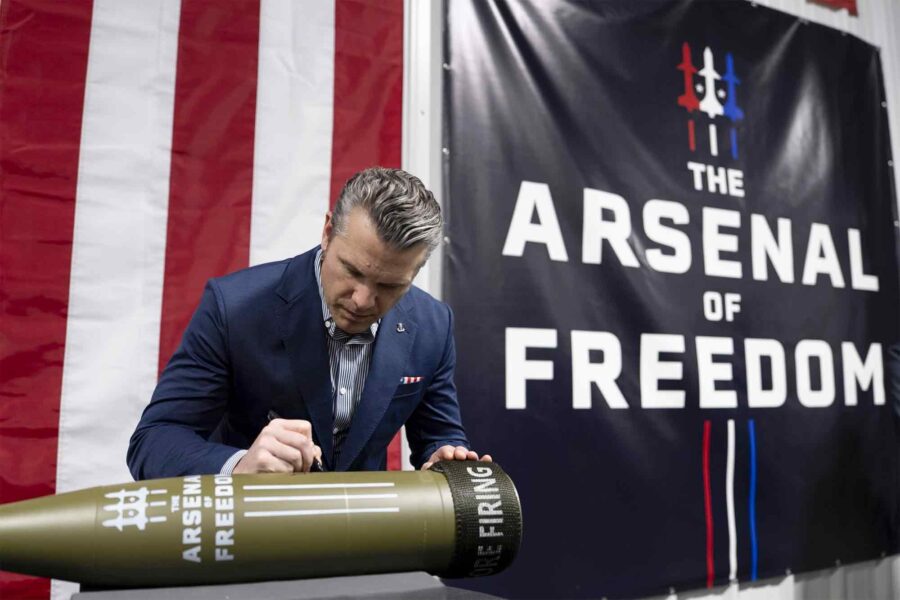
Pete Hegseth, Trump’s self-styled secretary of war, wants American soldiers to be lethal killers, and he’s prepared to give them injections of testosterone if he finds that they are not sufficiently manly.
But modern military thinking is about the projection of power — not just killing. Victory depends on a well-thought-out strategy, rather than the individual soldier’s delight in out-killing an enemy force on the battlefield. Sun Tzu, ancient China’s greatest military strategist, argued that the best path to victory was to conceive and carry out a plan that avoided battle and the sacrifice of men. Both Hegseth and Trump have made it clear that they are men without a plan.
Starting with Korea, then Vietnam, the US has faced repeated military embarrassments and defeats since the end of World War II. The problem has never been a lack of firepower or the determination of soldiers in the US Army. It has always been a flawed leadership — a failure to understand the cultural context in which a confrontation was taking place.
The Vietnam War was effectively lost before it began. The extremely long frontier that runs the length of Vietnam and separates it from Cambodia and Laos was impossible to control even with more than 500,000 US soldiers and unlimited US airpower supporting South Vietnamese forces. Impenetrable jungles made it easy for enemy forces to hide, and the US realized early on that if it went too far, it risked fighting a full-out war with China.
As a result, the Vietnam conflict turned into a stalemate and then a quagmire that sucked men and money into a bottomless abyss. The North Vietnamese could simply wait it out. The US, facing growing opposition at home, couldn’t. US defense contractors may have made a quick fortune from the war, but the cost was 50,000 Americans killed, and hundreds of thousands more wounded, traumatized, or crippled, for a conflict in which nothing of lasting importance was gained.
Once the war ended, and enough time had passed, the Vietnamese, whom we had tried to kill into submission while bragging about body counts, became our de facto allies. Subsequent US intrusions in Lebanon, Iraq, and Afghanistan have been variations of the same thing. We exercised enormous firepower, but failed to understand the underlying issues which were bound to play a critical role in determining victory or defeat.
The situation in Iran is no different.
Iran’s current leadership can wait out any amount of American bombing. The more we destroy with missiles and massive air strikes, the more the Iranian public will turn against the US and support the regime, no matter how bloody and repugnant it is. The US will always be seen as a worse alternative. Nothing will be gained, except that prices will continue to rise as US-Iranian fireworks continue to block the world’s oil supply-lines, and fertilizer shortages contribute to global hunger.
In the meantime, the US will have squandered its expensive arsenal of missiles and munitions on nothing, and its loss of credibility will encourage its global competitors — notably China, North Korea, and Russia — to take advantage of a self-wounded giant.
The bird that tries to escape through the picture window usually dies. Let’s hope that is not our destiny.
William T. Dowell is WhoWhatWhy’s editor for international coverage. He previously worked for NBC and ABC News in Paris before signing on as a staff correspondent for Time magazine based in Cairo. He has reported from five continents — most notably during the Vietnam War, the revolution in Iran, the civil war in Beirut, Operation Desert Storm, and in Afghanistan.