War With Iran Could Cost Way More Than Projected
Direct and indirect, domestic and foreign, Trump’s war with Iran is running up a serious tab. A looming war of attrition threatens the US and the global economy.
|
Listen To This Story
 |
When Donald Trump killed the United States Agency for International Development (USAID), effectively ending US foreign aid to developing countries, the rationale floated was to save enough money to allow the tax cuts in his “Big Beautiful Bill” without dramatically increasing America’s national debt.
Now the war against Iran, and the consequent closing of the Strait of Hormuz, threaten not only to wipe out any possible savings from slashing US government services, but also to send the national debt to even more dizzying heights.
The administration admits that the first few weeks of Trump’s war cost taxpayers at least $29 billion. USAID, which many experts believe was critically important to US soft power, had an annual budget of around $35 billion. The annual USAID budget was admittedly more costly than Trump’s war, but a growing number of analysts point out that the $29 billion lost on Iran is only an initial down payment that covers just the immediate costs to the Pentagon. The war’s overall cost to taxpayers is likely to range from $100 billion to more than $1 trillion.
Trump is already asking Congress to increase the Pentagon’s annual budget by $600 billion, which would put the overall defense budget at $1.5 trillion. The cost to an average American household would be an extra $5,000 in federal taxes. In the meantime, rising gas prices, food prices, and the cost of just about anything that needs to be transported by road can be expected to wipe out any gains from Trump’s tax cuts.
None of that appeared to make an impression on Defense Secretary Pete Hegseth when he invoked the $29 billion figure in his recent testimony to Congress.
“He wasn’t lying,” said Justin Wolfers, professor of economics and public policy at the University of Michigan, during a webinar on the Substack channel Iran War Dispatches with Tim Mak. “He was telling you an incomplete number. Their number is not the cost of the war. It’s the cost of bombs we’ve dropped so far. The real cost of war would be in hundreds of billions of dollars, if not trillions.”
Professor Linda Bilmes — a senior lecturer in public policy at Harvard University and a leading expert on public finance — points out that wars always cost more than expected:
Throughout history, those who get into wars tend to be optimistic about the cost and about the length of time it will take. For example, Russia thought it could take control of Ukraine in a few weeks. President George W. Bush fired his economic advisor, Larry Lindsey, for predicting that the Iraq War might cost $200 billion (it ended up costing $5 trillion).
We see the same pattern with Iran. The Trump administration expected that this war would be over quickly and would be relatively inexpensive. … According to my calculations, those first few days cost at least $16 billion. … To put it in perspective, we fired more Patriot missiles in the first four days of the Iran war than we have given to Ukraine over the past four years.
The cost of the Iran war, the experts say, should be calculated in broader societal terms based on three factors.
First is the increased cost of energy. Oil, now around $100 a barrel, is about 40 percent more expensive than it was before the war started. In the US, with some 130 million households — about 90 percent of which own cars — that translates into higher energy and transportation costs.
According to an analysis by Moody Analytics, the average US household has already spent an extra $450 on energy costs since the war began.
The second factor is that the war against Iran has already increased food prices in the US and other countries, and the prices are likely to continue to increase significantly.
While the US is much less dependent on oil and gas imports from the Strait of Hormuz — which is blocked by both Iran and the US — the market for fossil fuels is effectively global, even in the purportedly “energy independent” US. Accordingly, the blockade of a waterway responsible for about a quarter of international oil and gas shipments quickly showed up at pumps in the US and soon began rippling through other energy-dependent goods and services.
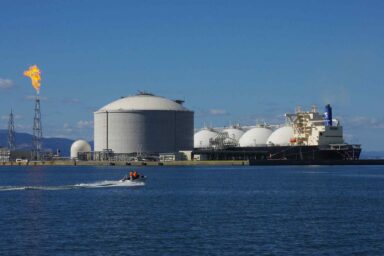
Before the war, nearly a quarter of world fertilizer shipments, and a fifth of liquified natural gas (LNG), which is used in fertilizer feedstock, passed through the Strait of Hormuz.
“Over the past three years (2023–2025), the Gulf countries were the single biggest regional exporter of urea and ammonia (both nitrogen-based), and the second largest regional exporter of diammonium phosphate (DAP) and monoammonium phosphate (MAP) fertilizers,” says a report by the International Food Policy Research Institute (IFPRI), an international research center focused on agriculture and food systems.
Iran itself is a major global urea producer and exporter.
While grocery prices worldwide have already increased — at different rates in different countries and for different products — they are likely to increase much more in the coming months and into 2027.
That is because many farmers purchase their fertilizers months before the spring planting season, when fertilizer use is heaviest. Farmers who purchased their fertilizers before the conflict started might not feel the pain as quickly as those who did not. But in the next planting season, every farmer will likely have to pay higher prices.
Fertilizer prices, which were already increasing before the war, have gone up by an average of 50 percent since the war started, a surge that will affect future planting seasons.
The United Nations’ Food and Agriculture Organization (FAO) Food Price Index report last month revealed that food prices rose in April for the third consecutive month, to the highest level since 2023. The previous such continuous increase was seen after the Russian invasion of Ukraine.
Even before the war with Iran, US farmers said the agriculture sector was already facing a multitude of pressures caused by immigration, trade, and global food prices.
The American Farm Bureau Federation, concerned at the time with Trump’s erratic tariffs, complained in a letter to the president last October:
America’s farmers and ranchers are facing extreme economic pressures that threaten the long-term viability of the US agriculture sector. Due to insufficient action over the last several years, an alarming number of farmers are financially underwater as policies have failed to address the spiraling farm economy and provide long-term certainty for American agriculture.
Fewer farmers, smaller harvests, and higher prices for consumers was the implication. Now it has only gotten worse.
The third factor explaining the war’s impact on the US economy is the rise specifically in diesel prices, which are mostly paid by truck drivers who transport goods and products, whether in the United States or across borders.
According to an April report by the International Road Transport Union, since the start of the Iran war, diesel prices have increased 40 percent in the United States, 29 percent in Europe, and 25 percent in China.
As detailed above, the impact of the US war against Iran is felt globally.
The World Food Programme (WFP) reported in March that “food insecurity can reach record levels” in 2026 as a result of the continued Iran war. Specifically:
New analysis by WFP estimates that almost 45 million more people could fall into acute food insecurity or worse (known as IPC3+) if the conflict does not end by the middle of the year, and if oil prices remain above USD 100 a barrel. These would add to the 318 million people around the world who are already food insecure.
In Europe, which also depends on the Strait of Hormuz for energy shipments, the European Central Bank reported that consumer prices rose 3 percent in April, while energy prices rose by 10.9 percent year-on-year.
Asia is feeling the impact of the Iran war to an even greater degree than Europe, mainly because 80–90 percent of the oil and gas passing through the Strait of Hormuz is destined for that continent.
The Philippines has declared a national energy emergency, while Thailand asked people to turn off air conditioners and told government employees to work from home as much as possible. Fertilizer costs have also increased food prices in several countries with already low levels of personal income.
Japan, South Korea, and Singapore are large energy importers and are likely to see their industries suffer as energy costs soar. Other countries in Southeast Asia — notably the Philippines — depend heavily on remittances from their citizens who sought better-paying jobs in the Gulf states. Those funds may be cut off as the global economy shrinks.
For US consumers, Trump’s stalemated war against Iran mostly means higher prices at gas stations and supermarkets. For the rest of the world, it means severe pain on a number of fronts, including widespread food insecurity and the specter of street protests, with the potential for mass violence.