Scorching US Heat Wave To Hit 70M With Third ‘Heat Dome’ in Month
PICKS are stories from many sources, selected by our editors or recommended by our readers because they are important, surprising, troubling, enlightening, inspiring, or amusing. They appear on our site and in our daily newsletter. Please send suggested articles, videos, podcasts, etc. to picks@whowhatwhy.org.
Scorching US Heat Wave To Hit 70M With Third ‘Heat Dome’ in Month (Maria)
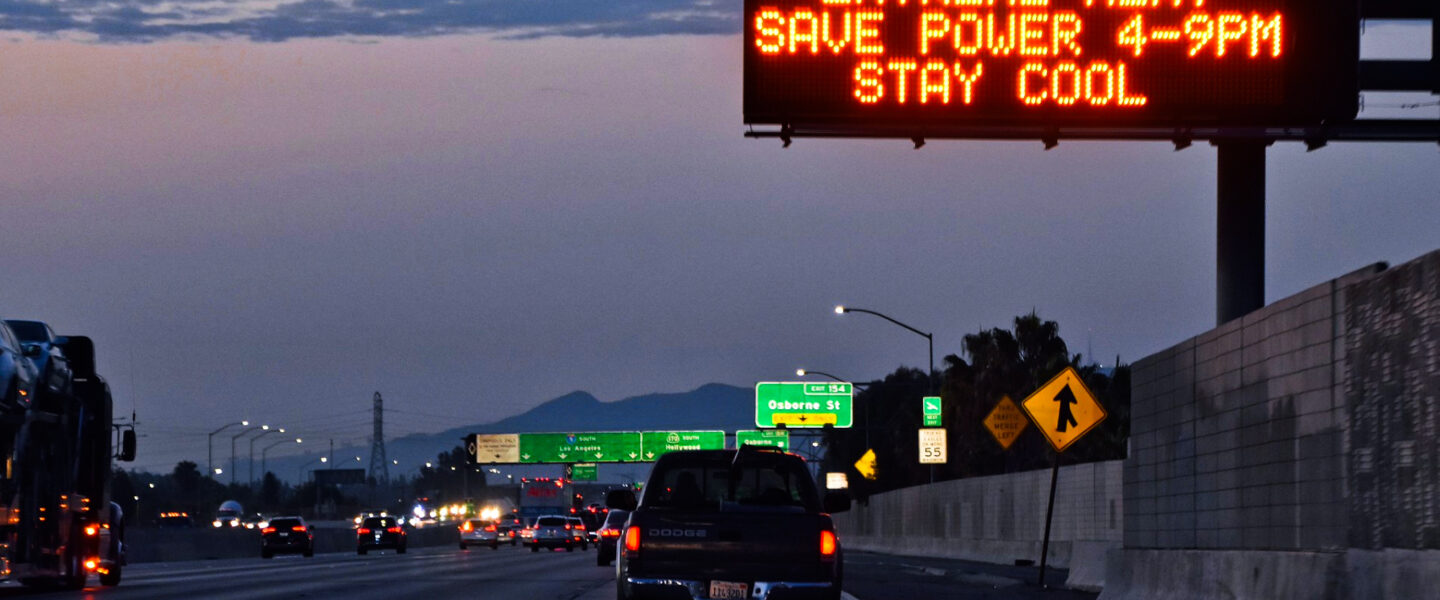
The author writes, “About 70 million people in the U.S. are expected to face extreme heat as dangerously hot temperatures scorch southern and central states. The third major heat dome to hit the U.S. in the past month gathered strength over the weekend, spanning a vast swath that stretches from the Gulf of Mexico coast to the Great Plains and the Midwest. Temperatures of 95 F to 105 F are expected, with some Southwestern desert areas potentially reaching 120 F.”
Trump Badly Screws Susan Collins as Maine ICE Death Takes Darker Turn (DonkeyHotey)
From The New Republic: “Collins cast some recent votes that can help likely Democratic challenger Troy Jackson tie her to Trump and to ICE. And there’s evidence that both liberals and moderates will listen.”
Nearly 150,000 Mail Ballots Rejected in California’s Primary Despite Efforts To Count Every Vote
The author writes, “Nearly 150,000 California voters had their mail-in ballots rejected for the state’s June primary, a spike from recent elections even as the state attempts to make voting easier with the goal of boosting participation and counting every ballot. California has become notorious for its ponderously slow vote counts that can drag on for weeks and sometimes longer. … Every voter receives a mail-in ballot that can arrive at an election office seven days late and still be counted, provided the envelope is postmarked by Election Day. Yet even with that generous weeklong window, the primary driver of the higher rejection numbers is late-arriving ballots, according to data compiled by the secretary of state’s office. Voting experts suspect the main problem is postmarks on ballots that came after Election Day, making them ineligible to be counted. The culprit could be U.S. Postal Service changes that might affect the timing of when postmarks are applied.”
How To Fix Social Security, in Six Words (Dana)
The author writes, “The annual report of the Social Security board of trustees, issued last month, has prompted Congress to return to one of its favorite pastimes: creating bipartisan Social Security commissions. More precisely, there are currently at least two bills in Congress to empower a commission to come up with a proposal to ‘save’ Social Security, which it would then bring to lawmakers, who would, potentially, vote on it. This is a waste of time. Bipartisan reform isn’t hard to design. I can do it in 500 words.”
Unusual Mortality Event: The Mysterious Die-Off of Eastern North Pacific Gray Whales (Laura)
From Orion Magazine: “Eastern North Pacific gray whales typically spend summers feeding in the seas around Alaska, before traveling southward along the North American coast toward Mexico. They stay there from about January to March, mating and (a year later) giving birth. Then they head north again. It’s the longest migration of any mammal. Researchers occasionally get calls about gray whales found dead in the ocean or on beaches: around seventy a year, total, in the late 2010s. In 2019, though, the number nearly tripled compared to that average. Soon, the National Oceanic and Atmospheric Administration (NOAA) had declared an ‘unusual mortality event’ — a name for a significant and unexpected die-off of marine mammals that ‘demands immediate response.’”
In a First, Scientists Witness the Seafloor Spread in Real Time, Giving Them a Rare Glimpse at a Mysterious Geologic Process (Sean)
From Smithsonian Magazine: “Earth’s outermost layer — the crust — is constantly renewing itself. It’s broken into giant chunks called tectonic plates that pull apart, push against or slide past one another, creating grand geologic features. Underwater mountain ranges, or mid-ocean ridges, for instance, generally take shape where two tectonic plates are moving away from each other. Magma can then bubble up in between, solidifying and turning into new oceanic crust as part of a process called seafloor spreading. Although the phenomenon has created entire ocean basins, it remains quite mysterious because it happens so deep in the water. Now, for the first time, scientists have observed this dynamic activity happening in real time.”