Requiem for a Trump-Touched Team
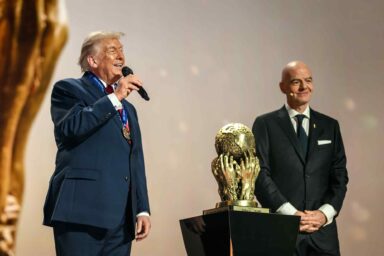
While Donald Trump has amply demonstrated that cheaters certainly can prosper, the USMNT seemed to pay a steep cosmic toll for the president’s mob-boss meddling.
|
Listen To This Story
 |
If you happened to miss it, consider yourself lucky.
It was a stinkeroo of epic proportions.
The US Men’s National Team is out of the FIFA World Cup after a 4–1 ass-whupping by Belgium in a match that was the worst thing a soccer match can be — boring. Painfully, quintessentially boring.
This was not because of the US loss or the lopsided score. It was because, to anyone who knows soccer, knows what to look for, the match was over five minutes after the opening whistle. The US squad simply did not, as they say, get off the bus. They played with lead in their shoes, and too often as if some devil had sneaked into their locker room and tied their left and right shoelaces together in a double knot.
Worst of all, they stopped playing instinctively and decisively and started thinking too much — which at this level is fatal.
And then, at key moments, they seemed to stop thinking entirely, allowing Belgian attackers to carve through them the way they might take apart a high school team.
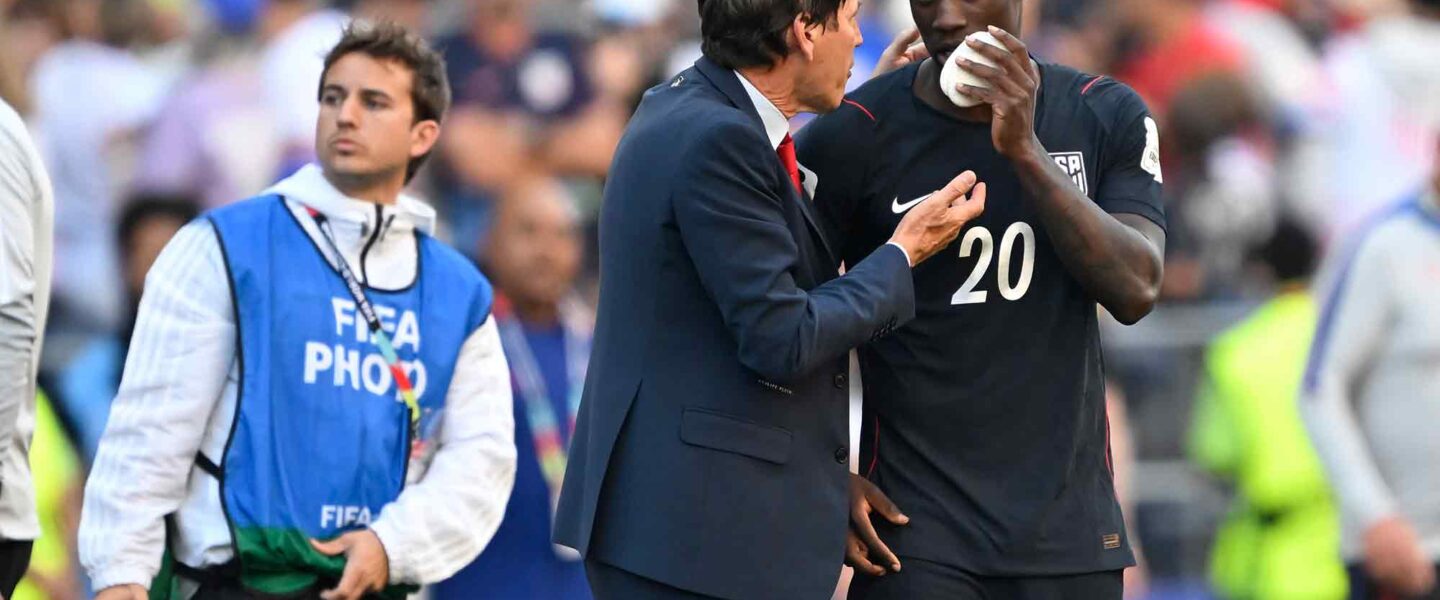
I could single out individuals as goats (not in the Lionel Messi sense), but this looked and felt more like a team-wide phenomenon — lack of individual brilliance (an inevitable consequence of overthinking) coupled with lack of cohesion and lack of intensity. Flo Balogun started, thanks to Donald Trump’s mob-boss intervention, and was a non-factor; so was the heralded Christian Pulisic and the entire supporting cast.
It was not as if the Belgians — who, in a move that struck me as half-strategic and half-cheeky commentary on the Trumped-up state of affairs, rested their top guns for most of the match — were especially scintillating. They just seemed to sense the US discombobulation and, as Steve Bannon might have put it, flooded the zone — throwing waves of extra players into their attack with seemingly no concern that the US could make them pay for it with a counter. You very rarely see that at this high level — soccer being a “conservative,” defense-first sport.
It is not a sign of respect.
Belgium’s first goal was a defensive blunder in the 9th minute. The US equalized, with some luck, on a deflected free kick. And then seemed to think their job was done, allowing Belgium’s second goal a minute later off another unconscionable defensive mixup. The US spent the next 30 or so minutes kicking the ball around and occasionally looking mildly dangerous, before the Red Devils put the match away on a blunder from US goalie Matt Freese that could make a high school blooper reel. It was left to the late-entering, well-rested (for Belgium’s next encounter with reigning European champion Spain) star Lukaku to pick up Belgium’s last goal in garbage time.
Related: Trump Twists FIFA’s Arm and Gets His Way
So what happened?
This US team was supposed to be different from all the previous models US soccer fans have seen over the long years of futility. And it was different: In the three matches of the group stage and the first knockout match against Bosnia-Herzegovina, the US team played decisively, instinctively, with many flashes of individual brilliance and elan. And with a confidence and intensity that were almost shockingly unfamiliar.
They owned a Paraguay side that went on to eliminate Germany and bow to mighty France by the margin of a penalty kick.
They dominated a game Australia, who took Egypt to penalties in the Round of 32.
They rested nine starters against Türkiye, having already qualified to move forward, and held their own.
And they played Bosnia-Herzegovina down a man (Balogun’s dubious red card) for half an hour and wound up adding a goal for a comfortable win.
They were well coached throughout by Argentinian Mauricio Pochettino, who made excellent roster and substitution choices and seemed to have the team playing rather consistently to their full potential. They were on a roll.
Then they laid this egg for the ages. From the get-go, it looked for all the world like nervous boys playing very relaxed men.
Okay, you probably know where I’m going with this.
I want to ask a fair question that I think no one will ever be able to answer definitively: How much of this dramatic shift in quality and fortune can be attributed to the superiority of the Belgian side, and how much to the impact of Donald Trump’s meddling and arm-twisting, which turned the last 24 hours leading up to the match into not just a distraction but an unmeasurable weight for the US squad to bear?
We may not have an answer, but we do have some clues to work with.
The US squad was healthy — injuries did not factor in.
The Belgian team, aside from a desperate and spectacular last 10 minutes against Senegal in their previous match, had mostly played mediocre soccer throughout the tournament: unimpressive draws with Egypt and Iran, before stomping on a winless New Zealand.
The Belgian coach rested their big stars against the US.
The Belgians were furious at FIFA’s reinstatement of Balogun, appealing it all the way to international sport’s top court before running out of time. After winning the match, the Belgians posted “Overturn this” on their official team website, and their captain, Youri Tielemans, stated the obvious: FIFA’s reinstatement of Balogun had fired them up.
Would the US team have been better off — more focused, more locked in — if Trump had refrained from butting in and they had played without Balogun, but with mental and emotional clarity, with a mission to step up in the face of adversity, with the angels on their shoulders as opposed to gripping them by the ankles?
So Belgium came in pissed and focused, while the US came in feeling wangled-for and distracted. Not exactly like cheaters — because they had done nothing wrong (although some commentators were suggesting that Balogun sit out the match to rectify Trump’s widely decried intervention and FIFA’s skirting of their own rules, which permitted no appeals of Balogun’s mandatory suspension) — but with an amorphous cloud, a kind of impurity of status and purpose, hanging over their heads.
Would they have been better off — more focused, more locked in — if Trump had refrained from butting in and they had played without Balogun, but with mental and emotional clarity, with a mission to step up in the face of adversity, with the angels on their shoulders as opposed to gripping them by the ankles?
And would Belgium have had the same edge, the same hell-bent intensity, the same attacking mindset without their grievance that Trump and FIFA had pulled a fast one and screwed them over?
We’ll never know for sure how that counterfactual would have played out. But we do know that, at this highest of levels, with these extraordinary pressures, half at least of the game of soccer is psychological. With talent levels basically a wash, it’s all about edge, confidence, and yes, feeling that the force — that mysterious cosmic force — is with you. That, as in war, your side is in the right.
Donald Trump took all that away from the US Men’s National Team, in exchange for a game but hardly game-breaking Flo Balogun. Trump’s power flex was not only both a practical and symbolic blow to the rule of law — which is, increasingly, his mortal enemy — but, to all appearances, a blow to the psyche and performance of the team he was ostensibly out to help.
That team, on the pitch in Seattle, didn’t seem, individually and collectively, to know where they were. They seemed to be sleepwalking through a bad dream. Much like the country they represent.
Requiescant in pace.