In Iran, Trump’s Stubbornness Conflicts With Persian Pride
Trump failed to understand — and no one around him seemed to have the courage to tell him — that Iranians are a different breed.
|
Listen To This Story
 |
To understand whether the ongoing talks between the US and Iran are likely to go anywhere, it’s first necessary to look at the psychology of the leaders on both sides. Details of the talks are secondary. Instead, it’s best to see the conflict in terms of “stubbornness” versus “pride.”
From his earliest days in business, President Donald Trump learned from his mentor and lawyer, Roy Cohn, the mantra, “Never explain, never apologize.” In other words, for both Trump the businessman and Trump the president, the playbook has always been to push hard and doggedly in order to achieve a stated goal, consequences be damned.
The trick is that there are no consequences if you can change goals in midgame. As Trump sees it, if you can avoid having to explain why you have switched to a different set of goals, you don’t have to deal with the consequences of not achieving what you initially set out to do. The key point is never to apologize or admit that you were wrong.
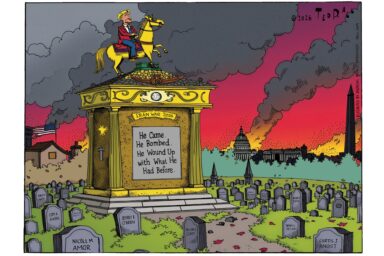
That summarizes Trump’s dealings with Iran. His rapidly changing explanations for going to war have been dizzying.
His initial stated goal was that Iran was on the verge of weaponizing its highly enriched uranium to make nuclear bombs. Whether Trump was acting on US intelligence information or was seduced by Israeli Prime Minister Benjamin Netanyahu’s ultra-right-wing politics is anyone’s guess.
Whichever the case, the war’s rationale soon changed to regime change and defending the Iranians engaged in massive protests. The reasoning went: “The regime is so bad that we have to help the Iranian people who have been suffering. Rise up, we will arm you, have another revolution, and we’ll both be happier when the Islamic regime collapses.”
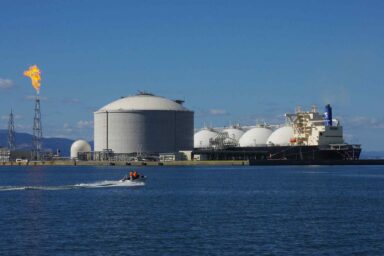
Finally, after Iran blocked the Strait of Hormuz, Trump’s goal changed to ensuring international navigation. For specifics, we were told that the US’s ultimate objective was to stop Iran from blocking the Strait of Hormuz, jeopardizing international trade, harming the world economy, and charging fees for tankers to pass. The new mission of the United States shifted to safeguarding the international business environment and world finance.
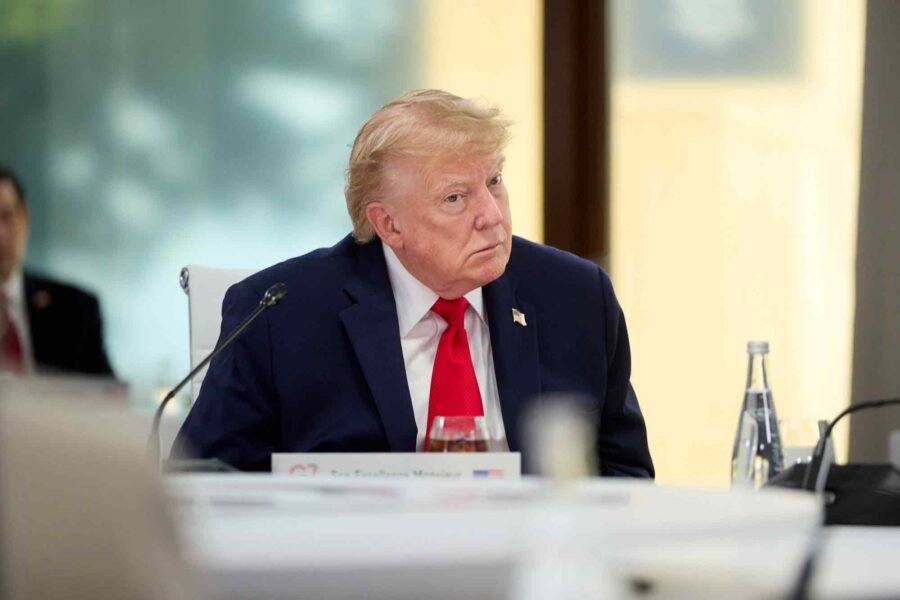
Trump’s strategy remained the same: Hit them hard and they will cave.
In summary: Be stubborn, keep pushing for something, pivot often, don’t explain, don’t apologize.
What Trump failed to understand and did not want to acknowledge — and no one around him seemed to have the courage to tell him — is that Iranians are a different breed. They play a different game; they have a different psychology.
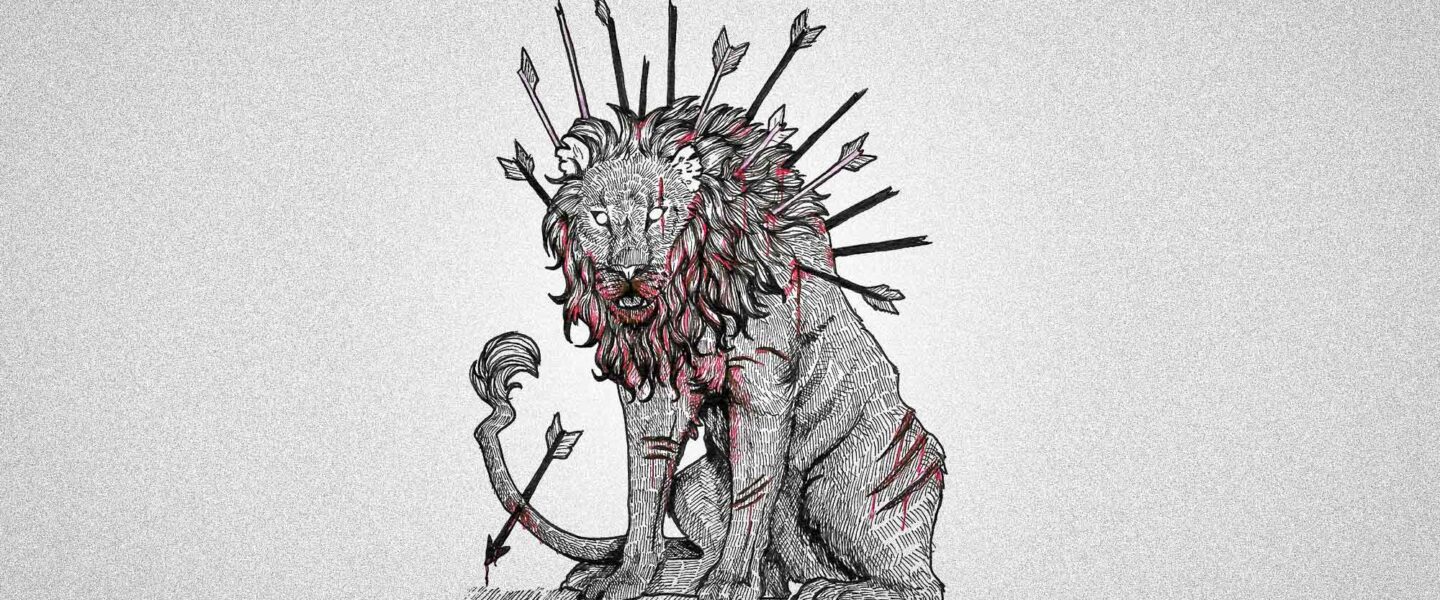
Having been an empire thousands of years ago and having dealt with other empires for centuries, they know how to play the long game. Yes, the Iranian regime sees the current conflict as an existential battle for survival. But more than that, both Iran’s leadership and even its impoverished and beleaguered population react to Trump’s hardline tone instinctively as a matter of Persian/Iranian pride. Existential survival is important, but centuries of history have convinced Iranians that they cannot allow themselves to be dictated to by someone else.
The late Iranian leader Ayatollah Ruhollah Khomeini led the way for this line of thinking in the eight-year Iran-Iraq War (1980–88) by pushing forward despite all odds, even at the expense of using young children to clear the way of landmines so the infantry behind could push forward.
The Iranian regime is indeed facing serious economic hardship, hardship from which its leaders and hardline elites are largely exempt but the average Iranian is not. The regime has made it clear that it is willing to sacrifice the public’s well-being, at least for some time to come, and there is not much anyone can do about it.
Evidence that the regime is more than willing to sacrifice its own people as a matter of pride was evident when Deputy Work and Social Security Minister Gholamhossein Mohammadi said on the record in April that 2 million people had lost their jobs because of the war.
The government, not for the first time, cut the internet under the guise of security precautions.
Mohammadi had already announced in January that every day that people did not have access to the internet cost the country’s economy $35 million. The government restored access in late May — about three months after the start of the war. Ninety days multiplied by $35 million a day equals a loss of about $3.2 billion, nearly 5 percent of the country’s GDP in 2024.
Women have been hit particularly hard. Even before the war, only 1 in 9 working-age women in Iran were counted in the workforce. A majority of these women worked online from home. When the internet was cut, their families lost much-needed income.
The economic situation is so bad that people have been selling their furniture to make ends meet. The lack of basic food commodities, such as cooking oil, has forced people to pay higher gas prices to travel to nearby villages to obtain animal fat as a substitute for cooking oil.
Iran is still believed to have about $40 billion of cash reserves at its disposal. So what has it done to lessen the pain of its people?
Yes, the Iranian government recently released $1 billion from the sovereign fund to import basic goods such as sugar, rice, red meat, and animal feed. In a country of 97 million people, more than 80 million receive monthly vouchers to buy subsidized food items — if they can find them.
A loan system was created to bail out small businesses with up to $330 per employee. However, there is a huge catch. The money has to be repaid within six months at a whopping interest rate of 18–35 percent.
These are not the signs of a government taking care of its people. And yet, there are fewer anti-regime demonstrations these days than at the beginning of the war. Why? Because for the average Iranian, too, resistance to “foreign occupation” trumps everything else.
So, how will it end? Where is the light at the end of the tunnel?
Remember the argument at the beginning of this article that the current impasse is a question of “stubbornness” versus “pride”?
The roles may recently have changed.
It is now Trump who has too much pride to admit that it was a mistake to launch the war. And it is the Iranian regime that is too stubborn to give in. Persian pride and readiness to play the long game are too powerful for them to back down.
Earlier this year, I predicted that this war would either win Trump the Nobel Peace Prize he so covets or he would have succeeded in dooming the next generation of Iranians.
I don’t have a crystal ball, but I would wager now that Trump’s stubbornness will doom us — the American people — to a protracted, alternating cold-hot war with no winner. The real loser will be the Iranian people.