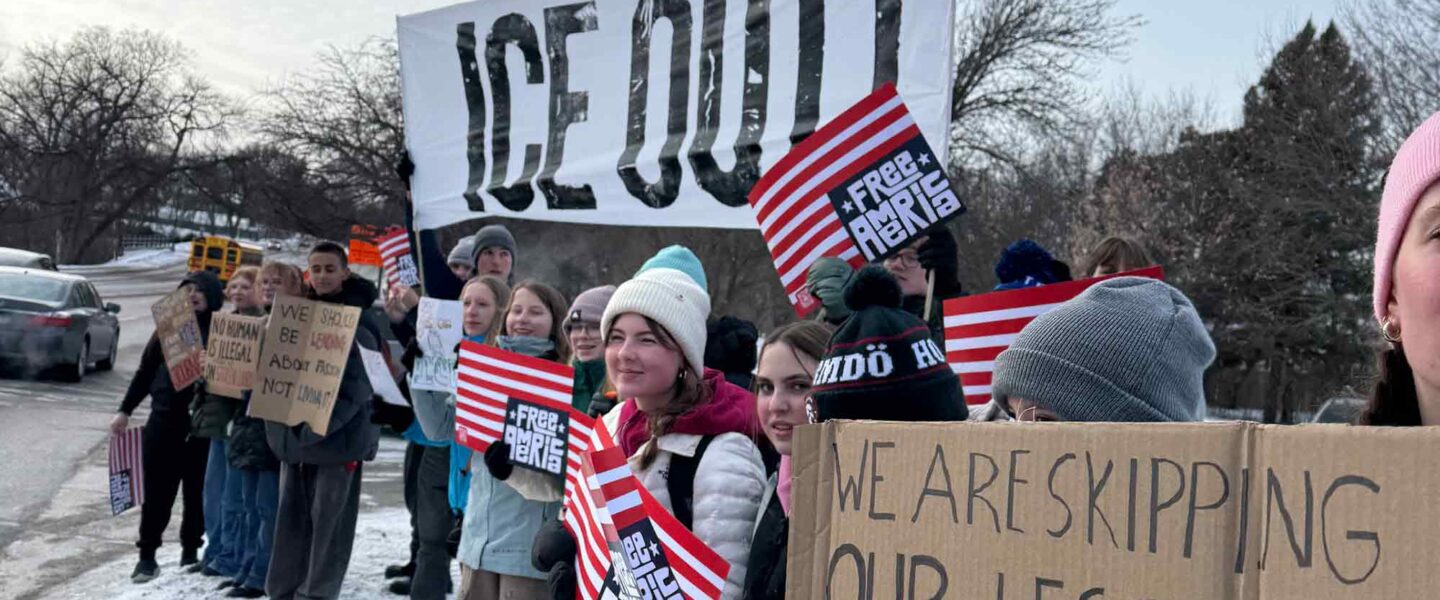
Operation Metro Surge Has Ended, Yet Trauma Lingers Across Minneapolis Schools
Although most of the 3,000 federal agents who targeted Minnesota’s Twin Cities at the start of the year have moved on, they left behind chaos, fear, and a new sense of community. WhoWhatWhy investigated the lasting impact of “Operation Metro Surge” on students and those who work with them.
|
Listen To This Story
 |
This is the first article in a four-part series investigating the impact of Operation Metro Surge on Minnesota schools and students. You can find the next installment here tomorrow.
Operation Metro Surge has long ended, yet Americans will not soon forget the chaos 3,000 federal agents caused in Minneapolis and St. Paul, and the civilians shot by government agents while protesting the heavy-handed deportation raids. The national news has since moved on. In the Twin Cities, however, the aftereffects of a terrifying two months continue to linger — not just within its immigrant communities but also among students who witnessed and lived through the mayhem.
What Americans saw on their screens — even the horrifying images of federal agents shooting Renee Good and Alex Pretti to death in broad daylight — doesn’t tell the whole story, and neither do the numbers. But they are a start.
From December 1, 2025, through March 10, 2026, ICE detained more than 70 children, about half of whom were sent to the Dilley Immigration Processing Center in South Texas.
We may never know how many kids lived in fear for their own well-being, as well as that of their families and friends, and who were forced to attend school from home out of concern for their safety.
To show how students were impacted, WhoWhatWhy spoke to some of them, as well as teachers, school administrators, and child psychologists. Over the next four days, you will find out how they experienced Metro Surge, the impact the crackdown had on them and their schools, and the lessons they learned away from the classroom.
Minneapolis High Schoolers Lived in Fear
For the majority of Minneapolis residents, fear washed over the city when an ICE agent killed Renee Good, a mom from the suburbs of south Minneapolis, in her car following a confrontation with agents.
Sullivan Cooper was in her 6th-period science class at nearby Southwest High School when she read the news on her phone.
“This was super scary because it was on the same road that is right near my house,” Cooper said.
A few hours later, federal agents showed up at Roosevelt High School during dismissal to detain two faculty members. A brawl broke out, and agents used tear gas on school grounds while students were still present.
When Southwest High School sophomore Clara Henry heard about this just 10 minutes away, she began to feel scared.
“I could have been in that position, just as easily as they were. Using chemical weapons against students is just horrific,” Henry said. “I can’t believe that would be happening from federal agents who are supposed to be trained. They’re so blatantly going against the rules and doing stuff that’s not okay.”
After Good’s killing, all of Minneapolis began to live on edge. Public schools across the city closed for the rest of the week, and when students went back the following Monday, life in Minneapolis had changed.
J, who asked to go by his first initial, saw adults patrolling every day on his way to and from school. He said he tensely gripped a whistle inside his pocket that he would use to alert others if ICE agents were in the area and taking action.
For Henry, these whistles became a familiar sound in areas of the city where businesses are predominantly owned by people of color.
The Southwest sophomore also started noticing her nonwhite friends carrying copies of their birth certificates and passports out of fear of being detained while walking alone.
As the creative director of her school newspaper, The Navigator, Henry felt obligated to publish an article to ensure her peers knew their rights if they were approached by ICE agents. Still, she said, living in a fear-ridden city due to the actions of federal agents made her feel powerless.
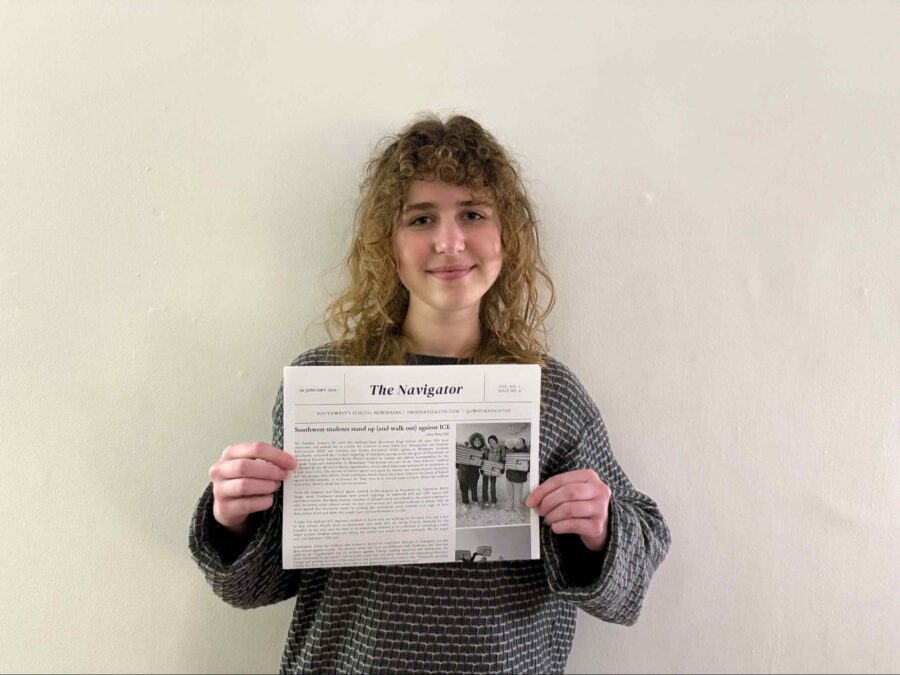
“It doesn’t matter if they have papers or not, they are still at risk,” Henry said of the city’s immigrants, adding that they make her hometown special.
“What makes me love Minneapolis so much is that we have such a diverse culture and I’m able to experience all these different cultures and be friends with people who have these different experiences,” she explained. “Literally everything [ICE is] doing is threatening that. So it feels very heartbreaking.”
Less than three weeks after Good was killed, two Border Patrol agents shot Alex Pretti to death. Pretti, an intensive care nurse, was directing traffic and attempting to help a woman pushed down by an agent when he was pepper-sprayed, swarmed by federal officers, and shot.
Ten days later, President Donald Trump’s border czar, Tom Homan — who had been put in charge of the operation after it generated bad press for the administration — indicated that Metro Surge would begin winding down and that 700 federal agents would leave the city. As a result, the media shifted its attention to other stories, and the declining coverage after the first week of February led many Americans to believe that ICE detentions were slowing down in Minneapolis.
However, in the city itself, ICE’s tactics had merely shifted, and agents used more clandestine methods to detain Minnesotans.
According to Henry, some agents dressed in reflective vests (formerly a sign to students that the person was a safe driver who could be trusted) and showed up at Minneapolis public schools during dismissal.
“By doing that, it’s obvious they’re targeting students,” she said. “These are just kids that are trying to go to school.”
She added that most people outside of Minneapolis never learned about these cases once the national media left the city.
Meanwhile, Henry understands that ICE is not going to stay in Minneapolis forever. Eventually, ICE’s mission of detaining immigrants will simmer down and more people will return to work, school, and their regular lives. Regardless, she knows the damage that has been done is irreparable.
“There’s always gonna be that kind of climate of fear around communities that have been severely affected by this because this is such a life-changing, in a bad way, experience for them,” she said. “That’s always gonna be there a little bit.”
Although students’ lives were heavily affected throughout Operation Metro Surge, they had teachers and other faculty who kept calm under pressure and did everything they could to ensure the schools were ICE-free zones. In the next two articles, teachers and administrators from two of the most affected districts in Minneapolis reveal how their schools became frontlines and how they fought to keep students and their families safe.
The next article in this four-part series shows how one school administrator went above and beyond to keep her students safe from ICE.
This story was written by a member of our Mentor Apprentice Program (MAP). It gives aspiring journalists an opportunity to hone their craft while covering national and international news under the tutelage of seasoned reporters and editors. You can learn more about the MAP and how you can support our efforts to safeguard the future of journalism here.