The Iran War Is About To Escalate
And there is no exit strategy in sight.
|
Listen To This Story
 |
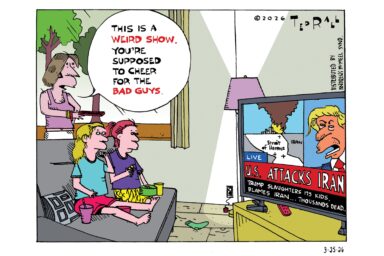
The United States and Israel’s war on Iran is about to escalate with no exit strategy in sight.
Several factors are pushing the combatants toward escalation:
- US President Donald Trump cannot credibly declare victory and an end to the war as long as Iran controls passage through the strategic Strait of Hormuz.
- Israel signalled its intent to emasculate Iran militarily and economically for years to come with this week’s assassination of five top Iranian officials and an attack on the Islamic Republic’s South Pars gas field.
- Iran, determined to prolong the war in the belief that it has the longest breath and ability to absorb body blows, has vowed to retaliate for the Israeli actions in ways that inevitably will spark an escalation of the hostilities.
Israel has long pursued a decapitation strategy against Hamas, the Palestine Liberation Organisation (PLO) until the 1990s, Lebanon’s Iran-backed Shiite militia Hezbollah, and Iranian nuclear scientists, in the faulty assumption that eliminating leadership would destroy groups or, in Iran’s case, the country’s nuclear program.
The strategy has yet to produce a success despite Israel’s ability to kill those it marks for assassination.
Hamas still controls parts of Gaza despite more than two years of a devastating war and the targeting of the group’s leaders since the 1980s.
The PLO governs parts of the West Bank, while Iran retains the capability to rebuild its nuclear program, assuming the Islamic Republic survives the war as a governing structure.
So far, Israel’s extension of its decapitation strategy to Iran’s political, military, and security elite has failed to break the Islamic Republic’s regime cohesion, let alone spark the regime’s collapse, despite the killing of Supreme Leader Ayatollah Ali Khamenei on the first day of the war, and of five senior officials — National Security czar Ali Larijani, Intelligence Minister Esmail Khatib, military commander General Gholamreza Soleimani, Basij intelligence chief General Ismail Ahmad, and Islamic Revolutionary Guard Corps spokesman General Ali Mohammad Naini — in the last 72 hours.
Israeli Defence Minister Israel Katz disclosed this week that Israeli military commanders were authorized to kill any senior Iranian official they can locate.
Iran has been here before, even if the war poses the most existential threat to the Islamic Republic in its 47-year history.
The Islamic Republic’s president and prime minister, alongside its chief justice and more than 70 other senior officials, were assassinated or killed in bombings in 1981, 2.5 years after the toppling of the Shah.
Israel killed the commanders of the military and the Revolutionary Guards and their successors in last June’s 12-day Israel-Iran war.
With Khamenei asserting that “every drop of blood has a price,” Iran could retaliate for the most recent assassinations by targeting senior Israeli officials, including Prime Minister Benjamin Netanyahu and Katz.
What the most recent assassinations mean for Iran and the course of the war will likely be evident when newly appointed Supreme Leader Mojtaba Khamenei, the son of Ali Khamenei, appoints Larijani’s successor.
Potential candidates include Saeed Jalili, the hardline presidential candidate in last year’s election and former National Security Council head, Ali Bagheri, a former deputy head of the Council, foreign ministry official, and nuclear negotiator who is viewed as a moderate, Parliament Speaker Mohammad-Bagher Ghalibaf, former IRGC commander Mohsen Rezaee, and IRGC naval commander Ali Akbar Ahmadian.
Irrespective of who succeeds Larijani, a consensus builder who favored de-escalation, Iran’s next generation of leaders is likely to be men and some women whose lives have been shaped by the Iran-Iraq war, the sense of being besieged by the United States, and the wars with the US and Israel.
They are also people who will need time to fill Larijani’s shoes, given that they lack the assassinated official’s experience and exposure to the world at large.
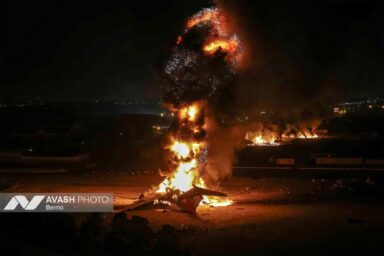
Alongside Israel’s assassination campaign, Iran’s retaliation for the attack on the South Pars gas field promises to escalate the war.
Trump has disavowed the attack, insisting Israel would not strike again at Gulf oil and gas facilities, while threatening Iran that he would attack its installations if the Islamic Republic continued to target the Gulf’s energy industry.
“It appears that the [Israeli] attack stemmed from frustration: Iran is not capitulating, and there is a desire to generate quick wins, such as opening the Strait of Hormuz, without requiring ground involvement, and before international and other pressures bring the campaign to a halt,” said former Israeli military intelligence and Iran analyst Danny (Dennis) Citrinowicz.
Raising the temperature, Saudi Foreign Minister Prince Faisal bin Farhan Al Saud warned Iran that tolerance of its attacks on Gulf states was limited.
In a first suggestion that Gulf states could respond to the attacks militarily, Prince Faisal noted that they have “very significant capacities and capabilities” that could be drawn on should they “choose to do so.”
Similarly, Anwar Gargash, a senior adviser to United Arab Emirates President Mohammed bin Zayed Al Nahyan suggested that the attacks were pushing Gulf states to cooperate more closely with the United States and Israel.
A potential Gulf shift towards a more offensive posture that supports the US-Israeli military campaign in one form or another would mean that Iran’s “escalate to de-escalate” strategy has backfired.
It would render meaningless Iran’s effort to drive a wedge between the US and Gulf states in a bid to increase pressure on Trump to end the war.
Iran has identified five key oil, gas, and petrochemical installations in Saudi Arabia, the United Arab Emirates, and Qatar that it would target.
Within hours, Qatar was fighting fires sparked by a missile attack at its Ras Laffan liquified natural gas (LNG) production facility, the world’s largest and one of the five facilities identified by Iran.
Energy Minister Saad al-Kaabi said the Iranian attacks have knocked out 17 percent of export capacity, causing an estimated $20 billion in lost annual revenue for the next three to five years, and threatening supplies to Europe and Asia.
Iran also struck at the facilities it identified in Saudi Arabia and the UAE, as well as a refinery in the Israeli port city of Haifa.
The targeting of Gulf energy infrastructure is part of Iran’s strategy to gradually increase the pain suffered by the Gulf states, Americans paying higher prices at the gas pump, and global energy and commercial markets, in the belief that Iran’s ability to absorb pain exceeds by far that of the Gulf and the United States.
Controlling shipping in the strategic Strait of Hormuz through which 20 percent of the world’s oil and gas exports pass, is another element of the Iranian strategy.
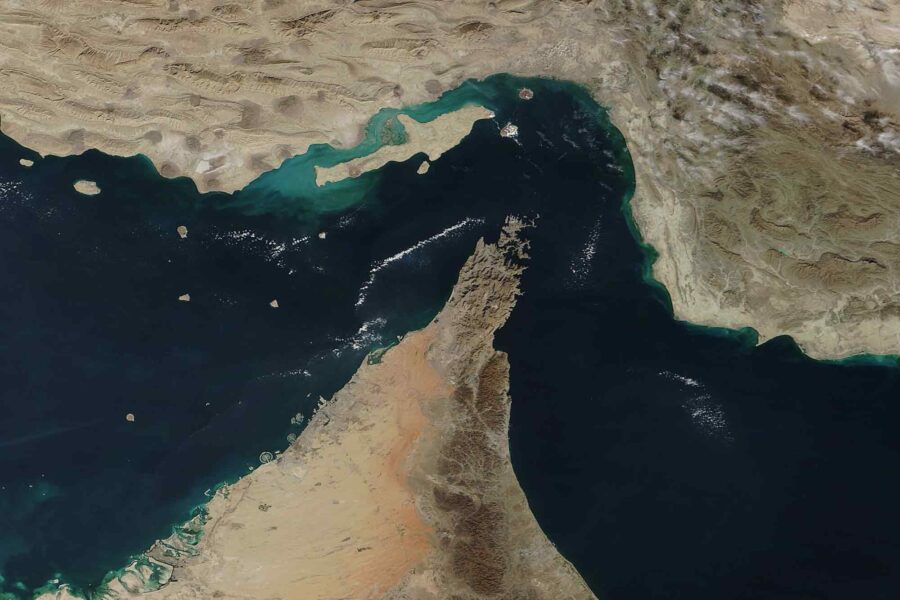
Photo credit: NASA / WIkimedia (PD)
The strait’s importance is not just oil, but food security for the Gulf states. Largely desert landscapes, Gulf states are dependent on the strait for 85 percent of all food consumed in the region.
There is no way Trump can credibly declare victory in the war without wresting control of the strait from Iran.
To regain control of the strait, Trump has to expand the war by occupying Iran’s shoreline (the riskiest option), occupying Iranian islands at the mouth of the strait, and/or ordering the US Navy to escort tankers through the waterway.
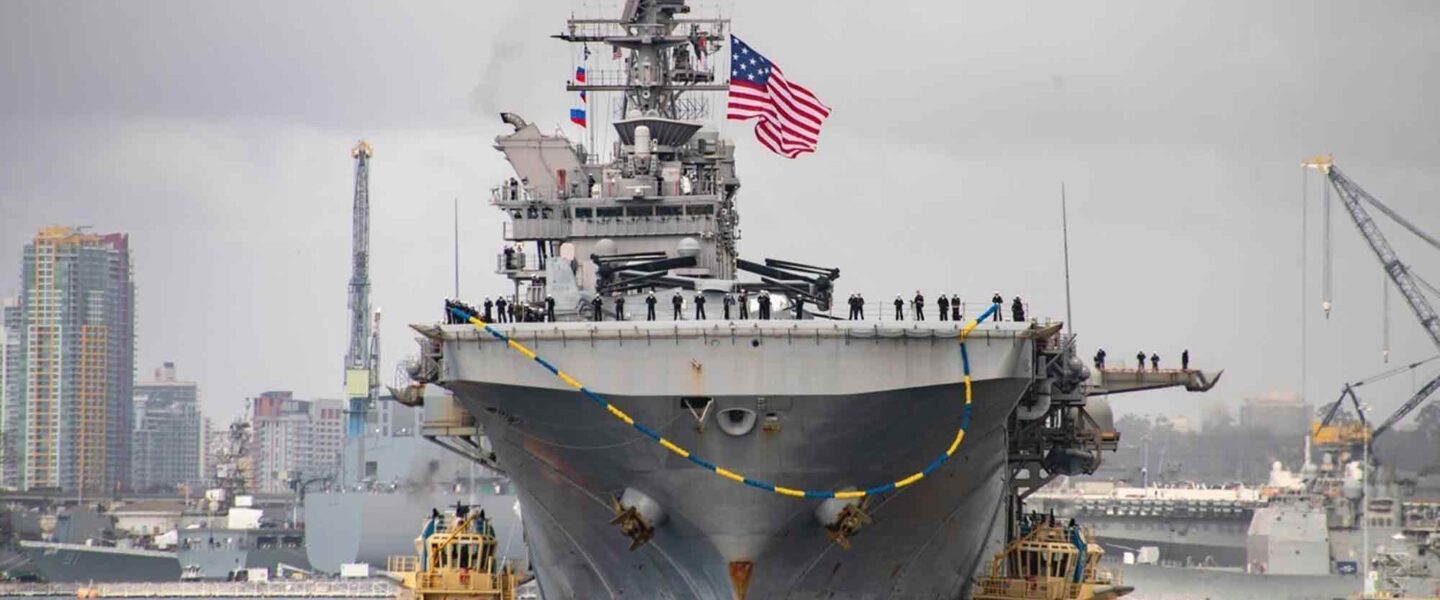
Trump has begun to put in place the building blocks of an expanded war with this week’s dropping of 5,000-pound bombs on missile sites on the Iranian side of the strait, and the dispatch to Gulf waters of the USS Tripoli, an amphibious assault ship with 2,200 Marines on board.
As the Tripoli makes its way from Japan to the war theater, the Pentagon is weighing sending more troops to the Middle East to bolster the 50,000 military personnel already in the region.
None of Trump’s alternatives is foolproof. Even so, whether one looks at the fallout of Israel’s decapitation campaign, Iranian retaliation for Israel’s attack on the gas field, or the fate of the Strait of Hormuz, escalation is the writing on the wall.
James M. Dorsey, an associate editor of WhoWhatWhy, is an adjunct senior fellow at Nanyang Technological University’s S. Rajaratnam School of International Studies and the author of the syndicated column and podcast, The Turbulent World with James M. Dorsey.