More Crops Grown for Fuel and Livestock Feed Than for People, New Study Finds
Cutting back on beef and biofuels could help improve food security and mitigate climate emissions.
|
Listen To This Story
 |
Croplands around the world produced enough calories in 2020 to meet global food needs, but only half of that output was available and suitable for people to eat, a new study finds.
As more crops are grown for livestock feed and biofuels rather than food for people, the food system becomes “less efficient over time,” says Project Drawdown researcher Paul West, one of the authors. Published in Environmental Research: Food Systems in March, the study warns that the growing gap between what is produced and what people actually eat has major implications for food security, land use and climate change, especially as demand for meat continues to rise.
Researchers from Project Drawdown and the University of Minnesota found that although global calorie production of 50 different crops rose by 24 percent from 2010 to 2020, the calories consumed by people eating these crops grew by just 15 percent.
In the study, calories are used as a standard measure of energy derived from crops to track how it moves through the food system and how much of that energy ends up as human food, livestock feed or nonfood uses, like biofuels, fuels made from plants and other organic materials. Their data shows that a growing share of crops is being funneled into livestock feed and nonfood uses, which increased by 31 percent and 36 percent in 2020, respectively.
“We already farm an area about the size of South America, and most of the best farmlands around the world are already used,” West says. “Any kind of expansion into new areas comes at the expense of loss of habitat, and you’re moving into areas that aren’t as fertile to grow crops.”
Researchers stress that cutting meat — especially beef — and reducing biofuel production could significantly increase the amount of food available for people while easing pressure on land, ecosystems and water resources.
Beef Production Drains Natural Resources
Reversing this inefficient use of crops could support 7.2 billion people per year, according to the paper. In comparison, 733 million people — about 1 in every 11 worldwide — went hungry in 2023.
Only a few countries are responsible for much of this global shift. In 2020, people in the United States ate 17 percent of crop calories; in Brazil, the figure is 24 percent. By contrast, people in India ate a significantly larger share of crops at about 79 percent. This disparity is largely driven by the concentration of livestock animal feed and bioethanol production in the US and Brazil. In India, a larger share of crop feed goes to dairy production, which converts feed to food more efficiently than beef.
Beef production stands out as the biggest source of this inefficiency in livestock feed. Roughly 40 percent of livestock feed calories are consumed by cattle, but they provide just 9 percent of the calories produced with crop feed that people get from animal sources (excluding fish). Beef is also the most carbon-intensive food produced, partly because cattle emit the greenhouse gas methane, and they also require large amounts of land for grazing and feed production.
As a result, even modest reductions in beef consumption have an outsized impact, researchers say.
“Shifting away from beef is really one of the easiest, simplest things that you can do to reduce the impact of your diet,” Project Drawdown researcher Emily Cassidy, one of the study authors, tells Sentient. She adds that swapping beef out for chicken or pork is “better for the environment and the climate.” Swapping beef for either chicken or pork does come with tradeoffs for animal welfare, which were not considered in this study.
Cutting beef consumption to healthy levels in higher-income countries and replacing it with chicken could free up enough calories to feed 850 million people, researchers say. More than half of that potential gain could come from just the US and Brazil if excess beef were swapped for chicken. The EAT–Lancet Commission recommends that people consume no more than 15 grams of beef, pork, or lamb per day for both climate and health reasons.
Biofuel’s Climate Cost
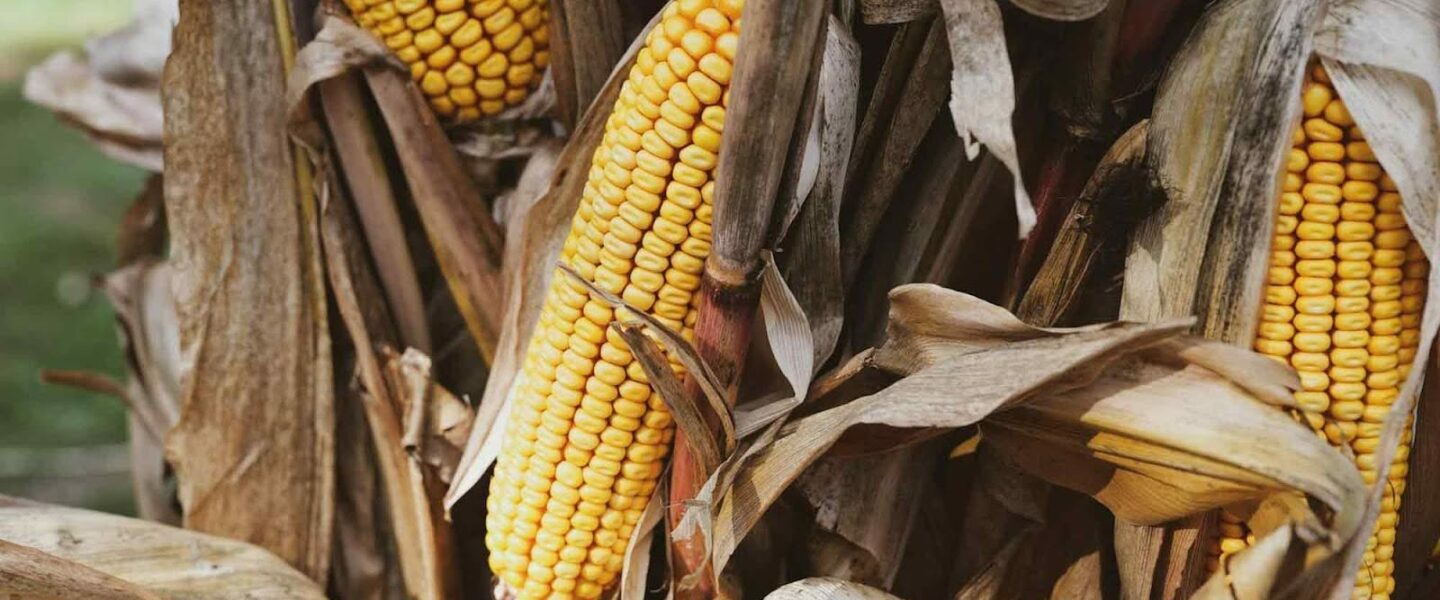
The researchers note that this study is looking at what drives the efficiency of how crops are used in the food system and is not focused on how this relates to human health. Corn grown for feed and fuel is not the same as the corn people eat. However, they emphasize that this land could instead grow crops that meet human caloric and nutritional needs while also benefiting the environment.
From 2010 to 2020, the share of crop calories used for biofuels rose by 28 percent. Over 40 percent of corn crops in the United States are used for ethanol production, driven by the Renewable Fuel Standard, a policy originally passed in 2005 that required gasoline to be blended with ethanol.
While biofuels burn cleaner than fossil fuels, some research suggests biofuels are no better for the climate — and may even be worse — than fossil fuels once you factor in land use for biofuel production.
Policymakers need to consider the natural resources each country has and how to use them effectively, Cassidy says. Using land that could grow food for people to grow biofuel crops instead, for instance, wastes valuable resources, she adds. “It’s a lot of land, it’s a lot of water, it’s a lot of fertilizer, it’s a lot of emissions that go into making something that’s not efficient at all.”
This story by Gaea Cabico was originally published by Sentient Media and is part of Covering Climate Now, a global journalism collaboration strengthening coverage of the climate story. WhoWhatWhy has been a partner in Covering Climate Now since its inception in 2019.