Who Will Tell Trump No?
Time for everyone, especially the military, to speak out against the madness.
|
Listen To This Story
 |
No matter what President Donald Trump does, there’s no easy mechanism to remove him. That is, short of agreement from his own allies leading to impeachment and conviction, or — an even longer shot — invocation of the provisions of the 25th Amendment, Section 4.
Plus, it’s far from clear that putting one’s own country on a dangerous course is itself grounds for removal.
In other countries, the military would step in and remove someone this unpredictable and volatile.
What’s urgently needed is serious attention paid to the question: What should be expected of the military beyond blind obedience?
The November video in which ex-military and intelligence-community members of Congress reminded soldiers they need not follow unlawful orders was a start. But now, with an illegal and unjustified war of choice ongoing, defenders of constitutional restraints on the use of military force need to up their game.
You might think that generals and admirals, current and former, would not be expected to move beyond their standard focus on “Will it work?” to ponder broader strategic, moral, and humane concerns. To say nothing of the increased threat of nuclear conflagration.
Yet four-star generals and admirals have all attended “war colleges” where these issues are studied and discussed at length. It’s part of the education of all top-ranking leaders in the armed forces of the United States.
The time has come for these military leaders to put their education to use and examine their current role in enabling Trump’s reckless international aggression. And, while respecting the fundamentals of democracy — squarely face the alternatives.
‘Some People Will Die’
Let’s talk about the core question I alluded to above: Is Trump insane?
He certainly appears oblivious to the consequences of what he has set in motion.
As the Middle East burned, he and Secretary of State Marco Rubio on Friday participated in a roundtable on… college sports. He acknowledged to a reporter that it might seem strange to be doing that during a war, but “it matters a lot to me.”
And his callous, very public shrug that “some people will die” indicates a depraved indifference to human life.
Then there’s his seemingly impaired ability, possibly relating to still-unclear loyalties, to recognize transparent dangers. He’s been stunningly blasé that his old “friend” Putin, whose country, with its excellent intelligence capabilities, has chosen to help Iran target American troops.
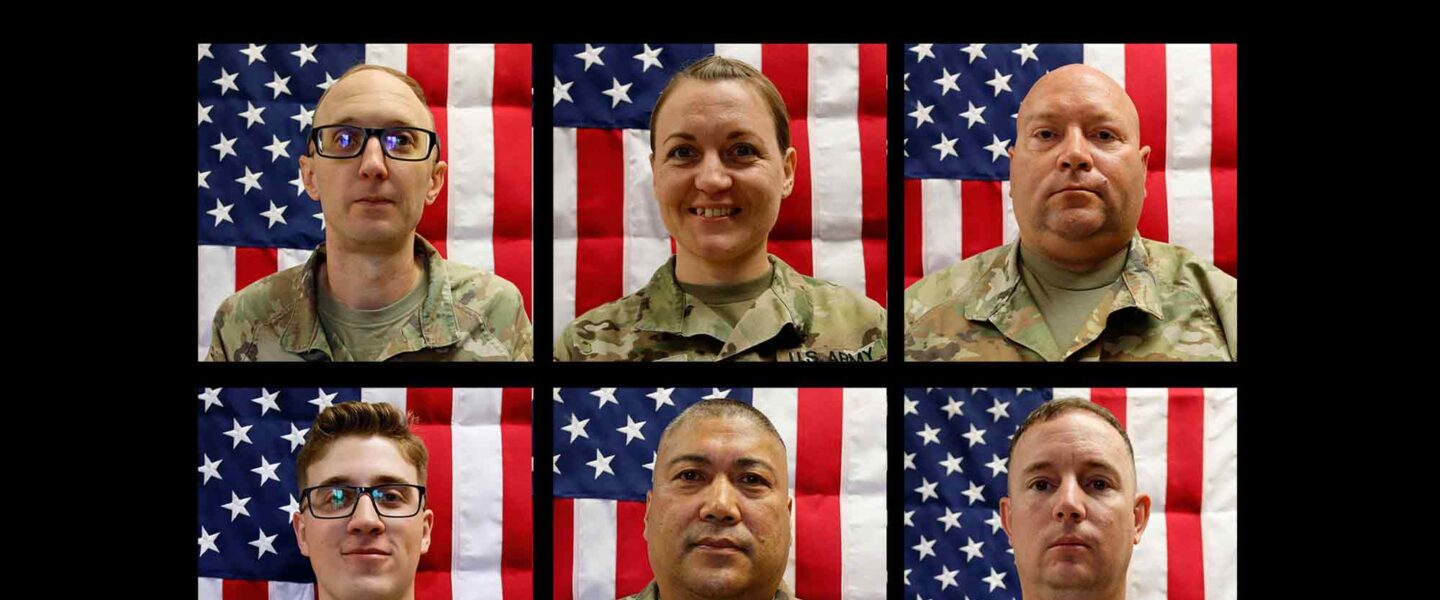
Trump also appears unconcerned about — or at least is downplaying — reports that the Pentagon is, according to the chairman of the Joint Chiefs of Staff, quickly burning through its supply of expensive precision arms and air defense interceptors. What they need especially to fight the Shahed. (Shaheds are one of Iran’s most effective weapons: drones that operate below the level that radar is usually calibrated to detect. They are responsible for the death of six American soldiers, and Iran has a huge stockpile of them.)
And yet while he seems not to care, he also seems desperate, actually reaching out to Ukraine (!) for help in combating these drones. Which does make practical sense, at least. Ukraine has had four years of experience fighting them. Ukrainian President Volodymyr Zelenskyy, ever able to turn the other cheek after all of Trump’s insults and treachery, will send advisers and systems to the Persian Gulf region because, he said, “Ukraine helps partners who help ensure our security.” If ever a line shimmered with sardonic ambiguity!
And because of this war, the government is burning through a lot of money. So far, according to early estimates, it has already cost taxpayers more than $1 billion.
To top this all off, Trump is looking for more fights. He’s now talking about invading Cuba, and just signed a new proclamation to use lethal military force in 17 Latin American countries to destroy cartels and terrorist networks.
He’s also exposing his own people to risks at home: We now learn that Trump is even blocking his remaining counterterrorism people from warning local police and the public about internal terror threats resulting from the war he created.
While I was writing this, I struggled to keep up with developments, including his statement Saturday that he won’t negotiate at all with Iran. He declared that the war would end only when Iran no longer has a functioning military — and no remaining leadership — resorting to his default to casually apocalyptic language:
At some point, I don’t think there will be anybody left maybe to say “We surrender.”
And at home, there may be nobody left who can tell Trump, “Enough. Stop.” Certainly not his party, which just voted down House and Senate resolutions to impose limits on the Iran operation.
The Moral Hollowness of This War
Stepping back a bit, the folly of almost everything about Trump comes into the sharpest view.
Trump so obviously had no vision for this war — and, apparently, neither did his military leadership. If they did, we don’t know what it is, which is equally intolerable in a constitutional democracy.
As has been manifestly clear since the beginning, he also had no justification to launch the war in the first place. His rationale has continuously shifted: claiming the Iranians were planning preemptive attacks (Pentagon briefers told Congress that no, they weren’t); saying Iran represented an immediate existential threat with nuclear weapons (it didn’t); or that the goal was always primarily to achieve regime change; or that Israel was going ahead anyway with an attack, so what the heck; or no, that Trump goaded Israel to act. None of the rest of us could behave this irrationally and inconsistently in our daily dealings with others and get away with it.
But he just keeps on coming. It’s good enough to plug problematic holes as they appear, and create new ones as needed. Trump has sought any loophole for his action, including taking cynical advantage of the well-meaning human rights doctrine of “Responsibility to Protect.”
And now, in a CNN Friday exclusive, he has told CNN that he’s OK with the next leader of Iran being a religious figure, and with the country being undemocratic, as long as it gets along well with Israel and the US. This is enormously important because it even challenges the seeming point of helping the Iranian people achieve their dream of freedom, which will obviously not be realized under another dictatorship.
No matter, of course, because he’s entirely capable of spinning on a dime and offering some other, possibly contrary, rationale for his war. Everything about Trump has the shortest imaginable “sell by” date.
Terminal Incompetence, Let Me Count the Ways
It’s hard to stomach this, and you’re entitled to say you simply cannot bear more. But more there is. Consider these facts:
- Trump communicated poorly to the public about what was going on — and the Pentagon press corps has not played its normal role of keeping us at least somewhat informed, with legit media blocked or ignored, and Team Trump calling almost exclusively on right-wing propagandists masquerading as journalists who can be counted on to never ask serious fact-finding questions.
- Trump failed to coordinate with the US’s Gulf allies who complained they were given no advance notice of his war plans, and were unprepared for the Iranian drones and missiles bombarding their countries in retaliation for US and Israeli strikes. Americans in the Gulf were left stranded, while citizens of other countries got quick help from their government, triggering criticism from one American, himself a retired general.
- Trump had fired many of the most qualified, experienced military, national security, and counterterrorism personnel — whose absence is now being deeply felt.
- Trump, who has been disrespectful of the military, military service, and prisoners of war, also, through Pete Hegseth, channeled inadequate respect for those American soldiers killed so far. Hegseth criticized the media for asking about or focusing on those deaths — as if the first American casualties in another open-ended Middle East conflict weren’t major news.
- Trump is rapidly drawing down the US’s limited supply of long-range and high-end missiles, giving comfort to geopolitical competitors like China and Russia — who can simply watch as the US’s vaunted ability to counter aggression is steadily degraded.
- Meanwhile, in this era of ever-observant spy satellites, our rivals are using this current onslaught to gauge the operational capacity of US tech against their tech — of central interest to any power contemplating aggression against American allies in Europe or Asia.
- Trump is raising already high military materiel costs to astronomical levels while cutting back on services to veterans.
- Some US commanders have begun rousing their troops with extreme Christian justifications for the war. This blatant breach of church-state separation is making many uncomfortable within the military.
- Those who speak up against the consensus are summarily forced to leave the military — and even retired military seem cowed, perhaps fearing the appearance of being unpatriotic.
- Conversely, the administration has organized PR efforts involving endorsements of the attack by ex-military, notwithstanding that these may represent a minority opinion.
Trumps… and the Draft
Trump hasn’t ruled out sending ground troops to fight in Iran. But one thing is clear: Whoever they are, none of them will be named Trump.
Generations of Trumps have all managed to avoid military service, while Trump has built his base largely by appealing to soldiers, veterans, and military groupies with his bellicose rhetoric.
Grandfather Trump fled Germany to avoid the draft.
Trump sat out Vietnam on account of “bone spurs.”
The president’s eldest child, Don Jr., changed his mind about enlisting after his father told him he would be disinherited.
As a candidate, he ridiculed John McCain for his status as a long-held (and tortured) prisoner of war: “He’s not a war hero. … He’s a war hero because he was captured. I like people who weren’t captured” and “He lost. … I don’t like losers.”
Our current commander in chief also made disparaging remarks on a tour of an American military cemetery in Normandy, and on numerous other occasions, about US troops who lost their lives or came home wounded, calling them “losers” and “suckers.”
Meanwhile, as Israel attacks Iran and suffers counterattacks, the 34-year-old son of Israeli Prime Minister Benjamin Netanyahu has been hanging out in Miami.
But nothing underlines the folly of bringing Trump back for another stint atop the military as an infamous incident during his first term. After obligatorily “paying respects” to fallen soldiers buried in Arlington National Cemetery — including the son of his former Secretary of Homeland Security John Kelly — Trump allegedly turned to Kelly and said: “I don’t get it. What was in it for them?”
And now it’s time to ask the military, Trump’s political allies, and the rest of the country: What’s in it for any of us?