Trump’s Scheme to Suppress Mail-in Votes Is on Hold Again
The legal battle over Donald Trump's attempts to insert the federal government in the administration of the midterms continues and the ball is once again in the Supreme Court.
|
Listen To This Story
 |
In many cases, it is impossible to predict how a judge or a court will rule on any given issue or what the decision will say. District Court Judge Indira Talwani’s order on Thursday night that prevents the Trump administration from moving ahead with its scheme to limit which Americans can vote by mail is not one of them.
The only question now is what happens next.
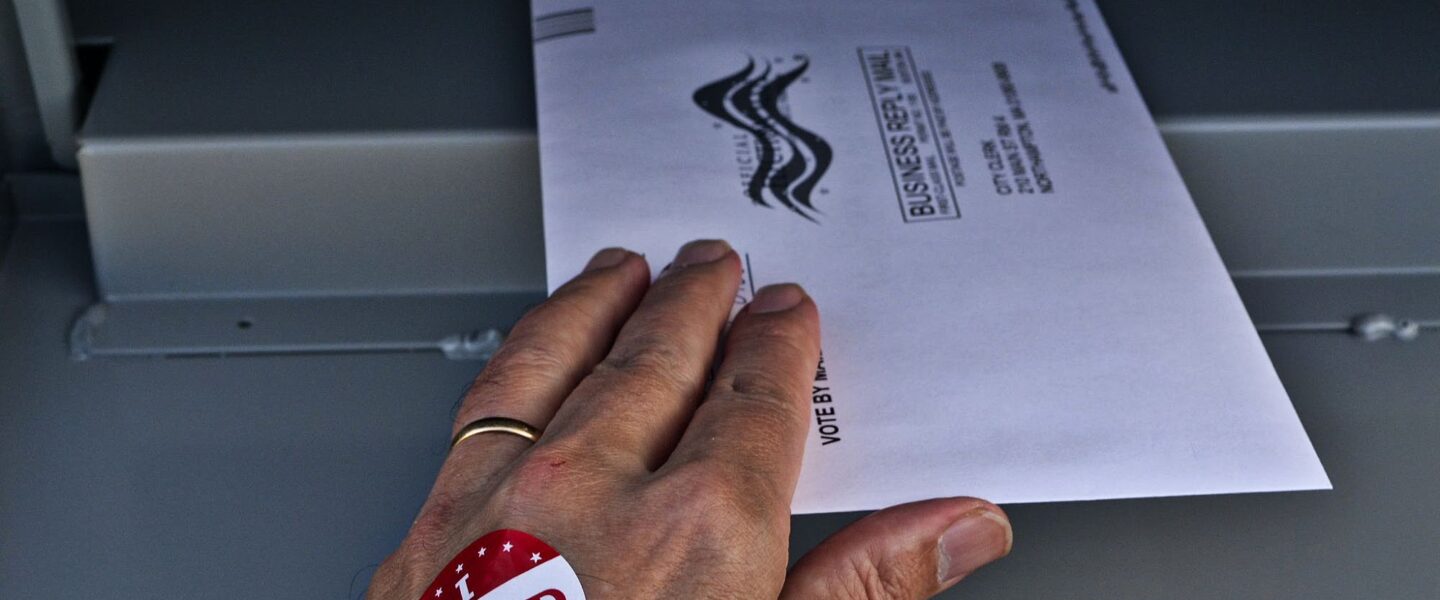
Up to this point, the legal wrangling over a United States Postal Service (USPS) rule that would require states to jump through certain administrative hoops before the federal mail service deigns to deliver ballots to and from its voters has been a bit of a kabuki theater.
In a nutshell, Donald Trump wants the federal government to play a much bigger role in deciding who gets to vote and how elections are administered in an effort to boost the GOP’s chances of electoral success in the upcoming midterms and beyond.
The president’s problem is that the Constitution clearly prohibits this because it is up to the states and Congress to make the rules on how elections are run.
That’s where USPS enters the picture. Simply put, its efforts to insert itself in the process of mail-in voting are a (clumsy) way to circumvent the Constitution.
Since it’s not difficult to see what is happening here, and to prevent the confusion and chaos that would surely follow if the postal service were to issue a final rule that imposes new burdens on states that allow their citizens to vote by mail, Talwani issued an injunction that prohibited USPS from implementing such a regulation when it was still in the draft stage.
Then, earlier this week, the Supreme Court rebuked her for not waiting until the issue was “ripe,” i.e., until the final rule had been issued (which had happened by the time the Supremes weighed in) and lifted that injunction.
Now that the final regulation has been published, Talwani on Thursday night once again ruled on behalf of blue states and voting rights groups that had sued the administration and sought another injunction.
And she did so in a fairly scathing fashion.
“Based on the record presently before the court, Plaintiff States face irreparable harm where they are required to comply with a likely unconstitutional regulation for which compliance is practically impossible as to the 2026 midterm elections, now little more than two months away,” Talwani wrote.
She pointed out that some states are required by their own laws to start sending their mail ballots to voters as early as next week, and that USPS’s rule includes no timetable for when it will approve the new ballot designs that states would be required to submit.
“If Plaintiff States are unable to comply with the Final Rule, an outcome that seems unavoidable given the timeframe, they will violate their obligations under the Constitution and State laws to administer elections,” Talwani added, noting that the administration never replied to the assertion of the plaintiffs that it would be impossible to comply with the mandates of the final rule in time for the midterms.
What the administration did assert, however, is that there simply is no time ahead of the election to adjudicate this matter, which is why the rule should be allowed to proceed.
In plain English, what it means is that USPS waited until the last moment to issue its final rule in order to thwart any attempts to get the courts to stop it.
Talwani wasn’t having it.
Noting that voters “are at risk of irreparable harm where they face significant risk of disenfranchisement and interference with their rights under state laws — where they rely on mail-in voting (due to age, disability, and/or residence), as permitted under their state laws, but live in a jurisdiction where election officials may not be able to comply with the Final Rule in time for the November 3, 2026 election,” she issued a two-week temporary restraining order barring USPS from implementing and enforcing the relevant parts of the rule that would affect the midterms.
The next (and highly predictable) step is that the administration will appeal the ruling.
The only thing that matters, however, is what will happen after that.
We know what should happen, which is that an unbiased Supreme Court would laugh that appeal out of the courtroom.
However, this isn’t an unbiased Supreme Court. Instead, the right-wing majority has been doing Trump’s and the GOP’s bidding when it comes to voting rights, e.g., by completely gutting the Voting Rights Act to allow Republican-led states to embark on an unprecedented mid-decade gerrymandering spree that disenfranchises millions of minority voters.
Therefore, it is entirely unclear whether these justices will disregard the Constitution once again in this case and allow the USPS rule to go into effect for the midterms — chaos and confusion be damned.