America’s 250th Anniversary Has To Contend With Donald Trump
Donald Trump’s desperate attempts to solidify his legacy are pushing the country away from its founding principles — and in a radically different direction.
|
Listen To This Story
 |
America’s 250th anniversary is fast approaching, just as the midterm elections and a potentially unwinnable war against Iran threaten to give the coup de grace to Donald Trump’s second term in office and transform it into a crippled, lame duck presidency.
Instead of facing up to the worsening reality of the situation, Trump’s reaction has been a race to put his name on as many Washington landmarks as possible.
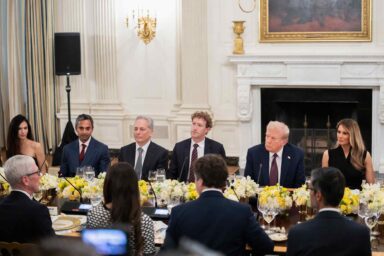
His latest outrageous act of narcissism was to add his own signature to the Treasury Secretary’s on US paper currency. This comes after demolishing the White House’s East Wing in order to build a gigantic ballroom that threatens to dwarf the original White House. The main entrance to his proposed folly is through what looks very much like a servant’s door on the side of the building.
The monumental pièce de résistance is Trump’s planned “Independence Arch” over the bridge leading to Arlington Cemetery. Critics have dubbed the proposed monstrosity the “Arc de Trump.” If built, it would be 250 feet high, nearly 100 feet taller than the Arc de Triomphe in Paris and dwarfing the Lincoln Memorial on the other end of the National Mall.
A mischievous artist commented on Trump’s vulgarity by planting an oversized golden toilet on the National Mall.
Trump’s desperate attempts to solidify his legacy are one thing. What he has done to America’s traditions and standing in the world — in other words, to all the things that really did make America great — is a far more dangerous project. What Trump has put at risk is American democracy itself.
Turning a Democracy Into a Monarchy
Trump’s narcissism and egocentric bullying, which seemed awkward during his first term in office, are starting to cause permanent damage not just to the United States but to the world at large.
Thanks to Trump, the US is now engaged in an unnecessary war in which the US is the aggressor. As a result, the world faces a critical energy shortage and gas prices are skyrocketing. Trump — who, over his two terms, has filled the government with sycophants and has been repeatedly let off-leash by a subservient Congress and a feckless Supreme Court — has effectively circumvented the checks and balances that for over two centuries have protected the country from someone like himself.
The US, for all intents and purposes, is dancing along a tightrope without a safety net.
Yet while many see the country in extreme danger, Trump seems blissfully unconcerned. Asked during an impromptu press encounter on Air Force One about the war he started with Iran, Trump kept turning the discussion back to his ballroom.
Polls show his popularity in a nose-dive, but at this point, Trump really doesn’t seem to care. What he does seem to care about is not the country, but the thrill of doing whatever he wants with the immense power granted to — or seized by — the US president.
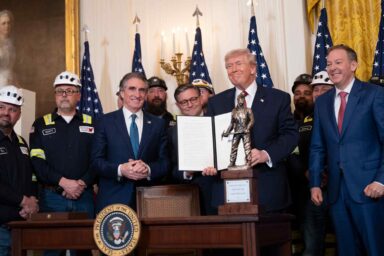
Asked by The New York Times in January whether he felt there were any limits to his power, Trump responded, “Yeah, there is one thing. My own morality. My own mind. It’s the only thing that can stop me.”
Asked a similar question more recently about US efforts to strangle Cuba, Trump replied, “I mean, whether I free it, take it. Think I can do anything I want with it.”
Trump may think everything is fine, but as far as the United States is concerned, we are a long way from the days of the Declaration of Independence. These days, Donald Trump sounds a lot closer to King George III than he does to George Washington.
In theory, the president speaks as the representative of the American public. When he speaks, the world at large interprets what he says as representing what you and I stand for as Americans. After all, a plurality of the American electorate voted for him.
Now we are stuck with him — our Constitution providing only two mechanisms for removal before the expiration of his four-year term, neither one of which has ever been used successfully. After helping draft that constitution, Ben Franklin commented that we had a republic, “if you can keep it.”
We appear to be losing it.
Is Democracy Still Possible?
Two and a half centuries after the Declaration of Independence, our ability to succeed as a democracy remains in question. The paralysis, misinformation, racist ideology, and openly fascist tendencies of the current administration raise questions not only about the survivability of the United States but also about the validity of democracy itself. “How can I believe in a democracy that voted for Trump twice?” is how a dubious colleague recently put it.
Democracy is the most valid form of government, at least for the United States, but it also depends on free speech, and that is complicated by the nature of communications in the Information Age. As the Italian novelist and philosopher Umberto Eco put it: “Social media gives legions of idiots the right to speak when they once only spoke at a bar after a glass of wine, without harming the community … but now they have the same right to speak as a Nobel Prize winner.”
The challenge today is that the chaotic, transformational phases that are normal in any democratic debate have taken on unprecedented proportions, aided by computer algorithms that feed social media posts to millions of users, with a business incentive to cause and channel outrage and tribalistic division. Periods of instability are inevitable. We are experiencing one of them right now.
Even in the best of times, democracy has never been a guarantee of good government. It has always been touch-and-go. The only thing that democracy really offers is an opportunity for the public to have at least some say in its own destiny. In short, democracy gives us a chance — regardless of who we are, our wealth, pedigree, or social status — to express an opinion about where it is that we want, collectively, to go.
In contrast, monarchies, dictatorships, and oligarchies hand control over our future to someone else, be it a single strong man or a narrow group.
In feudal times, peasant serfs were asked to trust the king to make the right choice. History proved that it was rarely in their best interest. The American Revolution was fought in order to try a different approach. Its basic idea, that the beliefs of the common citizen were worth paying attention to, came from the Age of Enlightenment. America was an experiment to see whether that could really work. Up until now, on the whole, it has.
Of course, not all democracies make the right choices. The citizens of Athens voted as a democracy to force Socrates to commit suicide by drinking hemlock. Plato never forgave Athens or democracy for that wrong-headed decision.
By its very nature, democracy is a perpetually unsettled form of government, subject to the moods of the public. Democracy can only exist if there is a rule of law that guarantees the right of citizens to express themselves honestly and is supported by a rule of law that protects the individual against arbitrary recrimination by the state. Yet, to thrive, democracy depends on the commitment of all its citizens to the commonwealth — a commitment to promote a common good that benefits everyone in one way or another.
The Ability to Freely Exploit Americans
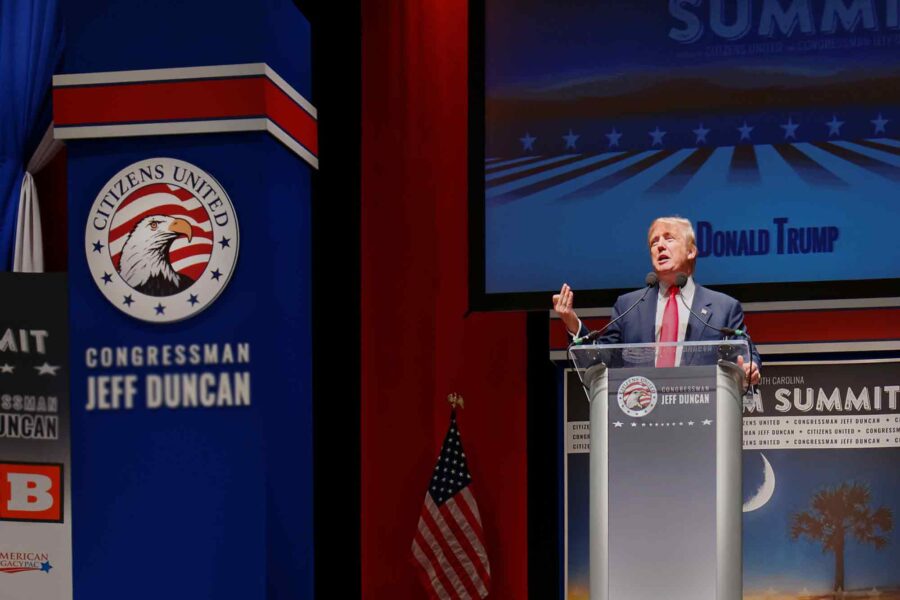
American democracy was weakened by the Supreme Court’s 2010 decision in Citizens United v. Federal Election Commission, which, along with several subsequent SCOTUS rulings, enabled corporations to spend money freely in elections — giving rise to super PACs and the massive amounts of corporate “investment” in candidates we see today.
Novelist John Steinbeck wrote his book Travels With Charlie as an attempt to rediscover America after having spent considerable time in Europe. In a 1961 letter to his editor, after traveling across the country, Steinbeck wrote: “If I wanted to destroy a nation, I would give it too much and I would have it on its knees, miserable, greedy and sick.”
Steinbeck’s observation was a riff, of sorts, on the Bible, where Jesus tells us: It is easier for a camel to pass through the eye of a needle than for a rich man to enter the kingdom of God.
Simply put, as people enter the stratosphere of the ultra-wealthy, their commitment to the society that enabled them to become rich tends to wither away. The United States currently has nearly 1,000 billionaires, more than any other country, and yet we are told the country cannot afford to adequately fund public education or universal health care. In a recent speech, Trump singled out day care, Medicare, and Medicaid as expenditures the federal government, with its proposed $1.5 trillion military budget, could no longer afford.
Trump’s desperate attempts to solidify his legacy are one thing. What he has done to America’s traditions and standing in the world — in other words, to all the things that really did make America great — is a far more dangerous project.
California currently has a billionaire-tax proposal that is gaining signatures to appear on the November ballot. The proposal would establish a one-time tax of 5 percent on any state resident having a total wealth of more than $1 billion. Google co-founder Sergey Brin recently added $25 million to the $20 million he had already put into a super PAC to oppose the measure. If the billionaire-tax ballot initiative goes through and survives the inevitable legal challenge, it will cost Brin $12 billion of his personal fortune, currently estimated at around $247 billion.
Other California billionaires — including Brin’s former partner in founding Google, Larry Page — have already moved out of the state, notably to Florida, to avoid paying the tax. Brin may be wealthy, but his commitment to the welfare of his fellow Americans is apparently limited by the price tag.
In its early days, Google had a motto: Don’t be evil. You do not hear that anymore. And Google’s founders are not alone. Elon Musk, who is the world’s richest individual with more than a trillion dollars in assets, has already abandoned California for Texas, where he can do what he wishes without having to pay his fair share of social costs.
Even though they already have more money than they know what to do with, billionaires are more than willing to spend wads of cash to avoid having to contribute a slightly higher share of their wealth to improving the society that made them wealthy.
The California tax is intended to fund education, housing, and other vital needs in a desperately unequal society. But as today’s billionaires see it, those issues are “California’s problem.” What we are dealing with here is arguably more a question of contemporary American values than of democracy itself.
When Donald Trump talks about “Making America Great Again,” he is not referring to the foundational vision of a country governed by the people and for the people. He is really talking about the “American Dream” — the illusion that in America, virtually anyone can become a millionaire, or these days, a billionaire.
In theory, anyone can win the lottery. But for most of us, lotteries are little more than a numbers racket in which hope springs eternal while the odds are stacked against us.
In reality, the promise of the American dream has always been mostly a sales pitch intended to encourage immigrants to move to America, where they can work for low wages in hopes of one day bettering the lot of their descendants.
Against great odds, many succeeded, even if they didn’t become millionaires. But these are precisely the people that Trump is now trying to discard with his rabid anti-immigration campaign. In fact, what Trump really wants is a return to the age of the “robber barons,” when there was no income tax and no protections for the easily exploitable poor. It worked well until the false lure of unfettered capitalism — that no-holds-barred competition would bring the “good life” to all — was finally discredited by the Great Depression.
The ‘Right Kind’ of Immigrants
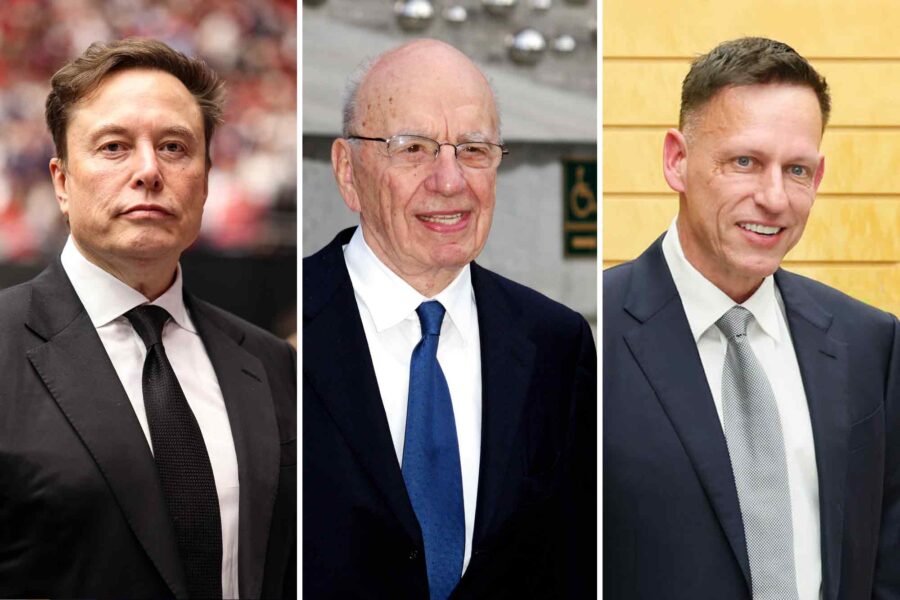
Ironically, many of the self-styled conservative Republicans leading Trump’s charge against immigration are themselves immigrants. Rupert Murdoch, the owner of Fox News, one of the most influential voices promoting the MAGA ideology, emigrated from Australia; Elon Musk, who recently played a pivotal role in shredding America’s civil service, emigrated from South Africa to Canada and then to the US. Billionaire investor Peter Thiel, who was largely responsible for promoting JD Vance as Trump’s vice president, was born in Germany and raised in South Africa before emigrating to the US. Stephen Miller, the dark force behind ICE and Trump’s mass deportation campaign, comes from a family that came to the US from Russia. His uncle has publicly denounced him for denying others the benefits that the US granted to his family. All of Donald Trump’s grandparents were immigrants — from Germany and a remote island off the coast of Scotland. None of them spoke English as their first language.
Trump, who personifies the current ultra-conservative Republican zeitgeist, clearly believes that the “right kind” of people have white skin and hail from northern Europe. He has said repeatedly that he believes that Africa is a “shit hole” and that Somalis are garbage, and he appears to believe that any immigrant from the Global South is a potential rapist, drug fiend, or murderer. Statistical data argues otherwise, but Trump insists that he alone knows best.
Hitler went to war based on the belief that he belonged to a northern European Germanic master race and that everyone else was inferior. The Judeo-Christian concept of empathy towards one’s fellow man, he believed, represented a cultural weakness that sapped the vitality of primal man. Musk thinks along similar lines. Human empathy, he has argued, is a trap.
World War II was fought largely to prove Hitler wrong, and the American support for the postwar Nuremberg trials set that verdict in stone. But that was a long time ago.
___________
The illusion that has seized Trump, much as it seized King George III, and ultimately led to the American Revolution 250 years ago, is that a single person, the right one, can independently make the decisions that society needs. The truth is that no single person can do that. America’s success has always depended on cooperation and teamwork. In the spirit of the 18th-century European Enlightenment, it has sought to base common decisions on reason.
The democracy that we have today traces its roots back to England and the signing of the Magna Carta in 1215. Britain’s King John — later valorized in the legends of Robin Hood and the Sheriff of Nottingham — faced the barons of England, who refused to support the king with tax money unless he promised to abide by certain rules. To get the funds he needed, John was forced to acknowledge that he was not above the law, as spelled out in the document later known as the Magna Carta.
Britain’s entire population at the time of King John was estimated at between 1 and 2 million people. It had already doubled since 1016 when William the Conqueror commissioned the Domesday Book as a means of determining taxation.
As England’s population expanded rapidly, managing an increasingly complex society posed ever greater challenges, and the king became increasingly dependent on the nobility, which by law wielded the power of the purse. With the Industrial Revolution and the rise of England’s commercial class, power shifted to the population at large. Parliament, which had begun as an informal discussion group among barons (“parlement” is French for “where one speaks”), gradually evolved into a vehicle for including a wider network of individuals in the decision-making process.
Failing to take the popular mood into account risked revolt. As technological advances increasingly shaped society, the ability of dissatisfied groups to sabotage a government that refused to listen made democracy the most stable form of government. The word sabotage, in fact, derives from the habit of French workers tossing their wooden shoes, or “sabots,” into industrial machinery as an effective protest during strikes. The bottom line is that no one imposed democracy on Western Europe or the United States; it evolved naturally because, after experiencing the alternatives, it was widely seen as the most rational system of government.
In 1947, Winston Churchill, who led Britain during World War II, summed up the argument for democracy in a speech to Parliament: “It has been said that democracy is the worst form of government, except for all those other forms that have been tried from time to time.”
As we approach the 250th anniversary of the United States, none of that history appears to have made an impression on Donald Trump. “I don’t need international law,” Trump told The New York Times, “I’m not looking to hurt people.” Maybe, but in launching an ill-considered war against Iran, Trump has already killed thousands of Iranians — combatants and noncombatants, including many women and children — as well as a number of American troops. He has also put the entire global economy at enormous risk.
The best one can say in his defense is that he may have thought that Iran really did represent an immediate danger to the United States. He clearly assumed that the Iranian regime would quickly collapse under fierce bombardment from US and Israeli forces, allowing him to seize control of Iran’s enormous oil reserves. If so, he guessed wrong. But guessing was never his job.
His job was to listen to military and intelligence experts and make a rational decision based on facts rather than emotion-clouded instinct or personal whims. Instead, his actions were driven by self-serving fantasies that overrode a careful reading of reality. Not unlike the government of King George III in dealing with the American colonies. We got rid of him more than two centuries ago. As for Trump, the end of that story remains to be written.
William Dowell is WhoWhatWhy’s editor for international coverage. He previously worked for NBC and ABC News in Paris before signing on as a staff correspondent for Time magazine based in Cairo. He has reported from five continents — most notably during the Vietnam War, the revolution in Iran, the civil war in Beirut, Operation Desert Storm, and in Afghanistan.