Viktor Orbán’s Defeat in Recent Elections Divides Ukraine’s Hungarian Minority
Viktor Orbán’s lost election has cleared the way for the EU to give a badly needed loan to Ukraine. The wild card is Ukraine’s Hungarian minority.
|
Listen To This Story
 |
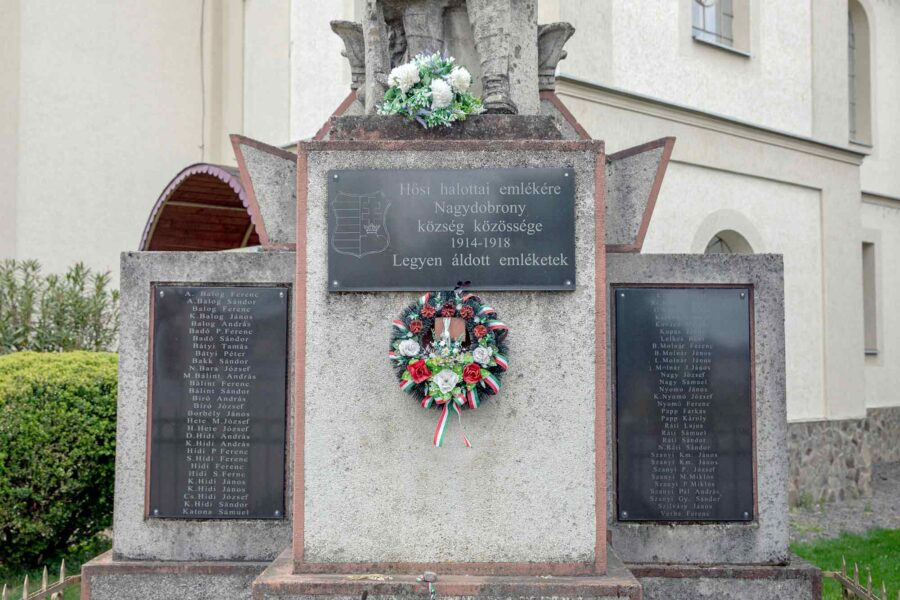
ZAKARPATTIA OBLAST, Ukraine — A granite statue of a soldier, its porous face eroded by more than a century of rain, stands guard at the entrance to the small village of Velyka Dobron — Nagydobrony, in Hungarian — just a few miles from the Hungarian border. The statue’s gaze, directed toward Budapest, is frozen in time. On the stone base that supports it is a list of names in Hungarian: Janos, Kovacs, Horvat… All died during World War I.
Two years after the Great War, on June 4, 1920, the Treaty of Trianon dissolved the Austro-Hungarian Empire for which these men had died, and it disappeared forever. Velyka Dobron, like much of the Transcarpathia region on the border of Ukraine and Hungary, was incorporated into Czechoslovakia before it was absorbed into the Soviet Union in 1945.
In 1991, as part of the Ukrainian Soviet Republic, the village became part of newly independent Ukraine. Yet many of its inhabitants, 80 percent of whom are Hungarian-speaking, feel they ended up on the wrong side of the border.
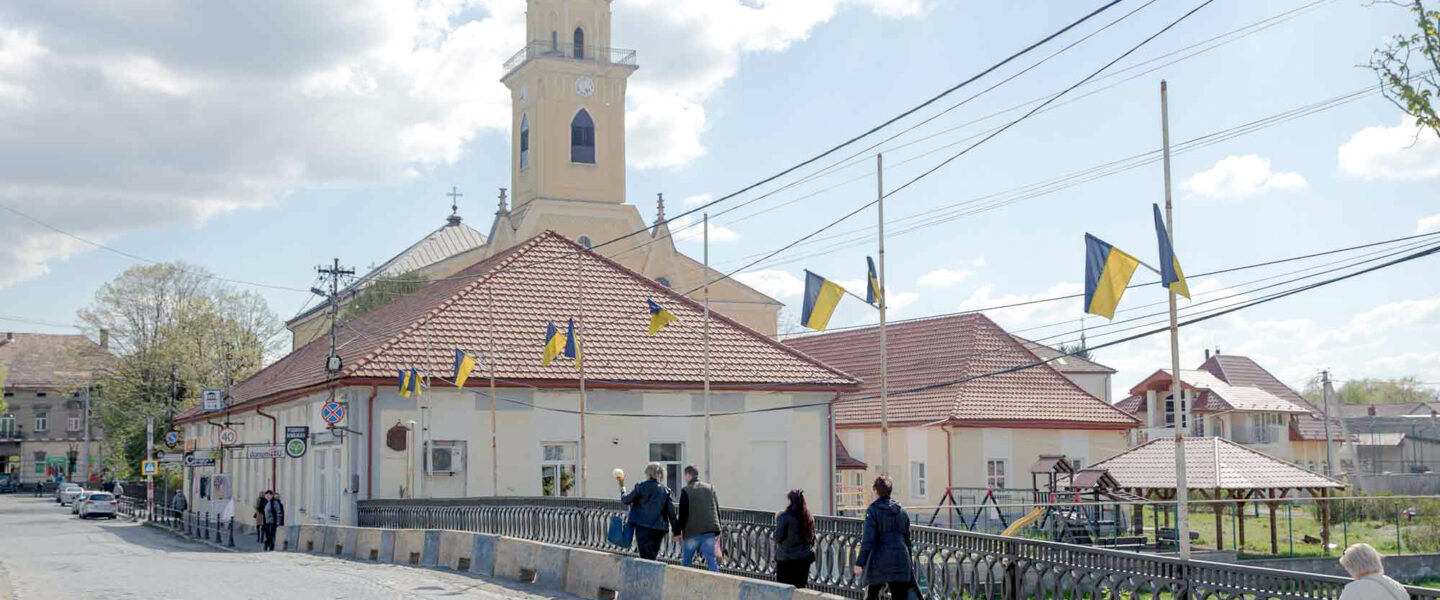
Today, Velyka Dobron’s streets are empty. Most of the men fled to Hungary at the start of Vladimir Putin’s invasion of Ukraine in 2022. They were able to do so because they were freely granted Hungarian passports by Viktor Orbán, Hungary’s recently ousted prime minister.
Beyond passports, Orbán, who made the trauma of the Treaty of Trianon a cornerstone of his foreign policy, provided financial support for Hungarian-language schools and encouraged the flight of Hungarian speakers. The strategy paid off: In 2022, Ukraine’s Hungarian speakers who moved back to Hungary supported Orbán by more than 90 percent.
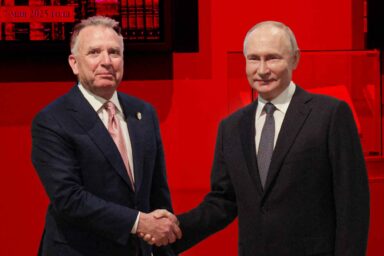
On April 12, however, Orbán’s Fidesz party lost Hungary’s parliamentary election to the Tisza party headed by Péter Magyar, despite a Fidesz campaign that attacked both President Volodymyr Zelenskyy and Ukrainian resistance to Russia. Major factors working in Tisza’s favor were accusations of Russian interference in the campaign and of Orbán’s collusion with Moscow.
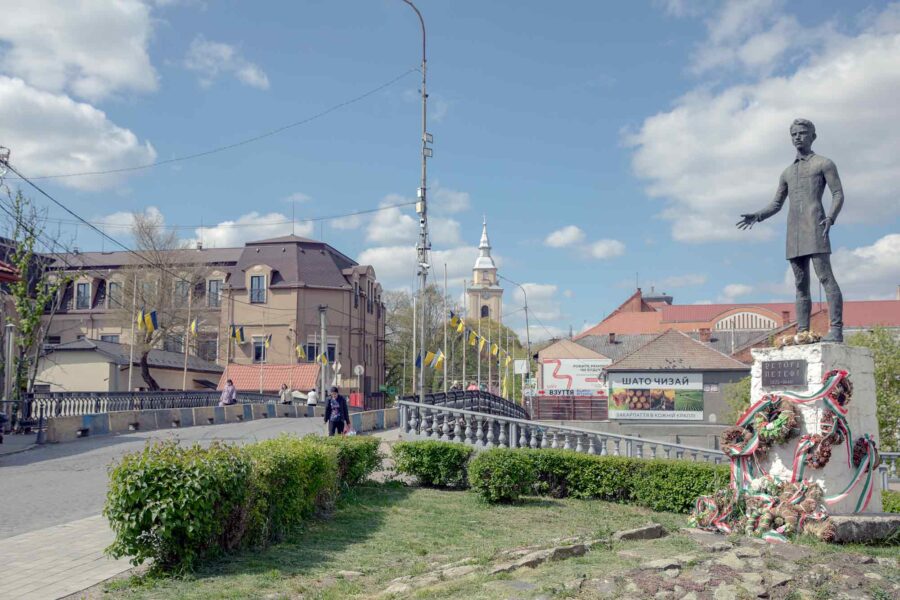
Janos, a 40-year-old Ukrainian engineer who belongs to Ukraine’s Hungarian minority, explains, in halting Ukrainian, that Orbán still has supporters and says he voted for neither Orbán nor the opposition.
He adds, “I have friends who voted for one or the other. But most voted for Fidesz,” and confides that, had he voted, he might have leaned toward Fidesz. “Orbán gave us European passports and always supported the Hungarian language in the region.”
Asked about the campaign demonizing Ukraine, Budapest’s closeness to the Kremlin, and the $105 billion in European aid to Ukraine blocked by his party, Janos shrugs, “People here don’t worry about those issues. It’s just politics.”
Divide and Rule
In Berehove, a western Ukrainian town where half the people speak Hungarian, local official Vitaliy Antipov acknowledges Fidesz’s influence. “Since 2015, the Hungarian government has invested a lot of money in our region,” he says.
A member of the Hungarian minority himself, he says he has distanced himself from Fidesz. He criticizes Orbán for contributing to divisions within the community and believes the former Hungarian prime minister’s positions often came at the expense of Hungarians in Ukraine.
“Our community has become geopolitically divided. Some local officials, influenced and funded by Fidesz, have neglected everyday issues to relay positions dictated from Budapest,” he explains.
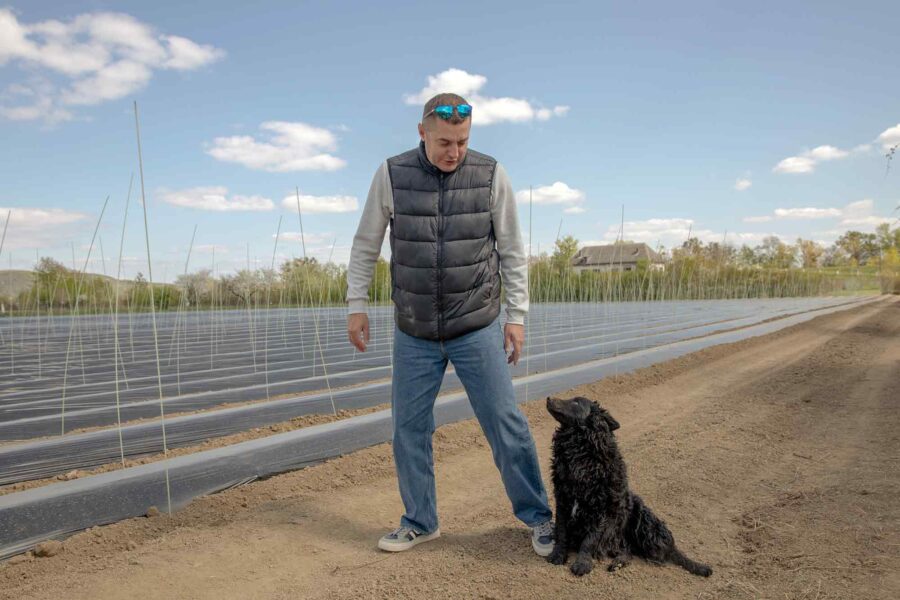
A few miles away, he meets Kostia Shymen, a recently demobilized soldier. Between fields of melons and corn, the young man walks with difficulty, the result of a knee injury.
Not particularly politically engaged, Shymen says he carries both his Ukrainian and Hungarian identities without difficulty. But he criticizes Budapest’s stance. “Orbán should have helped Ukraine defend itself instead of putting obstacles in our way,” he says.
Antipov agrees: “We want to join the European Union and NATO, and to move freely.”
Shymen could leave the country, but he cannot bring himself to do so: “Why leave a country I fought for?”
‘I Have Always Chosen Ukraine’
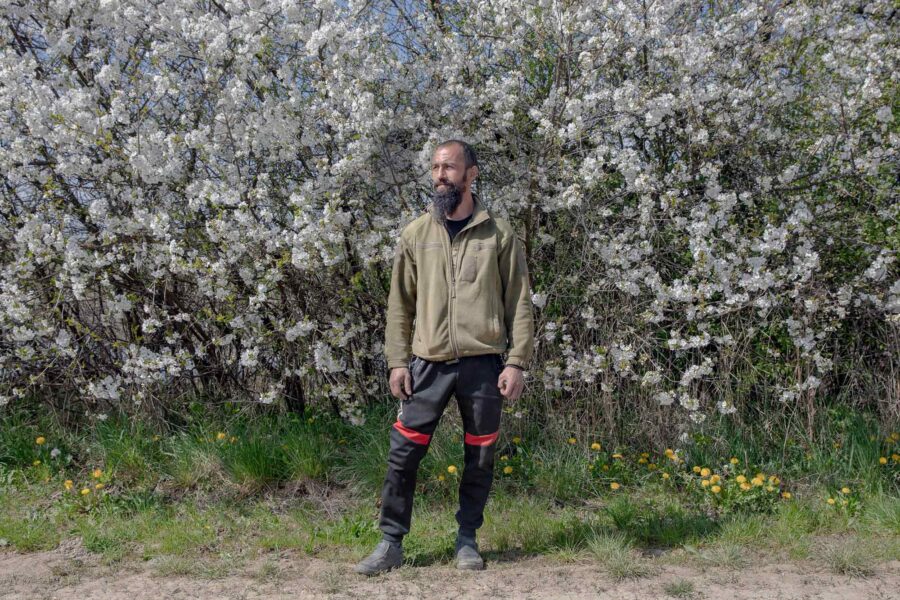
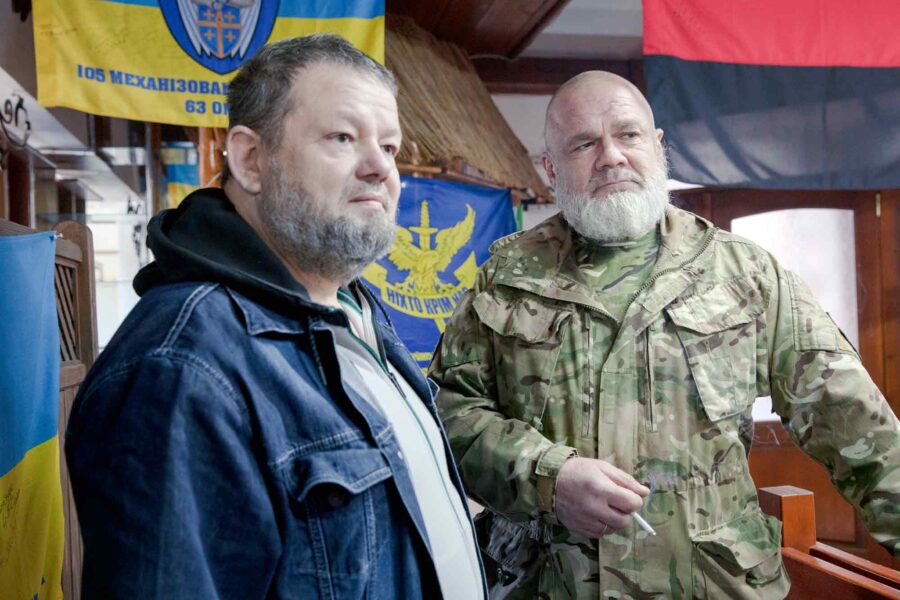
At the Berehove veterans’ association, Zoltan Razhov, 57, dressed in a khaki jacket, smokes while displaying the flags of his unit. Born into a Hungarian-speaking family, he first fought in Afghanistan in the Soviet army before pledging allegiance to Ukraine.
Orbán’s defeat does not displease him. Now responsible for logistics in his battalion, he knows better than anyone the urgent needs of the Ukrainian army in equipment, weapons, and all forms of support. He says openly that he hopes Magyar will quickly unblock the billions in European aid intended for Ukraine. But his tone becomes more critical when speaking about his community.
“Many people, especially the older generation, have spent years consuming only Fidesz media. Even when it goes against their own interests, they continue to support the party.”
He remains cautious about Magyar, though measured in his assessment. “He also took hard positions on Ukraine during the campaign,” he notes. “But he is more pro-European. If he wants to bring Hungary closer to Europe, he will have to take the war in Ukraine into account.”
Antipov, for his part, hopes for de-escalation:
We, the Hungarians of Transcarpathia, are waiting for a normalization of relations between Hungary and Ukraine. That the issue of minorities is no longer used to block European and NATO support. And above all, that we can move freely to see our families, many of whom live in Hungary.
Razhov concludes more bluntly: “Even if I am culturally more Hungarian than Ukrainian, I have always chosen Ukraine. And I always will. Even over Hungary.”