The Richest Poor Country on Earth
Guyana’s oil boom is transforming the economy, but many citizens say the wealth is passing them by.
|
Listen To This Story
 |
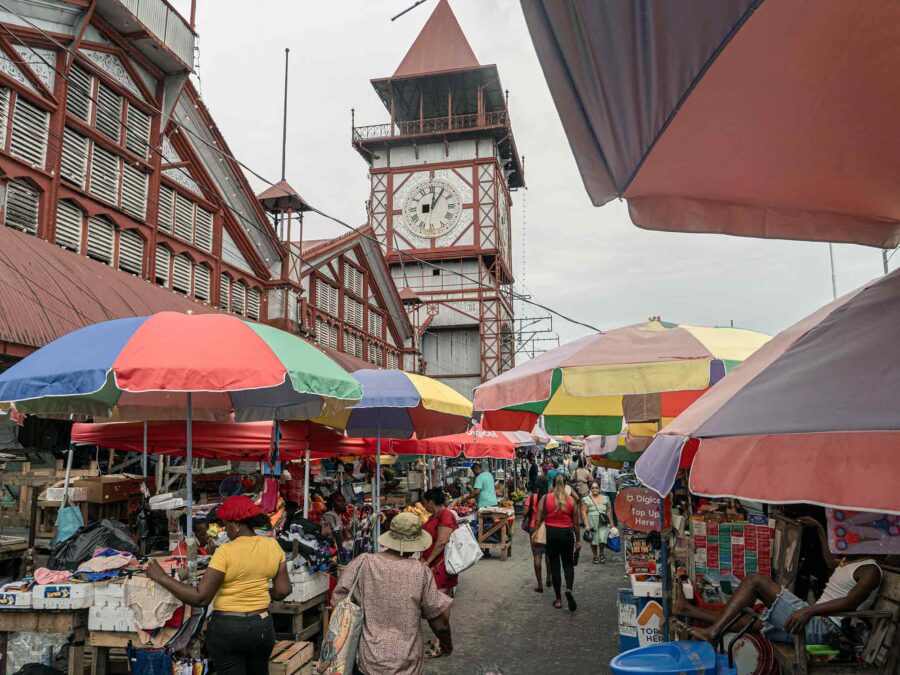
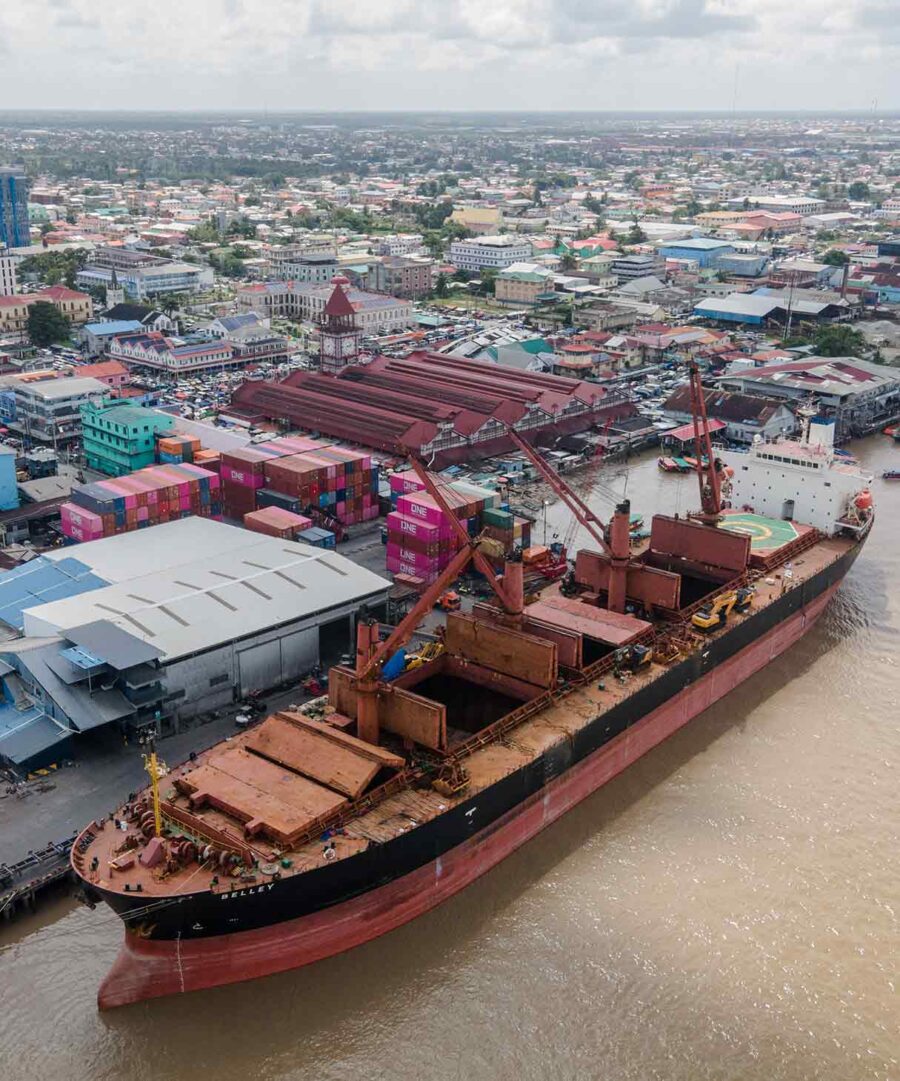
GEORGETOWN, Guyana — Under a red metal roof and a Victorian clock tower, Stabroek Market forms the beating heart of Georgetown, the capital of Guyana. When the market was built in the late 19th century, the British Empire ruled this corner of South America. Hundreds of thousands of descendants of enslaved Africans and indentured laborers from India worked the sugar plantations that covered the coastal plain. The market served as a commercial hub where the plantations sold their sugar and molasses.
A century and a half later, and long after Guyana gained independence in 1966, the plantations have largely faded away. But Stabroek Market still pulses with activity. Fruits and vegetables arrive from deep in the interior along the Demerara River, whose muddy waters surge out of the Amazon rainforest. Meat travels along the coastal road linking Guyana with Suriname and French Guiana. Nearby docks unload containers packed with cheap manufactured goods from China.
The fish market occupies a dilapidated corner of the building, along a muddy embankment where vendors dump their waste. Amid the smell of fish, mud, and garbage baking in the tropical sun, Patrick Clifton stands in a stall.
The 50-year-old vendor looks exhausted after a long day’s work. “Business isn’t good,” he grumbles, pulling off a T-shirt covered in fish scales. “People buy less fish. They’re getting poorer, and so am I.”
It is a strange complaint in what should be one of the richest countries on Earth. In less than a decade, this small South American nation has become the fastest-growing economy in the world.
Inside Stabroek Market, however, that miracle is hard to see. Clifton finishes packing his fish and boards an aging river ferry to cross the Demerara toward his wooden house on the opposite bank. As the boat moves across the water, the silhouette of a gigantic highway bridge appears against the purple dusk.
“It just opened,” Clifton says over the roar of the motor. “The government keeps building roads, bridges, and airports. Meanwhile, the population is struggling.”
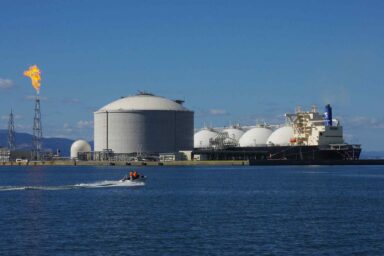
At the mouth of the river, a vast artificial peninsula now extends into the Atlantic Ocean. Completed in 2025, the shore base serves as a logistical hub for ships supplying offshore drilling platforms located about 60 miles from the coast. From there flows Guyana’s astonishing new wealth: nearly 1 million barrels of oil per day, pumped from beneath the seabed.
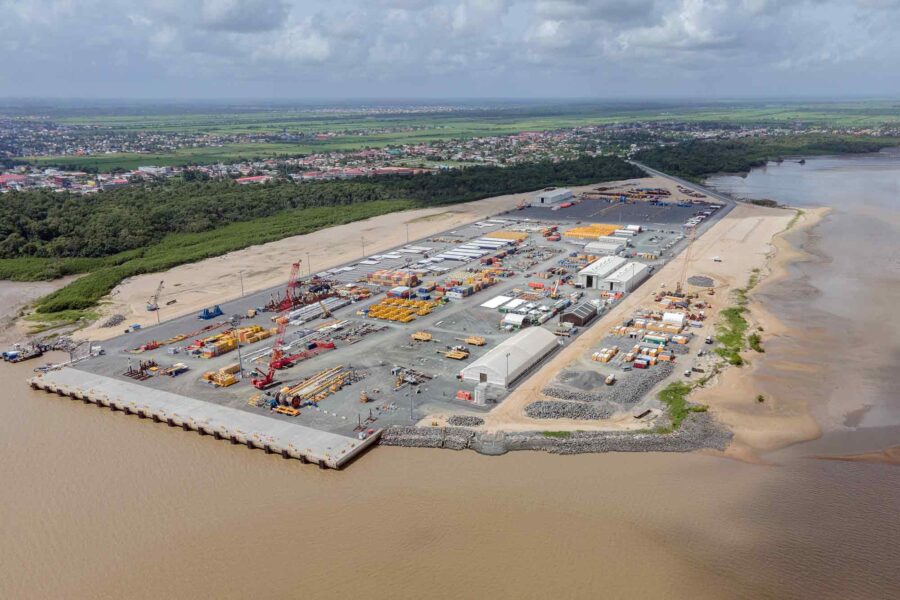
The jackpot dates to 2015, when ExxonMobil announced the discovery of an offshore oil field containing roughly 1 billion barrels: a relatively modest amount by global standards, but enormous for a country of only 800,000 inhabitants that was then the third-poorest in the Americas.
Since then, new discoveries have multiplied. Today, the offshore reserves are estimated at 11 billion recoverable barrels, making it one of the largest oil finds relative to population anywhere in the world. Production began in 2019, operated by ExxonMobil alongside China’s state oil company CNOOC. As a result, government revenues have quadrupled.
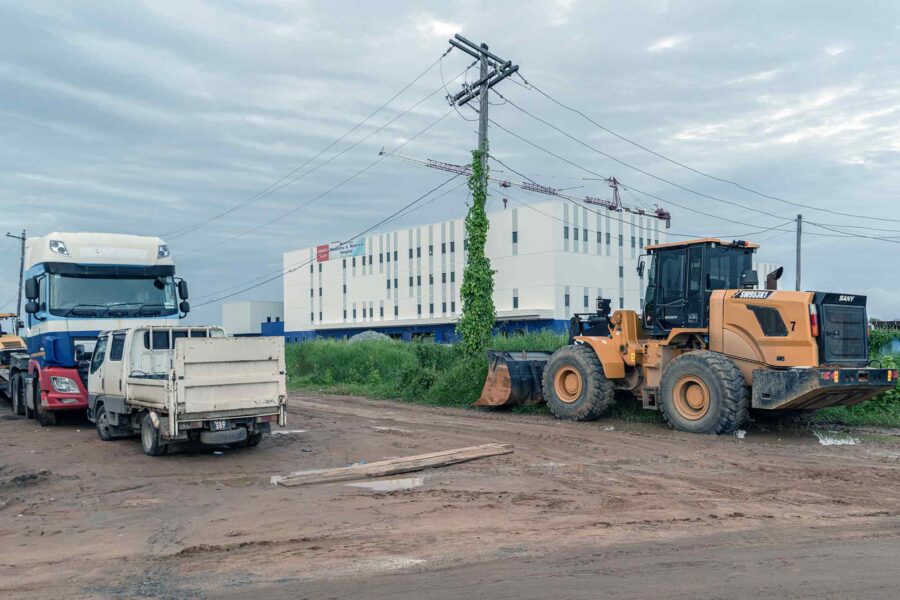
The impact on the country has been dramatic. Highways, airports, hospitals, and ports are rising across the country. A gas-fired power plant is expected to cut the national energy bill in half. Nearly 40,000 new homes are under construction. And the boom is only beginning. By 2030, Guyana’s oil production could reach 1.7 million barrels per day, placing the country among the largest producers in the hemisphere.
Arriving in Georgetown today feels like stepping into a modern gold rush.
The fever is visible as soon as visitors leave the airport. In the tropical heat, Greek shipowners and Chinese investors smoke cigarettes outside the terminal before climbing into taxis headed for the capital. The road into Georgetown is itself a construction site. Bulldozers work day and night to transform pothole-filled asphalt into a smooth ribbon of highway. Car dealerships, warehouses, supermarkets, and factories are already appearing along the roadside.
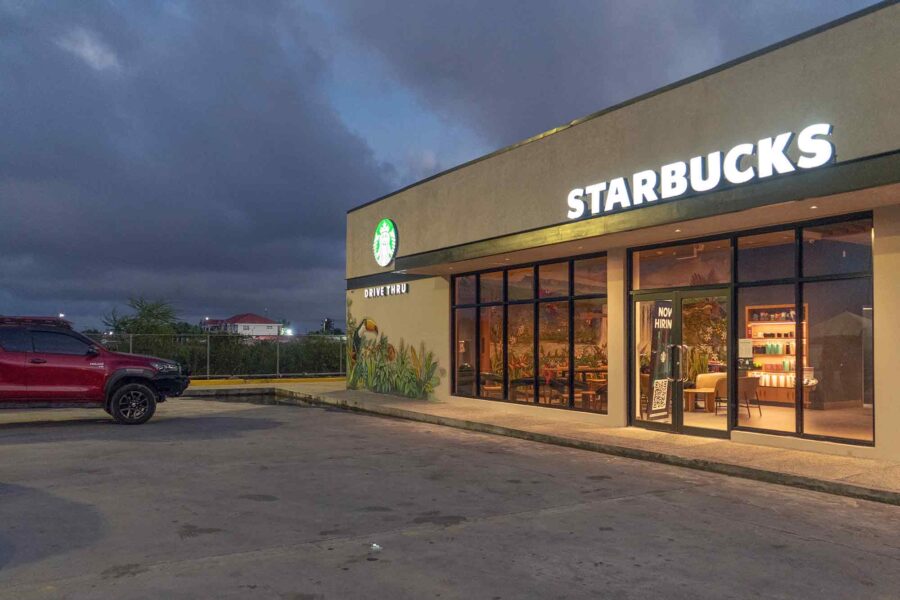
The capital has become a magnet for fortune seekers from around the world. Venezuelan migrants fleeing economic collapse at home arrive looking for work. Chinese entrepreneurs open restaurants and supermarkets. Brazilian contractors sell construction equipment. American hotel chains and fast-food restaurants line the boulevards.
Embassies are opening across the city as foreign governments scramble to establish a presence in what is rapidly becoming one of the world’s newest energy hubs.
But Guyana’s oil boom is unfolding in a tense geopolitical landscape. Much of the offshore production lies near the disputed Essequibo region, a vast territory claimed by neighboring Venezuela for more than a century.
In late 2023, the government of Nicolás Maduro organized a referendum asserting Venezuelan sovereignty over the territory and hinted at annexation by force. Guyana suddenly found itself
guarding one of the world’s fastest-growing oil frontiers while facing a far larger neighbor.
Washington quickly stepped in. US military aircraft conducted joint exercises with the Guyanese army, and American officials warned Caracas against any attempt to seize the territory. The United States has increasingly framed Guyana as a strategic partner whose oil production helps stabilize global energy markets.
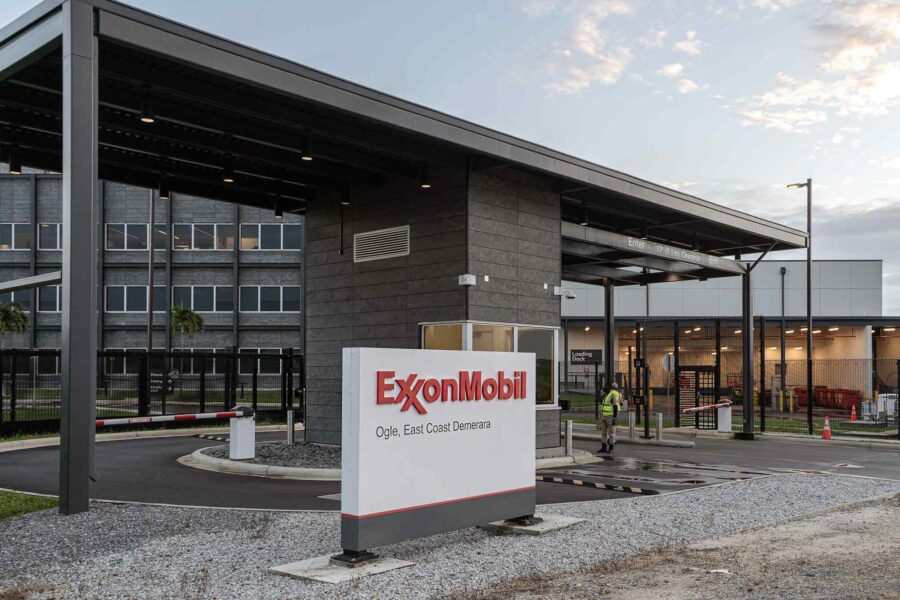
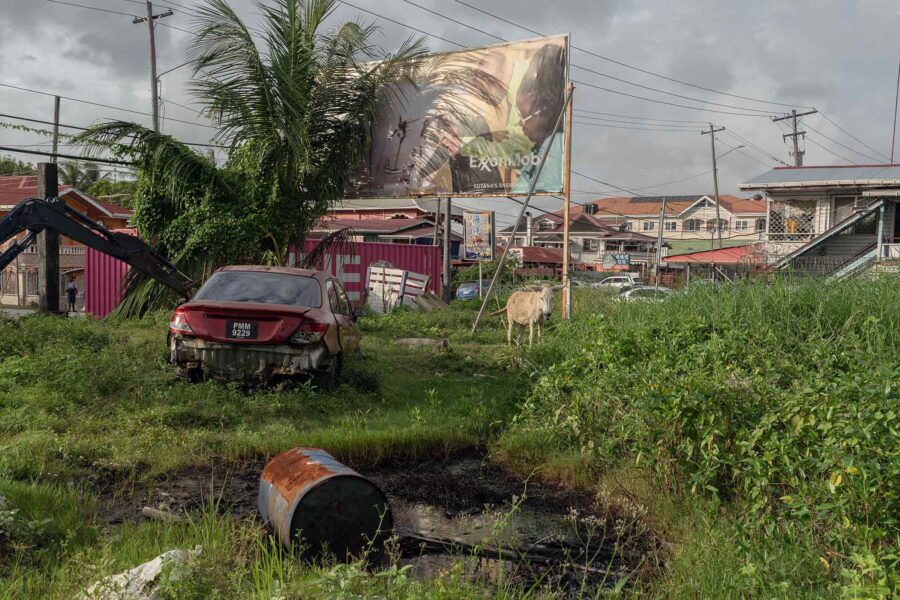
The stakes are enormous, not only for Guyana but also for ExxonMobil. The Stabroek offshore field has become the company’s most lucrative new oil province and analysts expect Guyana to account for a large share of Exxon’s global profits in the coming years. For the American oil giant, the small South American nation has become one of its most important sources of future revenue.
For some Guyanese, the oil boom has brought extraordinary opportunities.
Two hours south of Georgetown lies Saint Cuthbert, a small Amerindian village surrounded by forest. Driving through the settlement, rows of wooden houses stand on stilts above red soil. A new cell tower rises above the palm trees. A generator powers homes that, until recently, relied on sporadic electricity. The sandy road connecting the village to the highway has recently been paved, the school and the water pipes have been renovated.
At the wheel of a Japanese-imported SUV is Sakanchy Simon, a 20-year-old maintenance technician who works offshore on an oil platform. His salary of about $1,800 per month is nearly four times the minimum wage.
“I can help my mother, pay for my own place, buy a car and even save money,” he says proudly. “At my age, that’s unbelievable.”
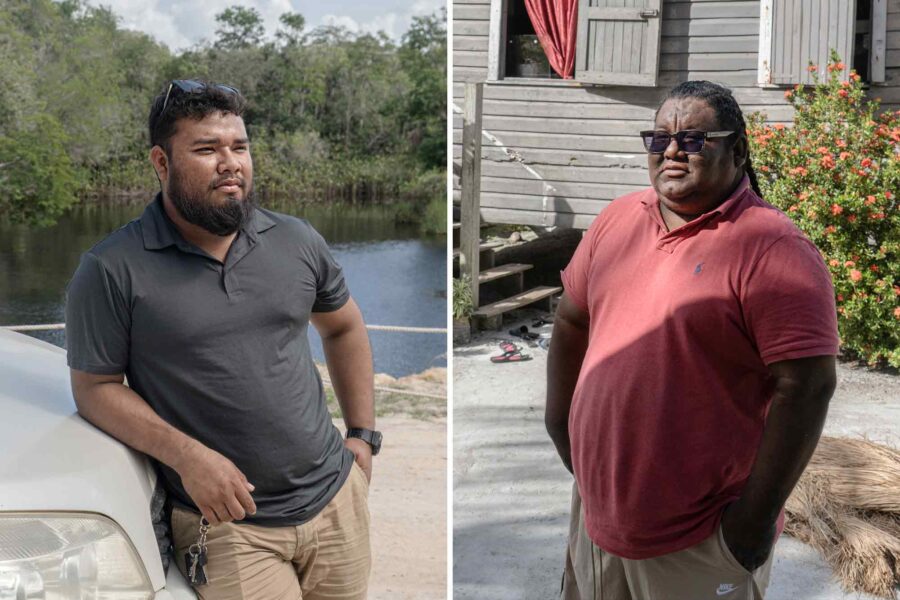
The oil industry has changed the trajectory of the village’s young people. “Before, our children became teachers in the local school,” says Alviro Simon, the village chief. “Many worked in the bauxite mines. Now some are studying petroleum engineering. For the first time, the government is paying attention to what we need.”
Amerindian communities, which make up roughly 10 percent of Guyana’s population, occupy a particular place in the country’s political landscape. Unlike urban neighborhoods, many Indigenous villages hold collective legal rights over their ancestral lands, giving them leverage in negotiations with the state and companies operating nearby. In recent years, their leaders have also become an increasingly important electoral constituency, encouraging the government to channel infrastructure projects and development funds toward remote villages in the interior.
In Georgetown, the boom is also reshaping the city’s economic elite. At a small airport outside the capital, helicopters depart every morning for the offshore platforms. Nearby stands the aviation company run by the family of entrepreneur Annette Arjoon Martins. The business has flourished thanks to the oil industry. “The demand for private aircraft is exploding,” she says. “We transport workers, equipment, and executives all across the region.”
Real estate prices across Georgetown have surged. Investors from the Guyanese diaspora are returning home, while foreign companies search for office space. Government regulations require foreign companies to rent buildings from local owners rather than purchase property outright. The rule has created sudden fortunes. “My neighbor built a building to Western standards and leased it to ExxonMobil,” Arjoon Martins explains. “Like her, many people are becoming rich very quickly.”
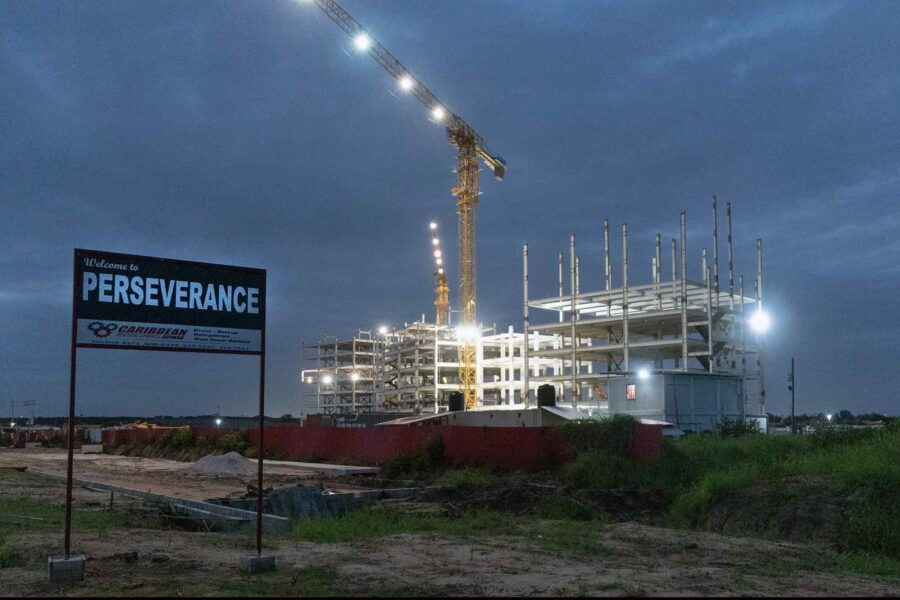
Across the capital, new housing developments are appearing with names like Success, Perseverance, Profit, and Ambition. “The possibilities are endless,” says Arjoon Martins, whose son recently bought a plot of land.
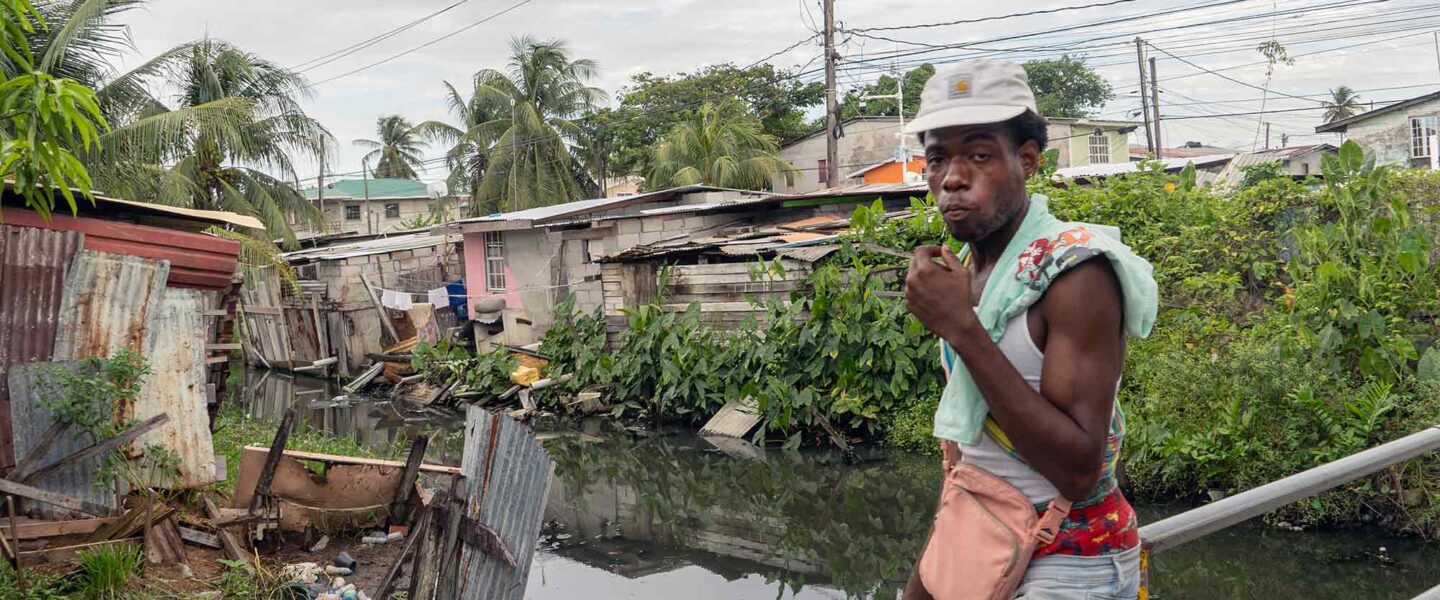
But only a few miles away, the boom looks very different. In the neighborhood known as La Pénitence — a largely Afro-Guyanese district of Georgetown — wooden shacks and rusted sheet-metal houses line a canal filled with garbage.
Burned-out cars block narrow alleys where drugs are sold openly. Despite the country’s economic miracle, nearly half of Guyana’s population still lives below the poverty line, according to the World Bank.
“The oil money?” asks Takita Brown, a 31-year-old school cafeteria worker. “Do I look like I’m
benefiting from it?” She stands on the balcony of a crumbling apartment block while stray dogs
rummage through piles of trash below. Food prices, she says, have surged since the arrival of
foreign workers and investors.
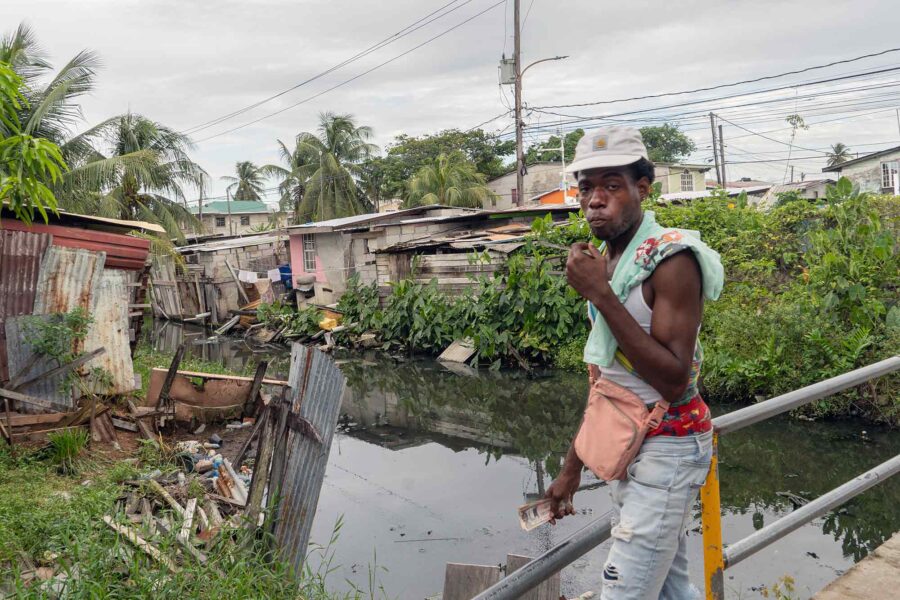
“Salaries stay the same while everything gets more expensive,” she says. “The government launches gigantic construction projects, but life in poor neighborhoods keeps getting worse.”
Taxi driver Bilal, leaning against the railing of a rundown building, describes a similar struggle. “Allthis oil boom has done is make prices explode, especially food,” he says. “Now I have to work seven days a week just to feed my family.”
The frustration is widely shared. “We never saw a single dollar of the oil money,” says Kirt Williams, a 47-year-old carpenter. “The canal is still filthy. Crime is still everywhere. The schools are still overcrowded.” He pauses before adding quietly: “We thought oil would change our lives. At this point, it’s starting to look like a curse.”
Economists warn that Guyana may already be experiencing the first symptoms of the “Dutch disease,” the phenomenon when a sudden influx of resource wealth distorts the economy, pushing up prices and weakening other sectors.
Tucked in the shadow of St. George’s Cathedral, one of the tallest wooden churches in the world, the newsroom of Stabroek News occupies a modest colonial house painted pale green. Ceiling fans spin lazily above cluttered desks while reporters type beneath framed photographs of Guyana’s turbulent political past.
From his small office overlooking a courtyard, editor Anand Persaud has been watching the oil
boom reshape the country with a mixture of fascination and concern.“Foreign workers are increasing demand for food, while agriculture struggles to keep up,” he explains. “Prices are rising across the board.”

He pauses, choosing his words carefully. “We are beginning to see the early symptoms of Dutch disease. The oil sector is expanding so rapidly that other parts of the economy risk being crowded out.”
At the same time, he says, government investment focuses on massive infrastructure projects rather than social support or economic diversification.
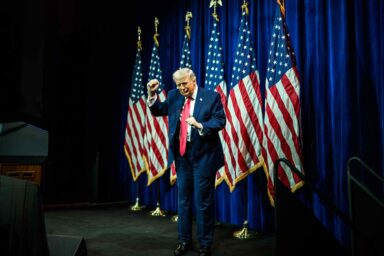
Why doesn’t the government simply redistribute a larger share of the oil wealth? President Irfaan Ali has repeatedly rejected that idea. “I cannot distribute money as if it were Christmas every day,” he often says in speeches.
His administration argues that direct payments would create dependence and discourage investment. Instead, the government is channeling oil revenues into large infrastructure projects intended to transform the country’s long-term development.
A sovereign wealth fund modeled on Norway’s has been established. Oil revenues are deposited at the Federal Reserve Bank of New York and withdrawn according to rules set by Parliament, in an effort to prevent the inflow of dollars from destabilizing the economy.
Guyana’s political landscape complicates the picture further. Since Guyana gained independence from the United Kingdom in 1966, politics has often followed ethnic lines between Afro-Guyanese communities descended from enslaved Africans and Indo-Guyanese communities descended from Indian plantation workers.
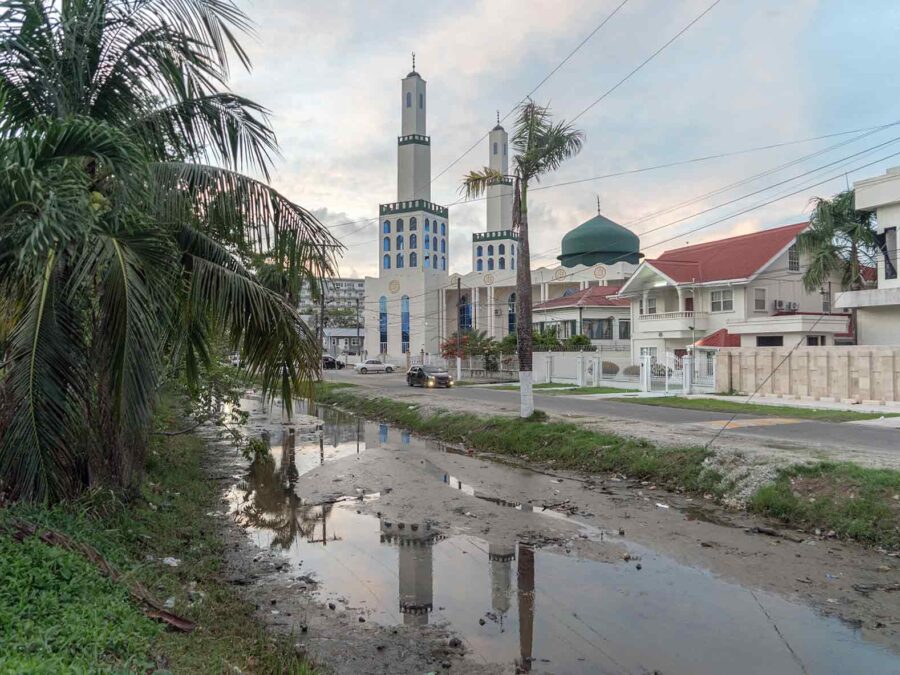
Those lines continue to shape political loyalties today. President Irfaan Ali leads a party dominated by Indo-Guyanese figures.
In neighborhoods like La Pénitence, which is heavily Afro-Guyanese, many residents feel excluded from the benefits of the oil boom. “This government gives the money to its own supporters, mostly Indians,” says Geneviève, an unemployed single mother.
But others reject that explanation. “The problem isn’t race,” says taxi driver Bilal. “It’s the political
class. The elites run the country for themselves.” Some residents of La Pénitence worry about corruption.
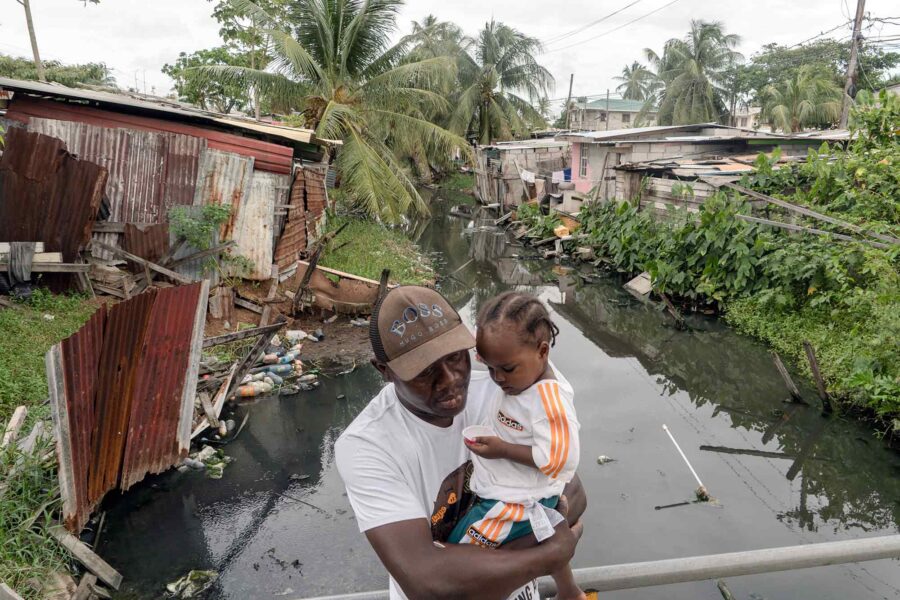
“Public infrastructure tenders are opaque and mismanaged,” says Williams, the carpenter. “The elites are enriching themselves while the rest of us struggle.”
Transparency International, a global watchdog organization that monitors corruption worldwide, has repeatedly warned that countries experiencing sudden resource booms face a heightened risk of political capture by powerful economic interests.
“Without strong institutions and transparency,” the organization wrote in a recent report, “large oil revenues can reinforce existing inequalities and concentrate power in the hands of a narrow elite.”
In the 2025 election, businessman Azruddin Mohamed attempted to channel the growing social frustration into a new political movement centered on redistributing oil wealth directly to citizens. Unlike the country’s traditional parties, his campaign focused less on ethnic divisions than on attacking what he described as an entrenched political elite.
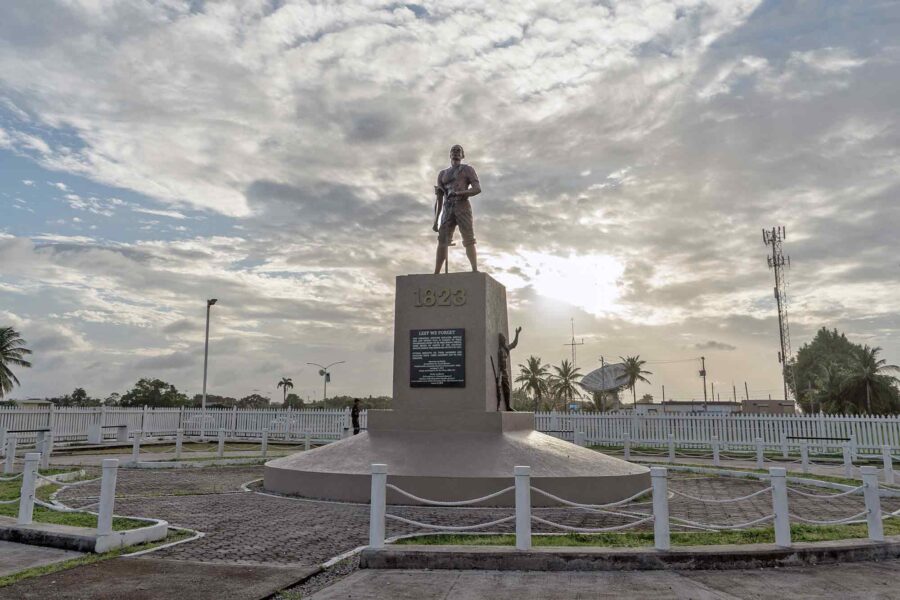
His message resonated among voters angry about rising inequality. Although Mohamed narrowly lost the election, his surge signaled that the oil economy may be reshaping Guyana’s politics. In October, however, he was arrested at the request of US authorities over alleged gold-smuggling charges, a development that abruptly halted his political rise.
Another source of anger is the oil contract signed in 2016 between ExxonMobil and the Guyanese government. Under the agreement, Exxon can use up to 75 percent of oil revenues to recover production costs, while the state receives only 2 percent in royalties — far below international standards.
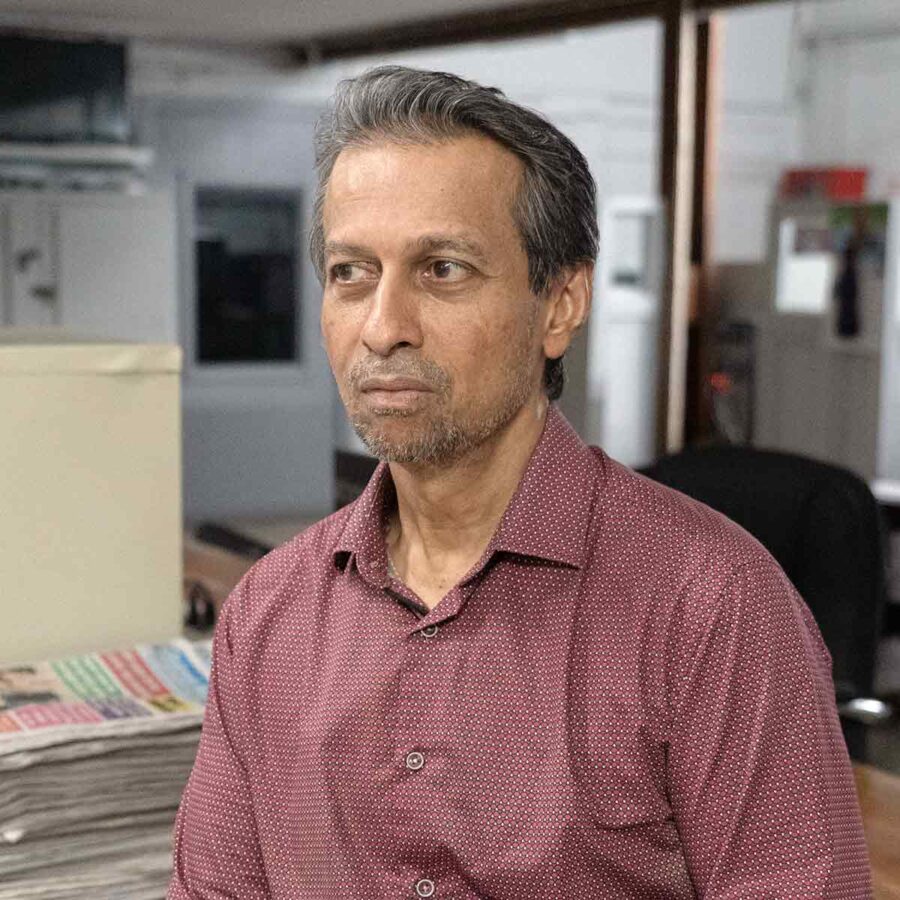
This contract reflected the risks ExxonMobil took when no one knew how much oil there was offshore, says Persaud, the Stabroek News editor. “The proven reserves were only about 1 billion barrels back then. Today we know there are 11 billion.”
He pauses before adding, “If Exxon refuses to renegotiate, other oil companies will gladly take
their place.”
Even the International Monetary Fund, he notes, has suggested Guyana consider revisiting the agreement. President Ali continues to refuse, arguing that honoring the deal demonstrates that Guyana is a reliable partner for foreign investors.
The memory of Guyana’s troubled economic past looms over the debate. “By the late 1980s, Guyana was effectively bankrupt,” recalls Persaud. “Shops were empty, the currency collapsed, and thousands of people left the country.”
That experience still shapes how today’s leaders approach foreign investment. “Many policymakers are terrified of repeating that period,” Persaud says. “They believe maintaining investor confidence is absolutely essential.”
Back in Stabroek Market, Clifton finishes the ferry ride home and collapses onto a worn couch. On his phone, TikTok videos show protests in Nepal that toppled a government accused of corruption. He scrolls through them quietly. “If the oil money doesn’t improve our lives,” he finally says, “there will be a revolt here too.”