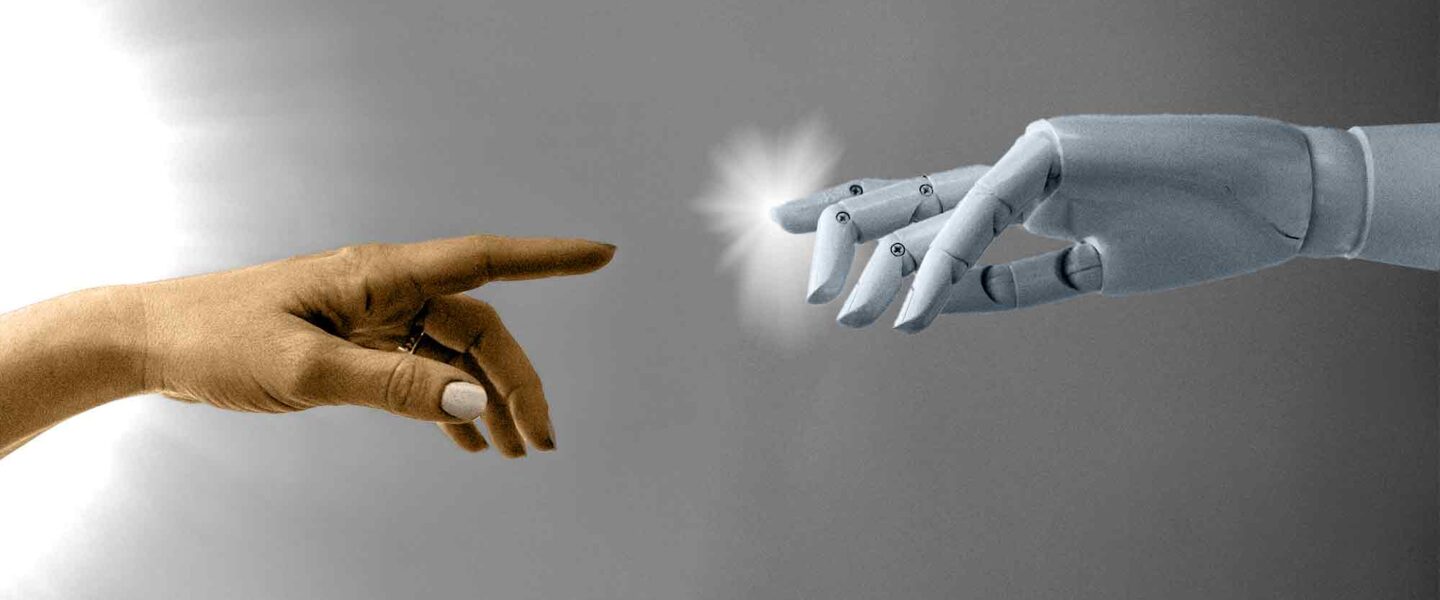
Saturday Hashtag: #ArtificialRelationships
Welcome to Saturday Hashtag, a weekly place for broader context.
|
Listen To This Story
 |
The digital dating industry is hiding a crisis. The culture is hitting “swipe fatigue”; apps that promised connection have instead just profited from our frustration.
Paid users have now declined 5 percent year-over-year, while platforms continue to monetize dissatisfaction. Today the majority of revenue comes from features that prolong uncertainty and engagement rather than create lasting relationships.
A widening credential gap is also reshaping relationships. Seventy-five percent of users of the No. 1 app are male. Sixty-one percent of all college graduates are women. Only 35 percent of non-college-educated men are considered “viable” partners in 2026. This imbalance turns romance into a numbers game and weakens social bonds.
Inside this paradigm society is growing more disconnected from real-world relationships. Men increasingly face fewer dating options, women are flooded with attention, and nearly half of Gen Z men have never asked someone out in person.
Exploding Loneliness
Despite unprecedented connectivity, loneliness, anxiety, and depression are surging among teens and Gen Z, precisely at the stage of life when social bonds usually form.
Young people are increasingly disconnected from their peers, struggling to build lasting friendships, while informal networks, once a crucial source of emotional support and community integration, are eroding, especially among young men.
Compared with prior generations, these groups engage in fewer structured social environments like clubs, community groups, or shared workplaces.
The Social Cost
Swipe culture erodes empathy, conflict resolution, and other real-world social skills.
Gamified, commodified interactions on apps and social media drive anxiety, low self-esteem, and chronic loneliness, turning people into profit centers and replacing authentic relationships with transactional ones.
Sociologists call this “social thinning”: As digital interactions dominate, real-life supportive networks shrink, and the face-to-face skills that build resilience, such as negotiation, shared experience, and accountability, fade.
The Rise of AI Companions
As human connection becomes harder, artificial companions, chatbots, AI-driven avatars, and even virtual partners are on the rise. Some have an AI best friend; others, a virtual spouse, or even throuples.
While these nonhuman relationships can provide interaction and a form of emotional support, they also profoundly deepen isolation.
Unlike humans, AI cannot organically challenge us, negotiate actual intimacy, or sustain the messy relationships that form strong social bonds, not to mention that every AI interaction is extracting data for training and profit.
A Troubling Trend
Together, declining dating app engagement, soaring loneliness, and the rise of AI companionship signal a societal shift: Humans are increasingly trading real, complex relationships for on-demand digital substitutes.
While swipe culture and AI companionship may satisfy short-term needs, they are hollowing out community, weakening empathy, and reducing civic participation.
Most troubling is that young people at the life stage when social bonds typically form are experiencing unprecedented isolation, with consequences that reach far beyond dating.
Hashtag Picks
Love in the Time of AI Companions
From The New Yorker: “The full range of human desire is incalculable, a cosmic mystery. There are many reasons that one might want to talk to a computer: meaning-making, dominance, privacy, fantasy, confession. There is also the appeal of pushing the boundaries of consciousness, and the simple fact that there is no greater pleasure than good chat.”
State of Our Unions 2026: The Dating Recession
From the Institute of Family Studies: “Young adults today are living in a depressed dating economy. In this 2026 State of Our Unions report, we pursued greater insight on the challenges of contemporary dating through the 2025 National Dating Landscape Survey, a nationally representative sample of 5,275 unmarried young adults ages 22–35 in the United States. … What did we learn?”
What Happens When AI Chatbots Replace Real Human Connection
The authors write, “We are living through a paradox that may define our era. Humans are wired to connect, yet we’ve never been more isolated. At the same time, artificial intelligence (AI) is growing more responsive, conversational, and emotionally attuned by the day. Perhaps because of this, we are increasingly turning to machines for what we’re not getting from each other: companionship.”
Gen Z Dating App Burnout Drives Surge in Matchmaker Interest
The author writes, “Dating app fatigue has reached a critical point for younger users, with recent data showing widespread emotional, mental, and physical exhaustion from swipe-based platforms. A Forbes Health survey from mid-2025 found that 78% of all dating app users experience this burnout to some degree, with Gen Z reporting the highest rates — often feeling drained more frequently than older groups. Women are particularly affected, with around 80% citing fatigue compared to 74% of men, driven by factors like lack of meaningful connections (40%), disappointment (35%), rejection (27%), and repetitive conversations (24%).”
Build Social Bonds to Protect Health
From News in Health: “From an early age, we learn that nutritious foods and physical activity can help us stay healthy. Growing evidence now suggests that social connections may also be key to good health. Socially connected people tend to live longer. They’re at lower risk for serious health problems. Social bonds are also linked to our mental health, eating habits, and much more.”
The Social Internet
The author writes, “Over the course of a single generation the internet has transformed from a fragile academic network into the primary information system of civilization. It connects billions of people, distributes knowledge instantly across continents, and allows events anywhere on earth to become visible everywhere else within seconds. And yet something unexpected has happened. The network that was meant to connect the world has begun to fracture it.”