Did Liberals Really Ruin the Movies?
Like everything else, movie attendance is now politicized, as the Right claims Hollywood’s too woke to watch.
|
Listen To This Story
 |
Hollywood heaved a collective sigh of relief last week when Project Hail Mary, starring Ryan Gosling as a reluctant middle-school science teacher who is dragooned into a space mission to save the planet, took in a haul of $80 million — the best first-week return on a nonfranchise movie since Oppenheimer opened three years ago.
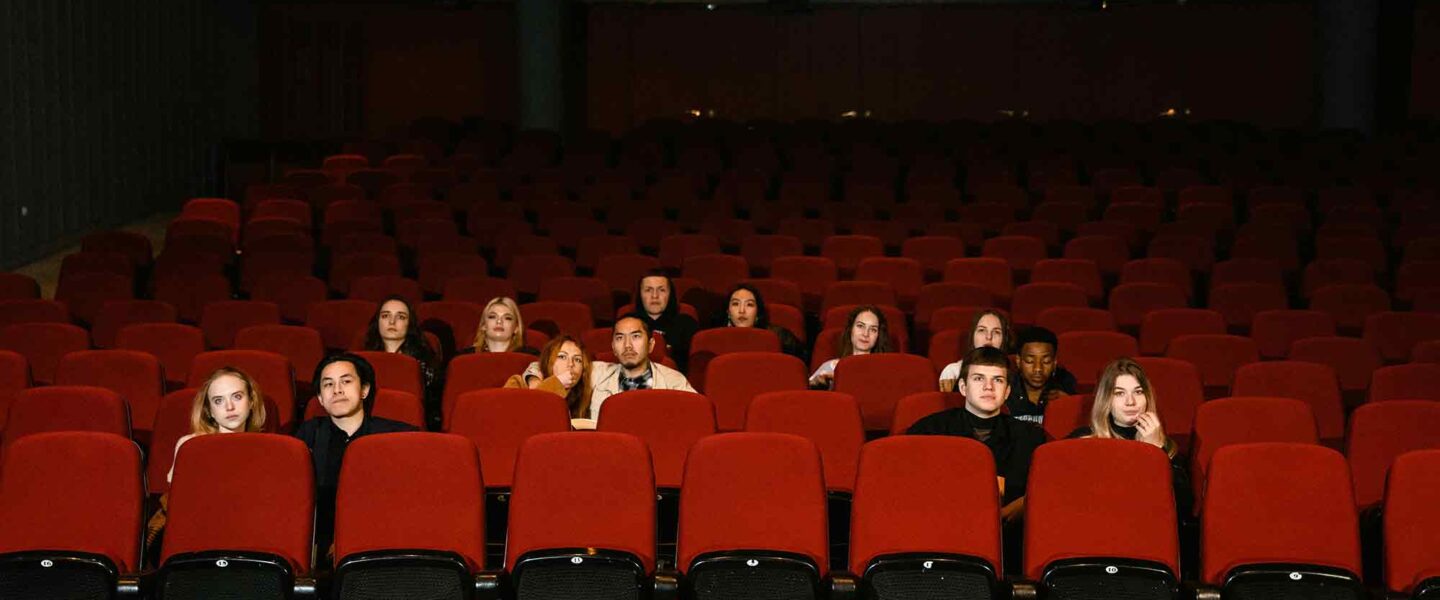
It has been a wan time for the movies — a rather long wan time. Attendance is down; receipts are down; the number of movies released is down, along with the number of theaters you can watch them in.
Last year, attendance dipped 10 percent overall from the previous year, with the largest declines at the biggest theater chains. Meanwhile, many of the best and most popular film artists are migrating to streaming services like Netflix, Apple, and Amazon.
Why are audiences abandoning movies after a hundred years of pancultural enthusiasm? It is hard to say. As the screenwriter William Goldman once opined about Hollywood, “Nobody knows anything.”
But that hasn’t prevented observers from concluding that 1) the movies have lost the pulse of the audience, and 2) the primary culprit is those damn liberals.
Roy Price, the former head of Amazon Studios and now head of his own production company, wrote an op-ed for The New York Times last week saluting Project Hail Mary for its lack of didacticism, and bashing much of the rest of Hollywood for being too overtly political.
Picking up from Samuel Goldwyn’s famous dictum that if you want to send a message, use Western Union, Price said that the movies had driven away audiences by substituting messages for entertainment — a charge similar to the conservative cliché that liberalism has spoiled every American institution from universities to museums to the armed services by pushing wokeness.
As Price put it: “Political and social messaging were what seemed to matter in Hollywood,” and “an unmistakable censoriousness and fear of saying or doing the wrong thing seemed to settle over the creative process.”
Price doesn’t adduce any examples, and for good reason: He is wrong.
To assume that Hollywood has its own political agenda and is willing to sacrifice audiences for it — as if! — is to assume that audiences follow movies rather than that movies follow audiences. There is, after all, a reason we get sequel after sequel; the tried-and-true formulas are usually, well, tried-and-true.
Hollywood has long been liberal. Donald Trump didn’t suddenly ignite its liberal impulses. There are reasons for that. Artists are generally liberal. And, yes, audiences are generally liberal, too, because they are overwhelmingly young, tend to be well-heeled, and live disproportionately in urban areas.
Hollywood hasn’t undergone any drastic aesthetic changes — at least not over the past 25 years or so. The movies that make money now are the movies that have been making money since the advent of Steven Spielberg and George Lucas.
To underline the point, the highest-grossing movies each year since 2017 were Star Wars: Episode VIII — The Last Jedi; Black Panther; Avengers: Endgame; Bad Boys for Life; Spider-Man: The Way Home; Top Gun: Maverick; Barbie; Inside Out 2; and A Minecraft Movie.
Basically, these are all popcorn movies.
Some of them (Star Wars, Black Panther, Barbie) have, to varying degrees, a political dimension or subtext; most do not. But to think that liberals have driven away audiences is nonsense. In fact, one of the movies that Price cites approvingly, the recent Oscar winner One Battle After Another, is about as political (and liberal) a movie as you are likely to see. And, in any case, according to Kalibrate, the recent drop-off has been among the wealthier and more urban moviegoers — the selfsame liberal groups who would be expected to prefer movies with a liberal slant.
This isn’t the space for a detailed discussion of why movies have been losing audiences since the early 2000s. Part of the answer, no doubt, is the convenience of streaming. Part may be the impact of a shrinking overall embrace of community on what had been one of our culture’s more communal experiences. Part may be the way Hollywood has catered to teenagers at the expense of a broader family audience — the sort of general audience Project Hail Mary is likely attracting. And the pandemic certainly took its toll.
But to blame declining ticket sales on liberals for making woke movies? That is just the sort of willful dunking you might expect from our politicize-everything president and those he’s inspired to just make stuff up.