Change the Model, Change Everything
Journalism mourns a golden age that was really a brief accident of technology and money. The work survives. The priesthood is another matter.
|
Listen To This Story
 |
— OPINION —
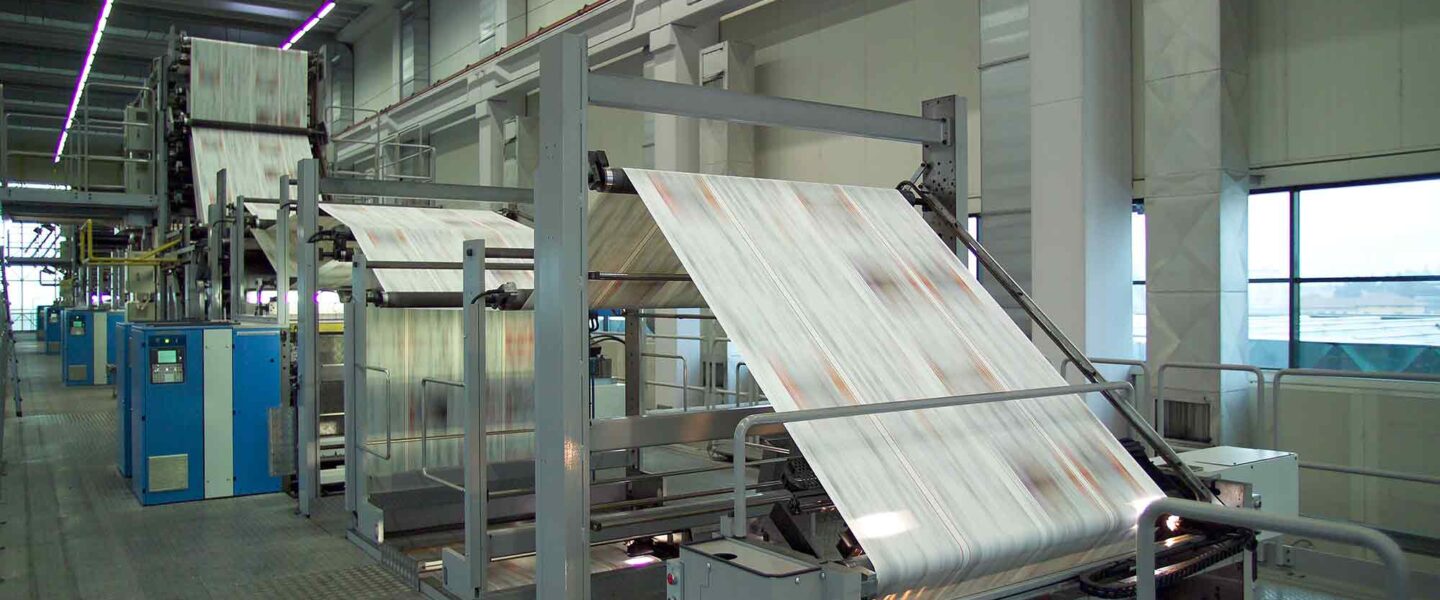
Begin with the parts no one defends. Forests felled, pulped, pressed. Ink by the ton. Bundles loaded onto trucks before dawn and driven to a corner, where a child on a bicycle flings them toward porches in the dark. Everyone agrees that no one would build this today to move information through a society. The surrender is cheerful, and it is offered as if it costs nothing.
It costs everything.
Journalism was never just the reporting. It was an information machine, and the reporting was one gear in it — bolted to a distribution network, an advertising business, the scarcity of presses, the licensed scarcity of the broadcast band, and the authority all of it quietly conferred. Pull one card and the rest do not stand there waiting. Concede the trucks and you have conceded the primacy that rode in them. Once you change the model, everything else changes. That is the sentence the profession cannot say aloud. To say it is to admit the grief was never for newsprint or broadcast bandwidth. It was for primacy.
The grief points to a golden age, and the age was real. Walter Cronkite and Edward R. Murrow and guys like David Halberstam were not frauds. They did serious work at the height of their craft, and the trust they held was earned. Grant all of it — then notice they were a window, and the profession has spent every year since insisting it was the house.
American mass journalism is younger than it pretends. It starts around 1833, when Benjamin Day sold The Sun for a penny a copy and discovered the real product was not news but readers — sold by the thousand to anyone buying an ad. Day did not invent reporting. He invented the business: a paper paid for by advertisers who wanted a crowd, not by a party that wanted a mouthpiece.
Objectivity came later, and never as a commandment off a mountain. It was a market position. The wire services made it pay first: a single dispatch sold to a Republican paper in one town and a Democratic one in the next could not afford to take a side. Then the nationally ambitious papers built brands on it — The New York Times under Adolph Ochs, in time The Wall Street Journal — selling sober, above-the-fray reliability as the respectable alternative to the partisan sheets that never went away and to the “yellow” sensationalism of the 1890s. Walter Lippmann gave the practice a philosophy in the 1920s. The ledger had already given it a reason. Objectivity was a way to sell to everyone long before it was ever an ideal.
Before any of it came the pamphleteers — partisan, unembarrassed, loud. Everyone with access to type had a position and pressed it. So the thing the journalism priesthood today mourns as decline — the many voices, the open quarrel, a printing press in every pocket — is not a fall from grace. It is a return to the origin. The calm, anointed voice was the interlude. We are not watching journalism die. We are watching the end of a brief, lucrative accident of technology that let a few talented and fortunate men be mistaken for the thing itself.
This is not journalism’s fate alone. It belongs to everyone who ever made a living standing between people and what they wanted to know. The travel agent who owned the printed timetables. The stockbroker who owned the quotes. The record store that decided which song came bundled with which. The video store, the classified-ad pages, the encyclopedia salesman at the front door. The licensed professions tell the same story in more flattering terms: Feed a decade of lab results and a list of symptoms into a machine, and the reading that comes back can beat the rushed quarter hour that a clinic can spare; people now themselves draft and file and argue about legal work they once had no choice but to buy by the hour. Different lines of work, one wall, and it falls the same way each time — on those who owned the monopoly on information — while opening toward the reasoning that turns information into judgment.
What survives is always the same. The trades that lasted gave up the monopoly on access and kept only the mastery of judgment. The agent who survived sells judgment now, not timetables. The broker sells judgment, not quotes. The doctor stopped being the only one who could read the book and became the one you trust to say what it means. The monopoly was never the value. The judgment was.
In journalism it is the middle ground that crumbles. The rewriter of press releases, the aggregator of the wire, the voice reading a teleprompter built from someone else’s reporting — that tier evaporates, because the machine that reads the lab results writes its copy faster and for free. The top gains value: the investigation no one else will fund, the judgment to know what matters, the nerve to say so under a name. The bottom remains but extends to the horizon — anyone, anywhere, publishing to the world. The middle is where the priesthood lives, and the indignation you hear is its defense — the robes of the top thrown over the work of the middle. Notice how quickly “save journalism” becomes “save journalists,” how smoothly a guild’s lost standing gets entered into the ledger as a threat to the republic. The priest says he is guarding the truth, when, in fact, he is guarding the rewrite desk.
And journalism is the most exposed of all of them, because its floor was always the thinnest. The doctor keeps the prescription pad. The lawyer keeps standing before the court — licensed acts no self-education lets you perform. Journalism never had a license. No bar exam for a byline, no board to certify a reporter. Its authority was never granted by the state; it was granted by who owned the press and who controlled the road the truck drove down.
The First Amendment is no exception — though the profession waves it like one. It licenses nobody. Unique among the constitutional protections, it works by holding the door open rather than locking it: The freedom of the press belongs to anyone who owns a press, and now everyone owns one. The clause held up as proof of a special standing is the very thing that guarantees none. Hand the press and the road to everyone, and there is less beneath journalism than beneath the doctor or the lawyer, not more. The sanctimony is loudest where it is least defensible. The doctor can still say: I am the one the law lets write the prescription. The journalist can only say: I used to own the truck. And no one weeps for a lost truck.
None of which makes what’s happening a small thing. It is enormous, and the defenders are right about all of it but the last step. Someone has to sit through the zoning meeting, file the records request, follow the money, refuse to look away when looking away is easier and safer and better paid. The community watchdog is not optional. But the watchdog is a function, and the newsroom was only its (temporary) form, and the whole error is believing the function can live nowhere but inside the form that history happened to pour it into a century or so ago. Verification, accountability, bearing witness — human acts, not institutional property. You can hold the watchdog sacred and still admit the kennel is obsolete.
There is one place the defenders hold firm, and it is only honest to say so. More information is not the same as someone answerable when the information is wrong. The case for the institution was never that it knew more. It was that a name, a byline, was attached to the work, with an organization behind the name, and both could be sued, fired, shamed — made to answer. Strip the masthead and that goes too. Whether trust that is staked online, one reputation at a time — built in the open and risked in the open — can carry what the printed masthead carried is the real question of the moment. It is not settled. Anyone who tells you it is, either way, is selling something.
Ben Smith of Semafor recently wrote of the line the profession keeps blurring: Journalism was never a profession at all, but a trade — a craft for people trying to make sense of the world, not a guild that licenses who may practice it. The sanctimony was always the pretension to professionhood, and the trade itself is in no danger. It is coming back — in the podcaster who pins a chief executive to the wall on the contradictions of his own industry, in the reporter who discovers that hard questions are the job, in the young audience that encounters a real interview for the first time and appreciates the power of truth revealed. The crowd was never loyal to the brand. It was loyal to the questions, and it will follow them out the door.
What is settled is the direction. Everything that can be manufactured will continue to be, endlessly, at a cost near zero. The only thing left worth paying for is the thing that cannot be manufactured — presence, judgment, the bare fact of a person who was in the room and will put a name to what they saw. Call it a trade, not a profession. It looks less like an institution than an act: someone trusted, asking the question no one else asked, and taking responsibility for the process of discovery.
The forests will not be felled for this. The trucks will not roll. The kids on bicycles grew up long ago and are now inside glued to their screens, and no one mourns the machinery. What we mourn is what it carried — never the news, but access to something approaching the truth. The model changed but the purpose remains the same: to help us figure out who we are, where we’re going, and why.