Deeply Divided America Celebrates Its 250th Anniversary. What’s Next?
America’s previous major anniversaries occurred during troubled times. This 4th of July is not likely to be different.
|
Listen To This Story
 |
In his new book, America, USA: How Race Shadows the Nation’s Anniversaries, Princeton professor Eddie Glaude Jr. notes that virtually every major American anniversary has marked a crisis in the country’s evolution as a democracy.
The country’s 100th anniversary in 1876 marked the near-collapse of the government owing to corruption in the administration of Ulysses S. Grant. Although he had been a brilliant commander in the Civil War, Grant as president turned out to be overly trusting of friends and associates who treated political power as a cash machine.
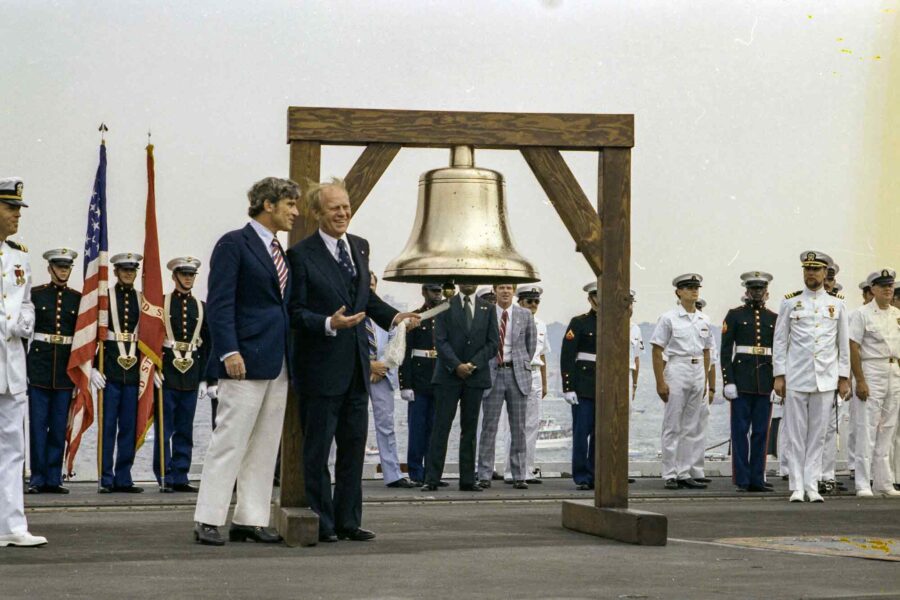
The 200th anniversary in 1976 found the country mired in the aftermath of the Watergate crisis and the collapse of Richard Nixon’s administration. Like Donald Trump, Nixon had compiled a list of political enemies and misused the office of the presidency in an effort to destroy them. The Washington Post’s Bob Woodward and Carl Bernstein wrote in their account, The Final Days, that Nixon had spent his last days in office delivering drunken monologues to the portraits of former presidents hanging in the White House’s hallways.
America’s 250th anniversary doesn’t promise to be much better. After abandoning a self-inflicted war against Iran, and turning Washington’s Reflecting Pool into a gigantic swamp festering in the netherland that separates the Capitol from the Lincoln Memorial (and consequently murdering the local population of ducks), Trump has imposed a squalid “Great American State Fair” on the National Mall that artists and performers have boycotted en masse and the public has largely ignored.
That’s not to mention the financial problems of the Kennedy Center, which much of the public has seen fit to boycott after Trump took it over and put his name on the façade. The name has since been taken down by court order, but the damage continues. This July 4th promises to find America just as divided as it was during earlier scandal-ridden anniversaries.
In his book, Glaude skips over the ever-present political corruption and focuses instead on the problems of dealing with race, the cancer that was embedded in American politics from the start. Two hundred and fifty years after its birth, America is still trying to decide who has the right to consider her- or himself an American.
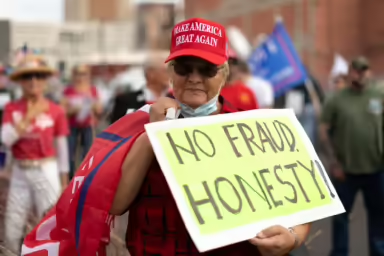
While previous administrations attempted to discreetly gloss over the question, Trump has been adamant that he considers people of color not to be right for America. He has famously denounced Somali Americans as garbage. He has referred to Haitians and Africans as people from “shithole countries,” and to Mexicans and Hispanics as “criminals and rapists.” Trump’s problem is that while Republicans have steadfastly relied on predominantly white voters to remain in power, the demographic makeup of America’s population is irreversibly shifting towards ethnic diversity.
There is nothing new in that. America has always been diverse. New York was settled by the Dutch before the English arrived and changed its name from New Amsterdam to New York. Philadelphia was originally the colony of New Sweden. Florida was Spanish. Louisiana was French. Territory west of the Mississippi was originally part of Mexico. The country has sought unity since the beginning, but the slogan “United We Stand” has always been more an aspiration than a reality. The real question is, what and who do we really want to be?
The Declaration of Independence proclaims that all men are created equal and endowed by their Creator with inalienable rights. That is an admirable notion, but American women in all the American states did not get the right to vote until the 19th Amendment went into effect in 1920. The 15th Amendment extended the right to vote to all American men regardless of race or ethnic origin, in 1870, but it was not until the 1965 Voting Rights Act (VRA) that African Americans were free to vote in most Southern states.
The Supreme Court, packed with a conservative majority thanks to the political maneuvering of Kentucky Sen. Mitch McConnell (R), has done its best to roll back the VRA, which had offered at least some degree of political equality to Americans of African descent.
Even with that setback, African Americans are better off today than they were when the US Constitution was first drafted. Apportionment to the House of Representatives was based on population. To avoid being outnumbered in the House, the Southern states demanded that slaves be counted when apportioning representation, even though an enslaved Black man was not considered to be the same as someone who was white. The “compromise” was to count each slave as three-fifths of a human being. So much for the Declaration’s contention that all men are created equal.
African Americans have a right to be upset at the contradictions and injustices that were prevalent when what was to become American society was just beginning to define itself. In the end, African Americans fared better than the indigenous population, which was brutally displaced in the European struggle to colonize and populate what it called “the New World.”
Towards the end of the Declaration of Independence, the signers itemized a long list of grievances against the king. The complaints build up to the final one: “He has excited domestic insurrections amongst us, and has endeavoured to bring on the inhabitants of our frontiers, the merciless Indian Savages, whose known rule of warfare is an undistinguished destruction of all ages, sexes and conditions.”
To the signers of the Declaration, the Native American was a savage to be feared. Hardly anyone remembered that in the French and Indian War, fought between 1754 and 1763 in a major colonialist grab for more territory, both the French and English paid native tribes hard cash for each scalp ripped from an opponent’s head. If the natives were indeed savage, Europeans had shown no compunction against joining in and exploiting the carnage.
Much of the divisiveness of the present derives from the fact that for the first time in our history, we are beginning to look beyond the founding myths to which our ancestors swore allegiance.
We are only now beginning to come to terms with a realistic understanding of our own history. That understanding is necessary if we want to move forward. It is easy to feel depressed at the injustices of the past, but to a great extent we have moved beyond the most egregious practices of our forebears.
Yet as Glaude says, as a country, we are still in our adolescence. Much of the divisiveness of the present derives from the fact that for the first time in our history, we are beginning to look beyond the founding myths to which our ancestors swore allegiance.
Now, knowing what we know, do we really feel that all men are created equal? Do we really feel that they are endowed with the right to life, liberty, and the pursuit of happiness? Or do we think that some are better than others, and that, since there is not enough of the pie to go around, we need to exclude those who are not strong or wealthy enough to play in the big leagues?
One of the most eloquent comments I’ve heard on what it means to be an American came in a BBC interview with Abdi Nor Iftin, who emigrated to the US from Mogadishu, Somalia, after receiving a “golden” visa in 2014. Abdi had not graduated from high school in Somalia, but in America he first attended a community college and then graduated from Boston College, one of the city’s most prestigious universities. After graduation, he published a best-selling book, Call Me American, and then went to work for a nongovernmental organization helping other refugees integrate into American society.
Trump cut funding to the NGO, which ceased operation, but Abdi found numerous speaking engagements and other assignments that have kept him busy. He told the BBC that, of course, he does not like the racism that has characterized some members of the Republican Party since Trump took over, but he still finds Americans in general to be friendly, helpful, and encouraging.
His brother had also hoped to emigrate from Somalia to the US, but Trump’s restrictions made that impossible, so his brother emigrated to Canada instead and is now a Canadian citizen. “Canada is a beautiful country,” Abdi said, “and I like it very much, but given the choice, I still prefer to be an American.”
Life in a deeply divided America is not easy for anyone, but an argument can be made that open disagreement about our differences is healthier than stifling dissent under a façade of false unity.
That said, we still need to decide who we really are and, more importantly, who we want to be.
As never before, humanity faces existential issues ranging from climate change to the proliferation of nuclear weaponry to a scramble for diminishing resources to the prospect of a new pandemic that might wipe out entire populations the way the bubonic plague decimated human societies in the Middle Ages.
The only way to handle these global problems is through global cooperation, which means looking beyond national, ethnic, and racial boundaries and thinking of ourselves as members of a single species, defined by our shared genome, rather than as members of irreconcilably opposed factions.
In realizing this great work, the US has a head start on everyone else, thanks to our diversity and the still viable parts of the political system that the Founding Fathers bequeathed us. Despite the malign pettiness of a Donald Trump, we can still be the leader of the Free World if we want to be.
William Dowell is WhoWhatWhy’s editor for international coverage. He previously worked for NBC and ABC News in Paris before signing on as a staff correspondent for Time magazine based in Cairo. He has reported from five continents — most notably during the Vietnam War, the revolution in Iran, the civil war in Beirut, Operation Desert Storm, and in Afghanistan.