Ahead of Midterms, Supreme Court Gives GOP and Billionaires Another Boost
Republicans and the uber-wealthy are rejoicing after the Supreme Court on Tuesday boosted the influence that the richest Americans have on elections.
|
Listen To This Story
 |
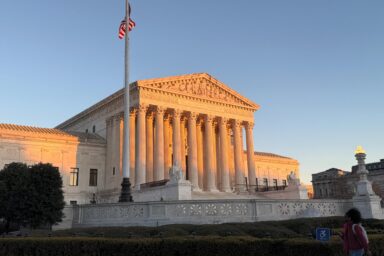
In a ruling that will primarily benefit Republicans and wealthy donors who want to use their money to influence politics and shape the course of the nation to their liking, the Supreme Court on Tuesday struck down limits on how political parties and candidates can coordinate spending.
The 6-3 decision favors the GOP, which relies more heavily on rich benefactors than do Democrats running for office, who get more of their campaign contributions from small donations.
This is reflected in how much money the respective parties and candidates have in the bank. For example, while Democratic Senate candidates in competitive states generally enjoy a massive fundraising advantage, the Republican National Committee (RNC) has more than $125 million cash on hand, which dwarfs the reserves of the Democratic National Committee, which has $14.4 million in the bank while carrying more than that amount in debt.
Even though the Supreme Court has been chipping away at campaign finance rules for a couple of decades, the $3,500 limit that an individual can give to a candidate per election cycle has hamstrung the ability of Americans millionaires and billionaires to buy themselves influence.
To get around that constraint, the uber-wealthy can also donate to state and national parties. In that case, their contribution limits are much higher ($44,300 per year for the national party and $10,000 for a state party).
However, until Tuesday, the parties were not allowed to coordinate directly with the candidates on how that money would be spent. In addition, they had to spend more on campaign commercials because only the candidates themselves get the most favorable rates for ads.
This means that, with the restrictions lifted, Americans will likely get to see even more campaign commercials this fall and beyond, which should be good news to those who enjoy being inundated with them.
There are some people who believe that giving the parties more power in this way will dilute the influence of super PACs, which can raise unlimited amounts from the uber-rich, who have made them the main vehicle for using their wealth to shape politics.
That is also the argument that Justice Brett Kavanaugh made in writing the decision for the Supreme court’s right-wing majority.
“To uphold the political-party coordinated-expenditure limits here could therefore help consign political parties to continued second-tier status as compared to outside groups,” Kavanaugh wrote. “Weakened political parties distort the political system. And in the views of many, the relatively diminished political parties have ushered in increased political polarization and fragmentation.”
Of course, if the Supreme Court wanted to curb the power of these super PACs, it could have done so at any time when it ruled on campaign finance cases, which makes this argument ring hollow.
To understand who does and does not benefit from the ruling, you just have to look at who celebrated it.
“The Supreme Court just took restrictions off political spending! A BIG WIN FOR REPUBLICANS and, more importantly, The First Amendment!” Donald Trump wrote in a social media post.
Conversely, groups supporting campaign finance regulations were dismayed.
“Yet again, the Supreme Court ignored the real-world impacts of its decision to grant high dollar donors greater influence over our democracy. Its justification for striking down the sensible limits on coordination between parties and candidates, which it quite recently upheld, is laughably weak,” said Donald Sherman, the president of the group Citizens for Responsibility and Ethics in Washington.
“Earmarking and bribery enforcement are not enough to prevent the corruption this decision invites,” he added. “This decision, as with its other campaign finance decisions since Citizens United, will inevitably render the government more responsive to special interests and indifferent to the demands of the American people.”
That is probably correct… but at least there will be more campaign commercials.