Winners and Losers of the Iran Deal
With the war in Iran at least paused, and the Strait of Hormuz being opened again, it's time to look at who benefits from the memorandum of understanding the US and Iran signed on Wednesday. The number of winners is surprisingly large.
|
Listen To This Story
 |
Now that the memorandum of understanding between the US and Iran has been signed that lays out the roadmap to a permanent peace in the region while trying to repair the damage to the global economy that the conflict has done, a lot of people will feel obligated to pick winners and losers.
While this is tempting, it’s easy to see why it’s also to some degree a fool’s errant… especially considering where Donald Trump put pen to paper on Wednesday night.
He did so at Versailles, the same place where Woodrow Wilson signed the eponymous treaty that ended World War I more than a century ago. Back then, any number of stakeholders might have looked like the “winners” of that accord. In hindsight, however, just about everybody lost since it paved the way for an even worse war just 20 years later.
That being said, there are some real winners here, which is perhaps owed to the fact that this was a highly unnecessary conflict from the beginning.
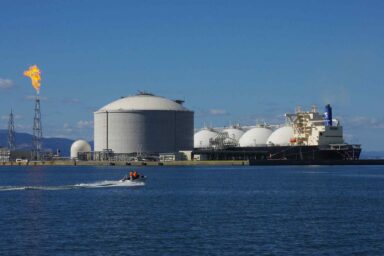
In fact, you, dear reader, are very likely one of them. No matter where you live on this planet and how much or little you care about geopolitical events, you have likely paid a price for Trump’s decision to attack Iran (and Tehran’s subsequent closure of the Strait of Hormuz).
It’s not often that a war, especially one that lasted only three months, can so thoroughly impact so many people who are not involved in it at all. In this case, that means anybody who is affected in any way by the cost of fuel and/or fertilizer. In other words, all of us.
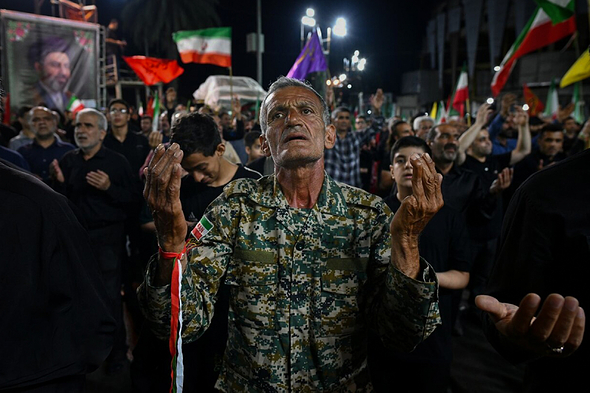
Then there were the tens of millions of people throughout the Middle East who spent the conflict cowering in fear that they would be hit by a missile or a drone. Most of them can now breathe a sigh of relief and also count themselves among the winners of the Iran deal.
Not the people of Lebanon, however.
Even though their country wasn’t involved in the original war, Israel took the opportunity to attack it – ostensibly to deal a blow to the terrorist group Hezbollah. But this offensive has caused lots of collateral damage. In fact, more people died in Lebanon than in Iran.
And, even though Lebanon is theoretically covered by the memorandum of understanding, and Trump has criticized the government of Prime Minister Benjamin Netanyahu for how it is conducting itself there, it remains to be seen whether Israel will halt its attacks.
Senior officials in Tel Aviv have indicated that they do not feel bound by the terms of the agreement, but they undoubtedly find themselves in a tough spot. With few friends remaining in the global community, Israel has maneuvered itself in a corner with its brutal campaigns in Gaza and now Lebanon.
And, because none of the goals that he had pursued when roping the US president into attacking Iran have been achieved, that makes Netanyahu one of the clear losers of this conflict.
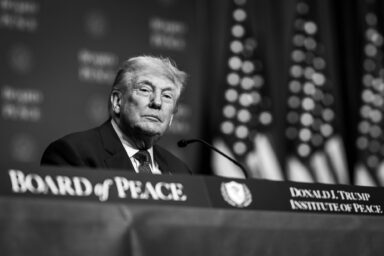
But before we get to that, let’s look at the most unlikely winner of them all: Donald Trump.
Now, we know what you are going to say, which is: How can we call him a winner of this deal when he bungled the entire war from the start and “negotiated” an agreement that seems to vastly favor Iran?
Those are fair points.
It was an unnecessary war and Trump and his team clearly never considered the possibility of Iran fighting back and the devastating consequences that this might entail. In addition, all of the president’s proclamations, e.g., that this conflict would only end with the complete surrender of the regime in Tehran, turned out to be wrong, and the stated objectives of the war were not achieved.
Finally, the campaign cost Trump dearly in the polls.
So, how can we consider him a winner?
Because sometimes you have to cut your losses. The Iran war had turned into a massively bad hand for Trump, but it wasn’t going to get any better, so he got out when he could.
If this conflict had dragged on, i.e., if the Strait of Hormuz had stayed closed, the GOP would have been annihilated in November.
The Republicans might still lose the midterms, but they would have been routed if inflation had kept surging because of the war and gas prices had soared past $5 per gallon or more, which is what would have happened.
By getting out of another Middle East quagmire now, Trump ensured that the economy at least has a fighting chance to somewhat recover.
While we doubt that the administration’s lofty promises of economic growth of 5 percent will materialize, just getting inflation down to the level it was at the start of Trump’s second term would be a welcome development for Republicans.
Finally, even though its military has been decimated, Iran is a major winner of the deal. The regime in Tehran is still in power and will reap a windfall of much-needed money from the concessions Trump made.
By the way, if it sounds as though almost everybody is a winner, that’s because that is what happens when a pointless war ends.
However, there are some losers as well.
Apart from Israel, which would love to keep this war going, seeing this conflict come to an end isn’t great for Democrats due to the aforementioned benefits that the deal has for Trump and the GOP. While the deal itself will offer them plenty of ammunition to attack the president and his party, they would probably rather head into the midterms with inflation at 5 percent.
Another big loser in all of this is the truth.
We have reached a point in time where the Iranian regime is a more reliable source of information than the Trump administration. That’s obviously not good.
Also, there is no guarantee that the conflict won’t flare up again. There are plenty of hawks in Washington, Israel, and on cable TV who hate peace so much that they will criticize this agreement vehemently until they can get Trump to either attack again or change the terms of the deal to get Iran to back out of it.
Finally, it’s important to remember that the memorandum isn’t actually a peace treaty. The hard work of negotiating what will happen to Iran’s nuclear program and its enriched uranium is still to come.
For now, however, we can all look forward to somewhat lower prices and a respite from Trump either announcing that a peace deal is near or that he will bomb Iran into oblivion — often in the same social media post.